Why Betting Brands Are Rethinking Influencer Marketing Before the World Cup
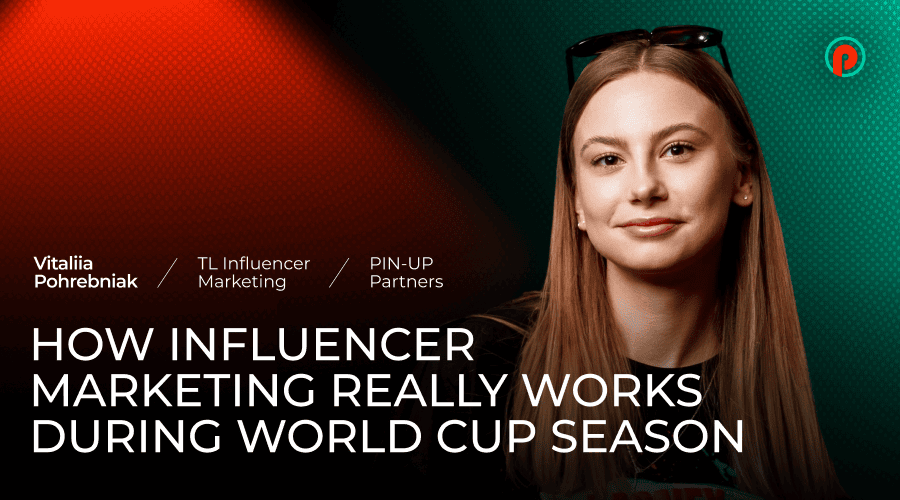
The closer we get to major football tournaments, the more aggressively brands start looking for sports creators. But according to PIN-UP Partners, the old “buy reach and hope for conversions” approach is becoming less reliable every year.
In this interview, we spoke with Vitaliia Pohrebniak, Team Lead Influencer Marketing at PIN-UP Partners, about what actually works in betting influencer marketing during high-pressure sports seasons, why large creators are no longer a guaranteed win, how teams evaluate traffic quality beyond clicks and registrations, and which integration formats create more risks than results.
In This Interview
- Why audience quality matters more than reach in betting influencer campaigns.
- How to spot risky creators before a World Cup campaign goes live.
- Which influencer formats work best during football tournaments.
- Why local sports creators can outperform larger influencers.
- How brands measure influencer value beyond clicks and registrations.
- Which content formats can create compliance or reputational risks.
Before a major football tournament, brands often rush to find sports influencers. What should teams actually start with when selecting creators for a campaign?
First of all, not with reach.
The most important thing is understanding the audience and the context around the creator. Who watches them? How engaged is the audience? How do people interact with the content? And how naturally can a betting integration fit into that creator’s style?
During football tournaments, creators who already have trust inside the sports community usually perform best: tipsters, football analysts, streamers, match reviewers.
Another important point is looking beyond numbers and paying attention to the content style itself. Modern audiences react very negatively to integrations that feel artificial or forced.
What mistakes do teams make most often when choosing influencers for tournament campaigns?
The biggest mistake is focusing only on audience size.
During major tournaments, brands start massively buying integrations with large creators, but often ignore engagement quality, audience relevance, and the actual quality of the content itself.
The second big issue is starting too late. During the World Cup, strong sports creators are usually booked long before the tournament begins.
And another common problem is the lack of localization. The same campaign approach can perform completely differently across different GEOs.
Which red flags immediately tell you that a creator is risky to work with, even if the numbers look strong?
There are several obvious signals.
Low engagement despite a large follower base is one of them. Another is suspicious comments, bot-like activity, or audiences that simply don’t interact with the content.
Sharp spikes in reach can also be a warning sign, especially when there’s no consistency in the creator’s content performance.
We also pay close attention to reputation and communication style. If a creator regularly posts toxic or overly aggressive content, that can create serious reputational risks for the brand.
And one more important red flag is when a creator doesn’t understand basic compliance and regulatory requirements for a GEO and isn’t willing to adapt integrations accordingly.
What tends to work better during football tournaments: one major influencer or a network of smaller local creators across different GEOs?
Usually, the strongest results come from combining both.
A large creator helps generate awareness and broad reach quickly, while local creators often deliver stronger engagement and better performance metrics.
During the World Cup, local sports influencers tend to perform especially well because audiences perceive their recommendations as more natural and emotional. That creates a much stronger level of trust.
That’s why large campaigns are usually more effective when they’re built as an ecosystem of different creator types rather than relying on one person alone.
Which integration formats work best during football season: predictions, match breakdowns, reactions, challenges, promo codes, giveaways, livestreams, or native mentions?
The formats that perform best are usually tied to emotion and real-time reactions.
That includes predictions, match reactions, live content, discussions around major moments, promo codes tied to specific matches, sharebet mechanics, and other activities connected directly to what’s happening during the tournament.
During major football events, audiences react much more actively to fast and highly relevant content.
At the same time, integrations that feel too “advertising-heavy” usually perform much worse than native integrations built directly into sports content.
Which sensitive points should betting brands always keep in mind when working with influencer integrations?
In betting, it’s extremely important to balance performance goals with a responsible approach.
Brands need to pay attention to audience age, local regulations, platform restrictions, and even how CTA messaging is phrased.
It’s also important not to create the impression of guaranteed winnings or “easy money.” Betting communication should feel more like entertainment: supporting your team, competing with friends, enjoying the tournament experience — not a promise of financial gain.
Tone of voice matters a lot as well. Overly aggressive or provocative content can create both regulatory and reputational risks.
When can an influencer campaign still be considered successful, even if it doesn’t generate immediate performance results?
Not every influencer campaign works like a direct performance channel in the short term.
During major sports tournaments, some integrations are much more about brand awareness, trust-building, and creating touchpoints with the audience.
A user may not deposit immediately after seeing an integration, but they may start recognizing the brand, encounter it across multiple channels, and come back later.
Influencer marketing also affects the efficiency of other acquisition channels. Someone may first see the brand through a creator, then later click on paid ads, respond to retargeting, register after repeated exposure, or simply remember the brand when they decide to place a bet.
Because of that, influencer marketing can:
- improve conversion rates across other channels
- lower CPA in performance campaigns
- strengthen the overall effect of broader marketing activity
That’s why it’s important to evaluate not only immediate performance metrics, but also the campaign’s contribution to brand awareness and long-term audience engagement.
One of the biggest problems in betting influencer marketing is that visible metrics don’t always reflect the real value of a creator. What makes influencer performance so difficult to measure honestly?
One of the biggest challenges is that the user journey toward a deposit is often long and non-linear.
A user might see an integration from a creator, encounter the brand later through another channel, return after some time, and only then register or deposit.
That means influencer marketing often impacts results indirectly through awareness and trust rather than immediate conversions.
Performance is also heavily affected by:
- audience quality
- engagement levels
- product-audience fit
- the integration format itself
Strong reach alone doesn’t guarantee high-quality traffic.
Sometimes a large creator generates many registrations but very low FTD rates and weak repeat activity. At the same time, a niche creator with a smaller audience may bring highly engaged users with much stronger retention and repeat deposits.
That’s why teams need to look much deeper than top-level metrics and carefully analyze audience quality after the first deposit, continuously test approaches, and understand the product well.
Which World Cup content formats may look attractive from a reach perspective but still create reputational or compliance risks?
During major tournaments, brands need to be especially careful with hype-driven and overly provocative formats.
Risks often appear around:
- overly aggressive CTAs
- promises of easy winnings
- questionable challenges
- emotionally overheated content
- integrations with creators who have controversial reputations
- creators promoting too many gambling products simultaneously
When influencers constantly advertise multiple competing betting brands, audiences stop seeing those integrations as genuine recommendations and start treating them as a stream of ads.
That can reduce trust, hurt loyalty, lower conversion quality, and negatively affect traffic performance overall.
Context matters too. Football tournaments are highly emotional events, and sometimes a format may generate excellent reach while still creating long-term reputational risks for the brand.
_________________________________________________________________________________________
This content has been produced for Affiverse by an independant Advertiser and expresses their own views, in their own words. If you would like to feature as an advertiser and be interviewed on Affiverse’s media content platform, please email [email protected].
Everflow
Connect
Tradedoubler
Connect
1win Partners
Connect
Shopnomix, a Nomix Group Company
Connect
Huffson Group
Connect
Kawaii Partners
Connect
Trackdesk
Connect
Share your expertise and expand your reach and become a content contributor with us today!
Contact Us To Find Out More