Nike Revives the Big Football Ad Era With “Rip the Script”
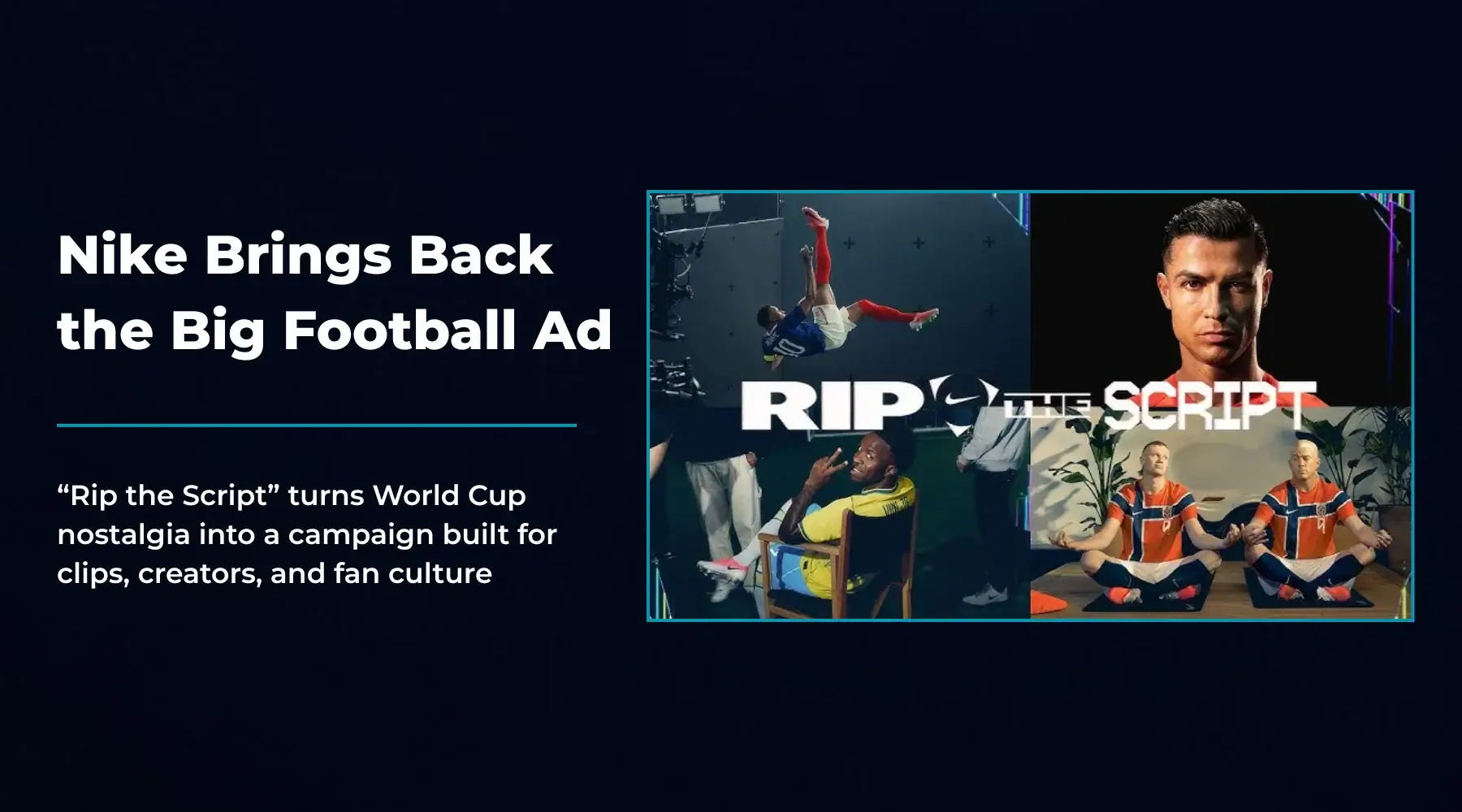
Nike has brought back something football fans have been missing: the oversized World Cup ad that feels built for group chats, fan edits, reaction videos, and half-time arguments.
Its new campaign film, “Rip the Script,” pulls together Cristiano Ronaldo, Kylian Mbappé, Erling Haaland, Vini Jr., Eric Cantona, Ronaldinho, Zlatan Ibrahimović, Didier Drogba, LeBron James, Travis Scott, Kim Kardashian, Ted Lasso, Channing Tatum, Young Miko, LISA, and more. Nike says the film opens the door to a wider “universe of Nike Football,” with subplots, extensions, unexpected casting, and Easter egg-packed content planned across the tournament period.
This campaign looks forward while reaching back. For anyone who grew up with Joga Bonito, Nike’s airport ad, Pepsi’s superstar football commercials, or the old World Cup spots that turned players into action heroes, “Rip the Script” carries a familiar feeling. Big cast. Big budget. Impossible football. A bit of comedy. Pure chaos.
The difference in 2026 marketing? The full film no longer does all the work. Now, the campaign has to break into clips, memes, creator commentary, product moments, celebrity coverage, and social edits. The old-school football ad has returned, but it now has to survive in a creator-led media cycle.
Watch Nike’s “Rip the Script” campaign film below.
Key Takeaways: Main Points for Marketers
- Nike’s “Rip the Script” revives the feeling of classic World Cup advertising, where football ads became cultural talking points.
- The campaign mixes current players, retired icons, celebrities, music, fashion, and entertainment to stretch beyond football audiences.
- Nike has designed the campaign as a wider content universe, rather than a one-off hero film.
- For marketers, the lesson sits in distribution. A big launch moment still helps, but the smaller moments around it now carry much of the campaign’s value.
Nike Brings Back the Big Football Commercial
World Cup ads used to feel like events. People remembered them. They quoted them. They recreated them in playgrounds and five-a-side cages. Nike understood that better than most brands. The old work turned footballers into characters, not just athletes. Ronaldinho could bend reality. Brazil could turn an airport into a pitch. A match could happen inside a secret cage. The ad became part of the tournament mood.
“Rip the Script” taps into that same memory.
The film carries clear echoes of Nike’s classic 1998 World Cup airport ad, but it swaps that older simplicity for controlled chaos and scale. That comparison feels right. “Rip the Script” moves like a football fever dream: a Hollywood backlot, an angry director, rebellious players, cameos everywhere, and the ball dragging the cast from one absurd scene to the next.
Football advertising has spent years trying to sound serious, polished, and purpose-led. Nike goes the other way here. It lets the players run wild. It lets the cameos feel ridiculous. It makes the whole thing feel closer to a pop culture event than a product spot. That gives the campaign its hook.
Why It Feels Like Joga Bonito and the Pepsi Era
The nostalgia works because the film understands what made old football ads travel. It was never just the football. It was the fantasy around it.
Joga Bonito sold flair. Pepsi sold superstar chaos. Nike’s older World Cup films sold the idea that football could spill out of the stadium and take over airports, cages, streets, dressing rooms, and TV screens. Those ads did not ask viewers to admire the media strategy. They gave them something to talk about. “Rip the Script” follows that playbook, but with a wider cast.
Football fans get Ronaldo, Mbappé, Haaland, Vini Jr., Ronaldinho, Zlatan, Cantona, Drogba, and more. Entertainment audiences get Kim Kardashian, Travis Scott, LeBron James, Channing Tatum, Young Miko, LISA, and Ted Lasso. The campaign stretches across sport, music, fashion, celebrity media, and streaming-era comedy. Nike’s own release says the cast reflects football’s reach across sport and culture.
That matters for marketers because each cameo gives the campaign another route into attention. A football page can clip the Mbappé sequence. A celebrity account can post Kim Kardashian and Saint. A music fan account can pick up Travis Scott or LISA. A sports media page can focus on LeBron and Ronaldo. A nostalgia account can run the Ronaldinho and Cantona angle. One film. Several entry points. That is where the old-school format becomes useful again.
The Hero Film No Longer Carries the Whole Campaign
In the old TV era, the big ad often stood alone. It aired during a major match, people talked about it the next day, and the best ones lived on through YouTube compilations. Now, that model feels too thin.
Nike knows this. Its official campaign notes frame “Rip the Script” as a doorway into a wider Nike Football universe, with ongoing extensions and content made for fans, creators, and players to engage with throughout the tournament period. That line tells marketers more than the cast list does.
Nike has not built this as a six-minute film with a few cutdowns. It has built a content system. The hero film gives the campaign a center of gravity, but the surrounding assets keep it moving.
That shift links neatly to a wider performance marketing trend. Brands keep looking for cleaner ways to connect creator activity, social reach, and measurable outcomes. Affiverse has covered that same pressure in its piece on when creators and affiliates stop being different budget lines, where the core issue comes down to how brands value different partner types across the same customer journey.
Nike’s campaign sits at the top end of that idea. It does not look like affiliate marketing on the surface. Of course it doesn’t. But the mechanics still matter: many audiences, many clips, many routes into attention, and a need to understand which moments actually move people.
What Marketers Can Learn From Nike’s World Cup Play
The lesson for marketers does not require Nike’s budget. The useful part comes from the structure.
Nike has built “Rip the Script” to do several jobs at once: the film gives media outlets a launch story, social pages get short clips, entertainment publishers get celebrity cameos, and Nike’s wider content universe gives the campaign room to keep moving after launch. That matters because World Cup campaigns can attract huge attention without always turning that attention into useful results. Nike shows the brand side of the equation: create the attention first, then give audiences enough formats to keep sharing, reacting, and coming back.
A single launch asset rarely carries a full campaign anymore. Brands need smaller pieces that different partners, creators, publishers, and communities can pick up without forcing the same message into every channel. Nike’s campaign speaks to the brand side of the same pattern. Big creative still matters, but brands need assets that can travel through creator-led discovery.
For World Cup campaigns, that means thinking beyond matchday media buys. Affiverse’s 2026 World Cup affiliate manager playbook makes the same point from a performance angle: brands and partners need to plan around the full tournament cycle, not just the biggest fixtures. Nike shows the creative version of that idea. Build one main story, then give audiences enough smaller moments to keep it alive across the weeks that follow.
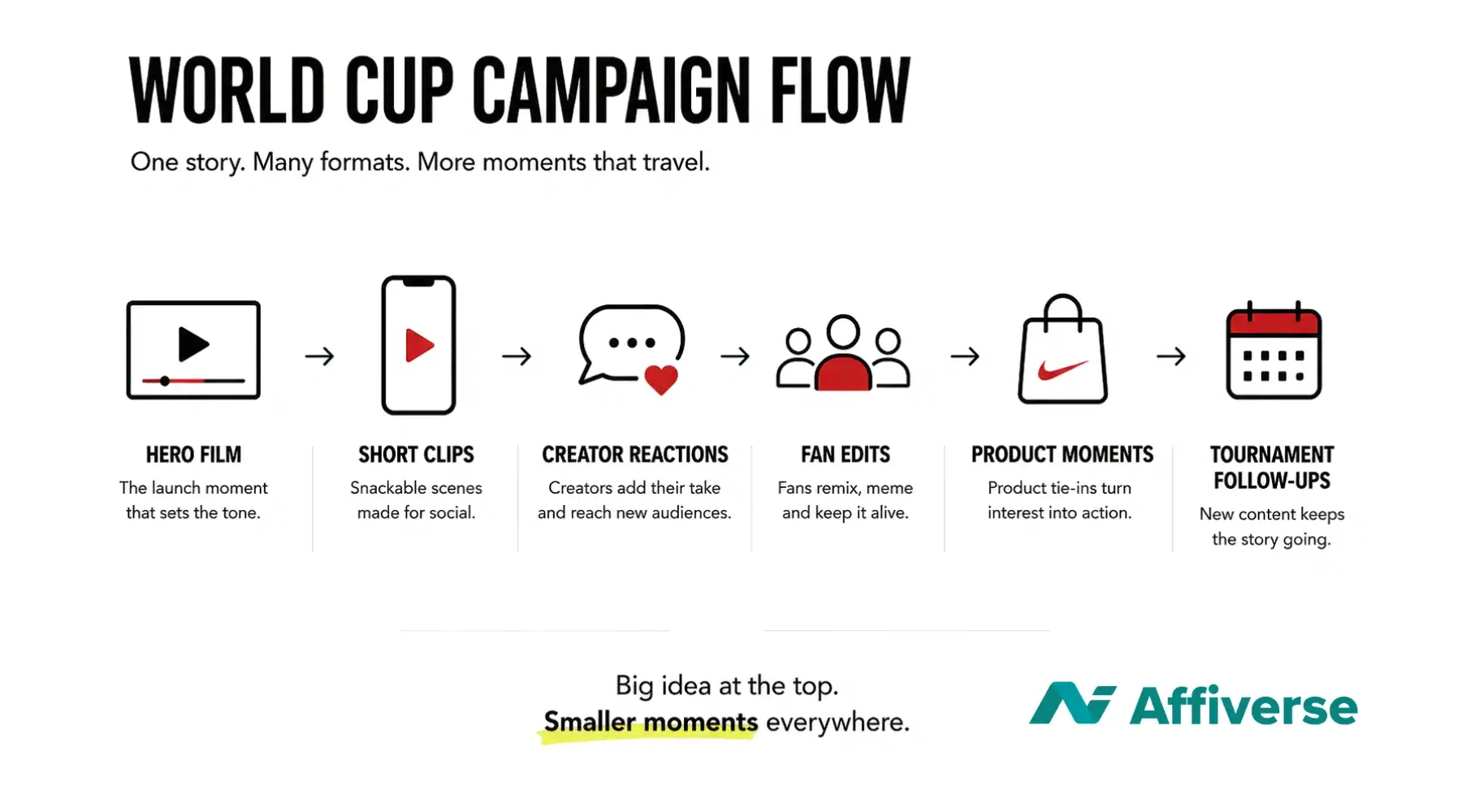
A brand can ask sharper questions before launch:
- What will fans clip?
- Which moments can creators react to?
- Which cast members or ambassadors open new audience pockets?
- What can live beyond the first 24 hours?
- Where does product fit without killing the entertainment value?
Those questions matter more than whether a campaign feels “viral.” Viral can happen by accident. Repeatable attention needs planning.
Nostalgia Works Best When Distribution Has Changed
Nike could have made a safe World Cup ad. A few stars. A dramatic voiceover. Slow-motion shots. Maybe a line about greatness.
Instead, “Rip the Script” chooses noise.
That choice gives the campaign its spark. It feels like a throwback to the time when football ads had jokes, cameos, tricks, and enough swagger to become part of the tournament conversation. But Nike has not simply copied the old format. It has rebuilt it for a market where fans expect to participate, remix, clip, and argue.
That is the real marketing point.
Nostalgia can get attention, but distribution decides how long that attention lasts. A big campaign film gives people something to gather around. The clips, subplots, cameos, and creator reactions decide whether it keeps moving after launch day.
Everflow
Connect
Tradedoubler
Connect
1win Partners
Connect
PIN-UP Partners
Connect
Shopnomix, a Nomix Group Company
Connect
V.Partners
Connect
Share your expertise and expand your reach and become a content contributor with us today!
Contact Us To Find Out More