How to Leverage FAQ Content in the Age of AI Search and Zero-Click Results
Updated for 2026
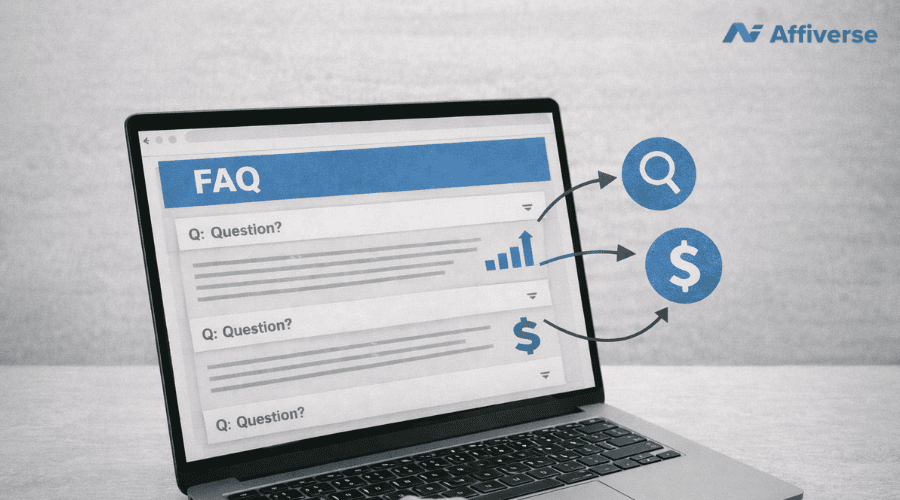
The strategic value of FAQ content has transformed dramatically since traditional SEO dominated digital marketing. In 2021, FAQ pages primarily aimed at capturing “position zero” featured snippets. In 2026, they serve a fundamentally different purpose: becoming the source material that AI systems cite when answering user queries.
Research shows that roughly 60% of searches now end without users clicking through to external websites. Google’s AI Overviews, ChatGPT, Perplexity, and similar platforms synthesise information and present answers directly to users. For affiliate marketers, this creates both a challenge and an opportunity: your FAQ content may never generate a direct click, but it can position you as an authoritative source that AI systems consistently reference.
The New Role of FAQ Content
Traditional FAQ pages were designed to answer customer service questions and occasionally rank for long-tail keywords. The AI era demands a more strategic approach.
When AI systems generate responses to user queries, they draw from content across the web, prioritising sources that demonstrate expertise, provide clear answers, and structure information in ways that algorithms can easily parse. Well-constructed FAQ content ticks all these boxes. It’s inherently structured around questions and answers, the exact format AI systems prefer.
Consider how users now interact with search. Someone asking “how do affiliate programs work?” is increasingly likely to receive an AI-generated answer that synthesises information from multiple sources. If your FAQ content provides a clear, authoritative explanation, your brand becomes part of that answer, even if the user never visits your site directly.
This represents a fundamental shift in measuring content success. The old metrics of page views and time on site become less relevant. The new metrics focus on whether your content is being cited by AI systems, whether your brand appears in AI-generated responses, and whether that visibility drives downstream actions like direct searches for your brand name.
Structuring FAQ Content for AI Discovery
AI systems parse content differently than human readers. Understanding these differences is essential for creating FAQ content that gets cited.
Use clear question-answer formatting. Each question should be immediately followed by its answer, with no ambiguity about which content addresses which query. Avoid burying answers within long paragraphs or requiring readers to piece together responses from multiple sections.
Provide concise, direct answers. Research indicates that featured snippets capture approximately 40% of voice search results, with optimal answers running around 40 words. This doesn’t mean all your answers should be that short, but the core answer should appear in the first sentence or two, with supporting detail following.
Structure for scanability. Use proper heading hierarchy (H2 for major topics, H3 for specific questions), bullet points for lists, and clear paragraph breaks. AI systems rely on these structural elements to understand content organisation.
Implement FAQ schema markup. Schema markup helps search engines and AI systems understand that your content is specifically structured as questions and answers. This increases the likelihood of your content being selected for featured snippets and AI citations. The technical implementation is straightforward: JSON-LD schema in your page header identifies each question-answer pair explicitly.
Moving Beyond Generic Questions
The fundamental mistake many affiliates make is populating FAQ pages with questions about their specific business that nobody outside their existing customers would search for. Questions about your contact details, refund policy, or business hours won’t drive new traffic or AI citations.
Instead, focus on questions that potential customers actually ask during their research and decision-making process. These are the queries that voice assistants and AI systems encounter regularly.
Research actual search queries. Tools like Ahrefs, SEMrush, and Google’s “People Also Ask” sections reveal the specific questions users type and speak. Pay particular attention to conversational, long-tail queries that align with how voice search users naturally phrase questions. Someone typing might search “affiliate marketing commission rates” but speaking would ask “what commission rates should I expect from affiliate programs?”
Address intent at different stages. Some users are just learning about a topic. Others are comparing options. Still others are ready to make decisions. Your FAQ content should include questions relevant to each stage:
- Awareness stage: “What is affiliate marketing?” or “How do affiliates get paid?”
- Consideration stage: “What makes a good affiliate program?” or “How do I choose between networks?”
- Decision stage: “How do I apply to an affiliate program?” or “What should I look for in commission structures?”
Include “versus” and comparison questions. Users frequently ask AI systems to compare options. Questions like “What’s the difference between CPA and revenue share commissions?” or “Which affiliate network is best for beginners?” align with how AI platforms are increasingly used for decision support.
Optimising for Voice and Conversational Search
Over 50% of all queries are now voice-activated, with 8.4 billion voice assistants in use globally. This fundamentally changes how FAQ content should be written.
Voice searches are longer, more conversational, and typically phrased as complete questions. The keyword-focused approach of traditional SEO becomes less relevant when users ask “Hey Google, what do I need to know before joining an affiliate program?” rather than typing “affiliate program requirements.”
Write answers conversationally. Your FAQ content will potentially be read aloud by voice assistants. Answers that sound natural when spoken perform better than those written in stiff, keyword-stuffed language.
Anticipate follow-up questions. Voice interactions often involve conversational threads. After asking about affiliate program basics, a user might follow up with questions about getting started, common mistakes, or earning potential. Structuring your FAQ content to anticipate these natural progressions increases the likelihood of being cited across multiple related queries.
Consider local and contextual queries. Voice searches frequently include phrases like “near me” or reference specific situations. If your affiliate content has any local relevance, ensure your FAQ addresses location-specific questions appropriately.
Maintaining and Updating FAQ Content
Static FAQ pages quickly become outdated, and outdated content loses credibility with both users and AI systems. In the affiliate marketing space, where industry dynamics shift rapidly, regular updates are essential.
Audit quarterly at minimum. Review your FAQ content every three months to identify outdated information, emerging questions you haven’t addressed, and opportunities to improve existing answers based on performance data.
Monitor what AI systems say about your topics. Regularly query ChatGPT, Google’s AI Overview, and other AI platforms with the questions your FAQ addresses. Are their answers aligned with your content? Are they citing other sources that provide better answers? This competitive intelligence informs your content improvement priorities.
Track emerging questions in your space. Industry forums, Reddit discussions, social media conversations, and customer support inquiries all reveal questions that users are actively asking. Adding timely answers to emerging questions positions your content for AI citation before the topic becomes saturated with competing content.
Measuring FAQ Performance in a Zero-Click World
Traditional analytics struggle to capture the value of FAQ content in the AI era. When your content influences a decision without generating a click, how do you measure success?
Monitor branded search trends. If your FAQ content is being cited by AI systems and building brand awareness, you should see increases in direct searches for your brand name. Tools like Google Search Console track these branded queries over time.
Track AI citations where possible. Some tools are emerging to monitor when and how AI systems cite specific content sources. While this measurement capability is still developing, early adoption positions you to understand your content’s AI visibility as these tools mature.
Measure downstream conversions. Even if users don’t click directly from AI responses, effective FAQ content creates awareness that influences later actions. Track whether users who arrive through branded searches or direct navigation convert at different rates than those from non-branded organic traffic.
Monitor featured snippet ownership. While AI Overviews are replacing some featured snippets, these remain valuable for voice search responses. Track which FAQ questions you’re capturing snippets for and which competitors are capturing instead.
Integrating FAQ Strategy with Broader Content
FAQ content shouldn’t exist in isolation. It should connect strategically with your broader content ecosystem.
Link to deeper resources. When a FAQ answer provides a brief response to a complex topic, link to more comprehensive content for users who want to learn more. This creates pathways from initial discovery to deeper engagement.
Use FAQ content to identify content gaps. Questions that require lengthy answers or that you struggle to address concisely might warrant dedicated articles, guides, or tutorials. Your FAQ page becomes a planning tool for broader content development.
Cross-reference across your site. When FAQ content addresses topics covered elsewhere on your site, link to those resources. This strengthens your internal linking structure and helps both users and AI systems understand the depth of your expertise on specific topics.
The Affiliate Advantage
For affiliate marketers specifically, FAQ content offers particular strategic value in the AI era. AI is reshaping how influence and attribution work in ways that favour authoritative content sources.
When AI systems recommend products or explain how to evaluate options, they draw from content that demonstrates genuine expertise. Affiliate sites that invest in educational FAQ content become trusted sources that AI systems cite, even when those citations don’t generate trackable clicks.
This creates a new form of “top of funnel” value. A user who learns about a product category through AI-generated content that cites your expertise may later search for your brand directly, visit your site, and click through your affiliate links. The initial FAQ content created the awareness; the conversion happened through a different pathway.
Building alternative traffic channels becomes essential as zero-click searches increase. FAQ content that builds brand authority and recognition supports those channels by making your brand memorable when users encounter it through email, social media, or direct navigation.
Getting Started
If you haven’t prioritised FAQ content or haven’t updated it for the AI era, start with these steps:
- Audit existing FAQ content. Identify what’s outdated, what questions are missing, and how current content could be restructured for better AI parsing.
- Research the questions users actually ask. Use search tools, AI platforms, and community discussions to identify high-value questions in your niche.
- Implement proper schema markup. Ensure search engines and AI systems can identify your FAQ content as structured question-answer pairs.
- Write for both AI and humans. Provide clear, direct answers that AI systems can easily extract while maintaining engaging, helpful content for users who do visit your site.
- Establish an update cadence. Schedule regular reviews to keep content current and expand it based on emerging questions and performance data.
The affiliates thriving in the AI era aren’t the ones mourning the loss of traditional organic traffic. They’re the ones adapting their content strategies to become authoritative sources that AI systems trust and cite. FAQ content, properly structured and maintained, is one of the most effective tools for achieving that position.
Ready to develop a comprehensive content strategy for the AI era? Explore Affiverse’s training programs for hands-on guidance, or read our complete guide to affiliate marketing to strengthen your foundational knowledge.
Everflow
Connect
Tradedoubler
Connect
1win Partners
Connect
Shopnomix, a Nomix Group Company
Connect
Huffson Group
Connect
Kawaii Partners
Connect
Trackdesk
Connect
Share your expertise and expand your reach and become a content contributor with us today!
Contact Us To Find Out More