Google to Penalize Back Button Hijacking From June 2026
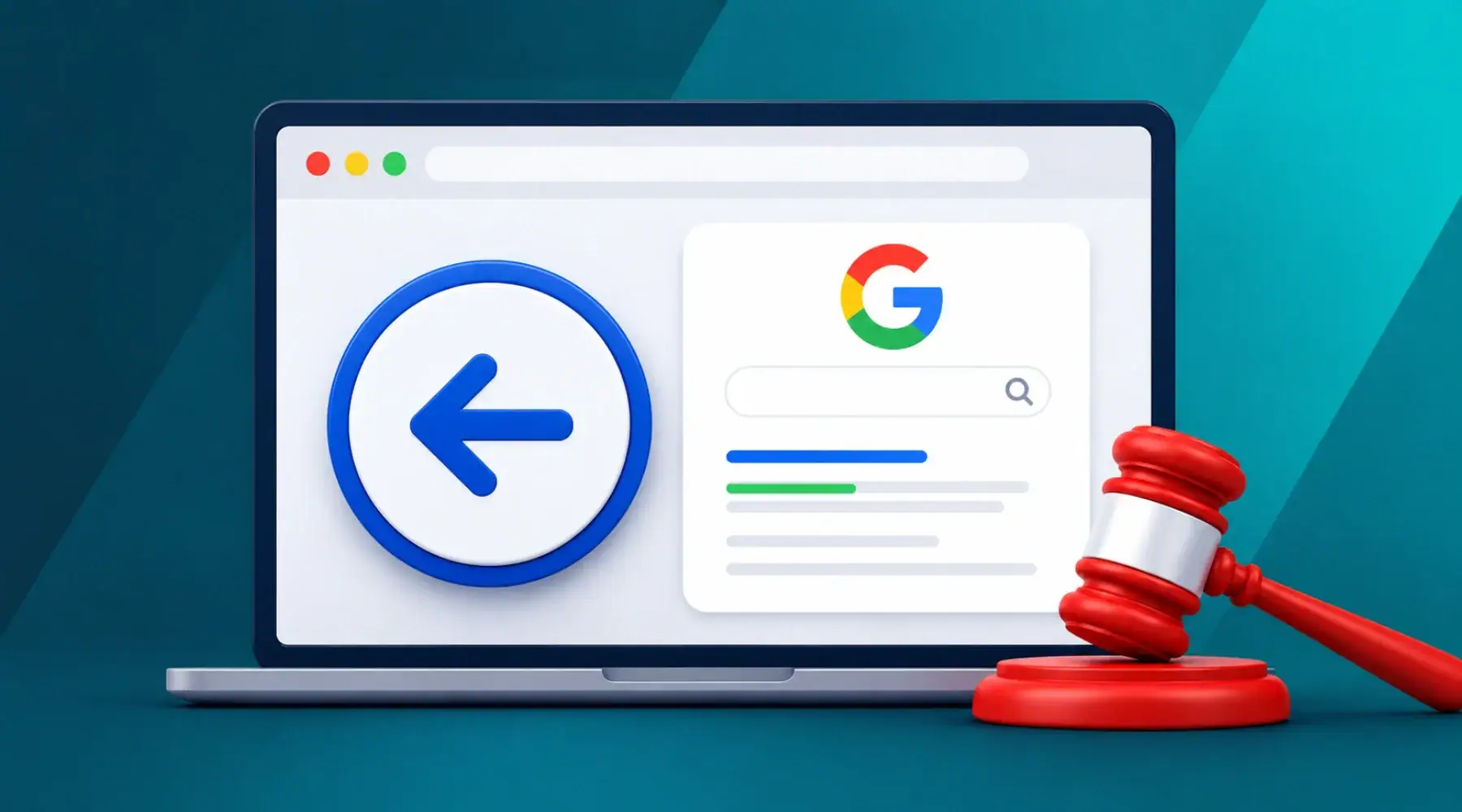
Google will start penalizing websites that manipulate the browser back button from June 15, 2026, after adding “back button hijacking” to its spam policies. The practice blocks or disrupts a user’s expected path back to the page they came from. In plain terms: someone lands on a site, clicks the browser back button, and instead of returning to the previous page, they get pushed to another page, shown extra ads, or trapped in a loop.
Google has now classed the tactic as an explicit violation of its malicious practices policy. Sites that continue using it may face manual spam actions or automated demotions, which can affect their performance in Google Search results.
Key Takeaways: Google Targets a Dark UX Pattern
- Enforcement starts on June 15, 2026.
- Google now treats back button hijacking as a malicious spam policy violation.
- Affected pages may receive manual spam actions or automated demotions.
- Site owners should check third-party scripts, ad platforms, tag setups, and redirect tools before the deadline.
What Is Back Button Hijacking?
Back button hijacking happens when a website interferes with normal browser navigation. A user expects the back button to do one thing: take them back. In its Search Central update, Google says the tactic breaks that expectation by preventing users from immediately returning to the page they came from. In some cases, users may land on pages they never visited, see unsolicited recommendations or ads, or find themselves unable to browse normally.
For users, it feels manipulative. For publishers, it now creates a search risk. Google said it has seen a rise in this behavior and has moved to make the violation explicit. The company also said inserting deceptive or manipulative pages into browser history has already gone against Google Search Essentials.
Why Affiliates and Publishers Should Pay Attention
Affiliate websites often run complex tech stacks. Comparison tables, tracking links, pop-ups, exit tools, programmatic ads, content recommendation widgets, analytics tags, and third-party scripts can all sit on the same page. That matters here. Google warned that back button hijacking may come from included libraries or advertising platforms, rather than from code written directly by the publisher. Site owners still carry the responsibility to review their technical setup and remove or disable anything causing the issue.
For affiliate teams, this adds another technical risk to monitor after a year of heavy search volatility. Affiverse has already covered how Google’s March 2026 core update hit affiliate sites harder than any other monitored content category, and this new policy points in the same direction: site quality, user experience, and technical control now need closer attention. Offer pages, bridge pages, advertorials, coupon pages, and lead-gen funnels should all come under review, especially where outside monetization scripts control user movement. A page may look clean in the CMS and still behave badly in the browser.
What Site Owners Should Review Before June 15
Google has given site owners until June 15, 2026, to fix back button hijacking issues before enforcement begins.
A good first step is a manual browser test. Open important pages from Google Search, follow the usual user journey, then press the back button on desktop and mobile. If the browser sends users somewhere unexpected, traps them, or shows a page they didn’t choose, investigate.
Site owners should review:
- JavaScript that manipulates browser history
- Google Tag Manager and other tag containers
- Ad network scripts
- Exit-intent tools
- Redirect chains
- Affiliate tracking layers
- Bridge pages and offer pages
- Third-party widgets and content recommendation tools
For teams already reviewing scripts and tracking setups, Affiverse’s coverage of Google’s JavaScript update for affiliate marketers gives useful context on why browser-level behavior matters for affiliate SEO. Google specifically advises site owners to remove or disable any script or technique that inserts or replaces deceptive pages in a user’s browser history.
Affiverse Take on Google Back Button Penalty
This update belongs on the SEO checklist, but it shouldn’t stay there. Back button hijacking affects user trust, site monetization, and partner quality control at the same time.
For affiliate marketers, the safest move now is simple: test the page like a user, then audit the scripts like a publisher. That same user-first approach also applies to Google’s AI search guidelines for affiliates, where site quality, clarity, and usefulness carry more weight than quick traffic tricks. If a retention tactic stops people from leaving normally, Google has now put a date on the risk.
Everflow
Connect
Tradedoubler
Connect
1win Partners
Connect
Shopnomix, a Nomix Group Company
Connect
Huffson Group
Connect
Kawaii Partners
Connect
Trackdesk
Connect
Share your expertise and expand your reach and become a content contributor with us today!
Contact Us To Find Out More