TikTok Launches Affiliate Program in the Travel and Leisure Markets
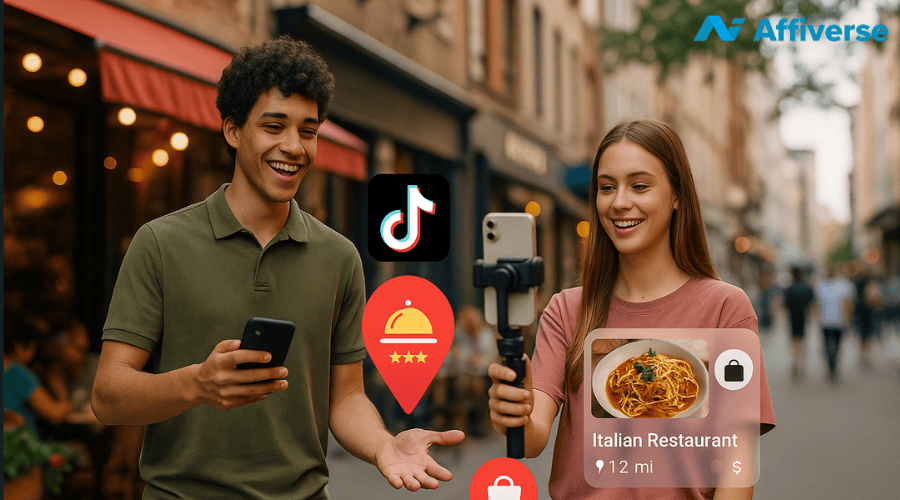
TikTok Go Signals Major Shift as Platform Targets Google’s Local Search Revenue with Creator-Driven Affiliate Model
Platform’s invite-only program enables creators to earn commissions on hotel bookings, restaurant visits, and local experiences across three markets, with ambitious expansion plans threatening traditional search advertising models
TikTok has launched TikTok Go, an invite-only affiliate program that allows creators to monetise local business recommendations through commission-based rewards, signaling the platform’s aggressive push into territory traditionally dominated by Google and other search engines. The program, currently live in the United States, Indonesia, and Japan, represents a strategic evolution in how social platforms approach local commerce and affiliate marketing. This is in addition to its original venture into launching affiliate programs for shopping and its recent launch of the Local Reviews feature.
The timing of TikTok Go’s launch is particularly significant as the convergence of social commerce and affiliate marketing reaches a pivotal moment, with platforms increasingly seeking to capture advertising dollars that have traditionally flowed to search engines and review sites.
Beyond Hotel Bookings: A Local Commerce Ecosystem
While US creators currently have access only to hotel bookings, the broader program structure reveals TikTok’s ambitious scope. Creators can select preferred cities and interests across five categories: Hotel, Travel, Food & Drinks, Leisure, and Beauty. The platform displays specific earnings opportunities for each category, with creators earning commissions when their content drives bookings or purchases.
“You literally earn commission by posting content from hotels you stay at,” explains creator @Amaya in a viral TikTok demonstrating the new feature. “Whether you’re travelling for work, a staycation, or just posting where you’re at, if you add the right tag, you’ll get paid.“
The program’s structure mirrors successful affiliate networks but with a crucial difference: it leverages TikTok’s massive user engagement and discovery algorithms to amplify creator content, potentially delivering higher conversion rates than traditional affiliate methods.
Strategic Timing: Capturing the Social Search Revolution
TikTok Go’s launch comes as consumer behavior shifts dramatically toward social platforms for local discovery. Recent industry data shows that TikTok is increasingly replacing Google as the preferred search platform for younger demographics, with users turning to the app for restaurant recommendations, travel inspiration, and local experiences.
This behavioural change represents a massive revenue opportunity. Google’s local search advertising generates tens of billions annually, with businesses paying premium rates for visibility when users search for “restaurants near me” or “best hotels in [city].” TikTok Go positions the platform to capture this spending through a creator-driven model that offers authentic, engaging recommendations rather than traditional search ads.
“Beyond a greater shift in the industry toward performance-based creator partnerships, this reflects a growing desire by platforms for more hyper-local content,” notes industry analyst Rebecca Chen. “It’s a way to capitalise on the growth of people turning to social media for discovery, while also allowing platforms to potentially capture ad dollars that traditionally go to search engines and review sites.”
Industry Implications: The Local Affiliate Arms Race
TikTok Go’s launch intensifies competition in the local affiliate space, where platforms are racing to build sustainable creator monetisation models. The program’s invite-only structure creates exclusivity while the platform fine-tunes its approach, but industry insiders expect rapid expansion as TikTok validates the model’s effectiveness.
For affiliate marketers, TikTok Go represents both opportunity and challenge. Traditional affiliate marketing strategies are already adapting to TikTok’s influence, with the platform’s short-form video format requiring new content approaches and engagement strategies.
“The program creates a win-win ecosystem: creators, especially smaller ones, get a new revenue stream through their recommendations for services, similar to physical and digital products,” explains digital marketing strategist Maria Santos. “Businesses get to tap into TikTok’s massive user base through social proof from creators and everyday users.”
The model’s appeal extends beyond major influencers. By requiring only 1,000 followers for eligibility, TikTok Go democratises local affiliate marketing, potentially creating thousands of micro-influencers who can effectively monetise their local knowledge and audience connections.
Technology Integration: Seamless Commerce Experience
TikTok Go’s technical implementation reveals sophisticated integration with booking platforms and payment systems. The program includes direct booking capabilities within the app, reducing friction in the customer journey and increasing conversion likelihood. Posts automatically include location information and commission disclosures for transparency, addressing growing regulatory scrutiny around influencer marketing disclosure.
The platform provides creators with a dedicated Discord community and support resources, indicating TikTok’s commitment to creator success rather than simply extracting value from their content. This approach contrasts with traditional affiliate networks that often provide minimal creator support.
Advanced analytics tracking allows both creators and businesses to monitor performance metrics, providing insights that can optimize future campaigns. This data-driven approach mirrors successful elements from TikTok’s broader expansion of affiliate marketing features.
Market Response: Creator Enthusiasm and Business Interest
Early creator response to TikTok Go has been overwhelmingly positive, with travel and lifestyle influencers particularly excited about new monetisation opportunities. Amanda Dishman, who runs the family travel blog Salty Vagabonds, expressed enthusiasm about the program’s accessibility: “The barrier to earning commissions has been significantly reduced, making it more accessible to a broader range of creators.”
Businesses in eligible markets are also showing strong interest. Local hotels report that TikTok-driven bookings often come from younger demographics with higher lifetime value and stronger social media engagement, making creator partnerships particularly attractive even at higher commission rates.
The program’s performance metrics, while not yet publicly disclosed by TikTok, are reportedly encouraging internal expansion plans. Sources familiar with the rollout suggest that restaurant and experience categories could launch in the US within the next quarter, with additional international markets following.
Competitive Pressure: Google’s Response and Market Evolution
TikTok Go directly challenges Google’s dominance in local search advertising, potentially disrupting a market worth hundreds of billions globally. Google’s recent investments in AI-powered search features and enhanced local business tools suggest the search giant recognizes the competitive threat.
The battle extends beyond immediate revenue to long-term user behavior. If TikTok successfully trains users to discover local businesses through creator content rather than search queries, it could fundamentally alter how businesses approach digital marketing and customer acquisition.
“We’re seeing very strong interest and eagerness from the community as answer engines begin to play a bigger role on lower funnel commercial and transactional searches,” notes Rodrigo Stockebrand, global head of SEO at gaming group Entain, referring to the broader shift toward AI-powered discovery platforms.
Regulatory Considerations: Transparency and Creator Protection
TikTok Go’s launch occurs amid increasing regulatory scrutiny of creator monetization and affiliate marketing disclosure. The program’s automatic inclusion of commission disclosures addresses some concerns, but questions remain about creator protection and fair payment practices.
Industry observers note that TikTok’s approach appears more creator-friendly than some traditional affiliate programs, with transparent commission rates and streamlined payment processes. However, the platform’s control over creator reach through algorithmic amplification raises questions about sustainable income predictability for participants.
The program’s expansion will likely face varying regulatory requirements across international markets, potentially slowing rollout plans or requiring market-specific modifications to maintain compliance with local advertising and consumer protection laws.
Future Outlook: Platform Consolidation and Creator Economy Evolution
TikTok Go represents a broader trend toward platform consolidation, where social media companies seek to capture entire customer journeys from discovery to purchase within their ecosystems. This approach reduces reliance on external traffic and advertising while increasing per-user revenue potential.
For the creator economy, TikTok Go signals evolution toward more diverse, platform-integrated monetization options beyond traditional brand partnerships and merchandise sales. Successful creators may soon manage portfolio businesses across multiple affiliate categories, effectively becoming local commerce entrepreneurs.
The program’s success could accelerate similar initiatives from competing platforms, potentially creating a new category of location-based affiliate marketing that combines social proof, entertainment value, and purchase facilitation in ways traditional affiliate models cannot match.
As TikTok continues expanding TikTok Go’s capabilities and geographic reach, the program may prove to be a defining moment in the evolution of both social commerce and affiliate marketing, demonstrating how platforms can create value for creators while building sustainable competitive advantages in local commerce.
Industry Impact Assessment: TikTok Go’s launch represents more than a new creator monetization tool—it signals a fundamental shift in how local businesses will reach customers and how social platforms will compete for advertising dollars. The program’s success or failure will likely influence strategic decisions across the social media industry and reshape affiliate marketing approaches for local commerce.
For affiliates and creators interested in location-based marketing opportunities, monitoring TikTok Go’s expansion timeline and performance metrics will be crucial for early adoption strategies as the program scales beyond its current test markets.
Everflow
Connect
Tradedoubler
Connect
1win Partners
Connect
PIN-UP Partners
Connect
Shopnomix, a Nomix Group Company
Connect
V.Partners
Connect
Huffson Group
Connect
Kawaii Partners
Connect
Share your expertise and expand your reach and become a content contributor with us today!
Contact Us To Find Out More