Instagram Now Lets Creators Add Affiliate Links to Reels
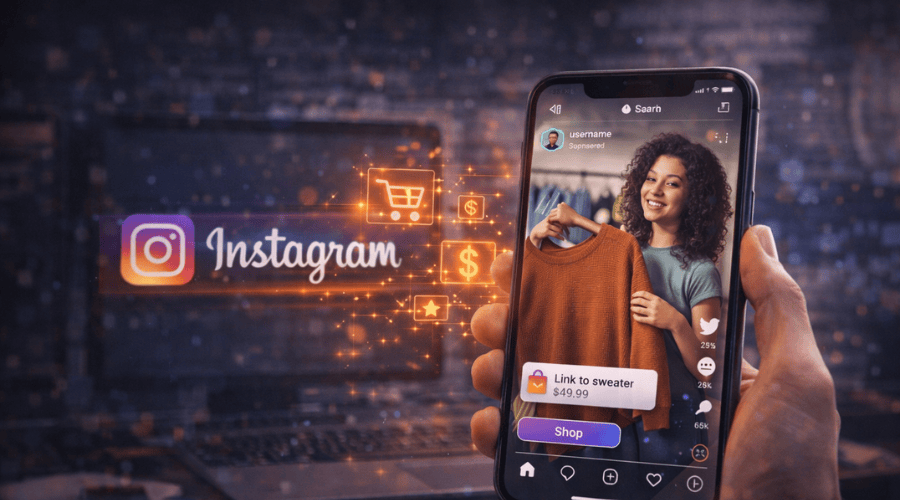
Instagram has introduced native affiliate linking for Reels, allowing creators to tag products directly in their videos and earn commissions when viewers complete purchases. The feature was announced by Instagram chief Adam Mosseri on his own profile, where he confirmed: “You can now use affiliate links to tag products in your reels and earn a commission when people shop your content. Rolling out over the coming weeks.”
The rollout is live in India, the United States, Brazil, Indonesia, and Thailand, with further markets to follow.
What the feature actually does
Creators publishing a Reel can tap the “Add Products” option in the share sheet, paste a product URL or search a brand’s verified catalogue, and tag up to 30 items in a single video. Once published, viewers tap a tagged item, land on the brand’s app or mobile site, and complete the purchase there. Eligible creators earn a commission on any resulting sale. Products also receive additional distribution through the Partnership Ads Hub.
That 30-product cap is generous. For creators covering round-up content, outfit posts, or multi-item tutorials, being able to tag an entire selection in one Reel removes the workaround dance that previously sent audiences to a link in bio, then a landing page, then a retailer. The friction was where conversions died.
Why Meta is moving on this now
Instagram launched its Shop tab in 2020 as its first serious bet on in-app commerce. By 2023, the tab had been removed from the platform’s primary navigation, an admission that the model had not scaled the way the company had hoped.
The affiliate bridge model has always been a different proposition. Rather than asking a creator to own and manage a storefront, it connects their content to an existing retailer’s checkout. The creator drives the discovery; the retailer closes the transaction. As we have written about in our coverage of TikTok’s social shopping boom, this model thrives because it removes the expectation that a content platform needs to become a logistics operation.
TikTok Shop’s success made the commercial argument impossible to ignore. The platform recorded $100 million in single-day US sales on Black Friday 2024. That number is what Meta is chasing with this feature, and the mechanics are deliberately similar: tag a product, viewer taps, buyer purchases without leaving the ecosystem.
Meta’s timing also follows its recent launch of Facebook Affiliate Partnerships, which introduced native product tagging across Facebook posts and Reels. The Instagram rollout is an extension of that same commercial infrastructure. The two implementations work differently, though. Facebook’s current model operates as a closed partner system; Instagram’s is more open, accepting affiliate links and supporting up to 30 tagged products per video. Affiliate program managers briefing creators should not treat these as a single Meta update.
What program managers need to check first
Before any of this works for your brand, your products need to be registered in a Meta commerce catalogue. If that registration has not been done, creators cannot tag your products in their Reels regardless of their affiliate status. This is a technical prerequisite, not a strategic one, and it should be resolved before any creator outreach begins.
Once the catalogue is in order, the practical opportunity is to identify creators who already drive affiliate revenue for your brand on other channels and brief them directly on this feature. Many will have Instagram audiences they are not currently monetising through your program. A direct briefing costs less than recruiting new partners from scratch.
The Partnership Ads Hub integration is worth paying attention to. Tagged products gain additional visibility through Instagram’s paid placement tools, which means affiliate content can be amplified beyond the creator’s own audience. That changes the attribution picture slightly: organic commission activity and paid amplification can now operate from the same piece of creator content.
The broader context for affiliates
Instagram’s ad-reachable audience skews toward the 18-34 age bracket, which accounts for 61.1% of the platform’s total reach according to figures we analysed in our piece on Instagram’s $42.5 billion ad machine. That demographic is, broadly speaking, the same audience that made TikTok Shop’s numbers what they are. Affiliate content that converts on TikTok is a reasonable starting point for testing on Instagram Reels.
Video has always been the format Instagram’s algorithm rewards most heavily, as we have tracked in our guide on leveraging Instagram Reels for affiliate managers. Creators who are already producing Reels for reach now have a direct monetisation mechanism built into the same workflow. That removes the gap between content production and revenue generation that has historically made Instagram a supporting channel for affiliates rather than a primary one.
The Trial Reels feature, which we covered in depth earlier this year, adds a useful testing layer. Creators can gauge conversion performance with non-followers before committing affiliate content to their existing audience, reducing the risk of misfires against an already-warm subscriber base.
Planned integrations
Instagram has confirmed that future updates will include integrations with Amazon and Shopee. The Amazon integration will be significant for creators already in the Amazon Influencer Programme, as it would allow them to tag Amazon products natively in their Reels rather than routing audiences off-platform. Shopee’s inclusion targets the Southeast Asian markets where both platforms already have established commerce traction. Neither integration has a confirmed date yet.
The rollout continues over the coming weeks. Affiliate program managers in the five launch markets should begin catalogue verification and creator briefings now rather than waiting for the feature to reach full availability.
For further context on how social commerce is reshaping affiliate strategy, see our guide on the best social media platforms for affiliate marketing and our earlier overview of Instagram Shopping for affiliate marketers.
Everflow
Connect
Tradedoubler
Connect
1win Partners
Connect
PIN-UP Partners
Connect
Shopnomix, a Nomix Group Company
Connect
V.Partners
Connect
Huffson Group
Connect
Kawaii Partners
Connect
Share your expertise and expand your reach and become a content contributor with us today!
Contact Us To Find Out More