APMA Launches Code of Conduct for Affiliate Subnetworks
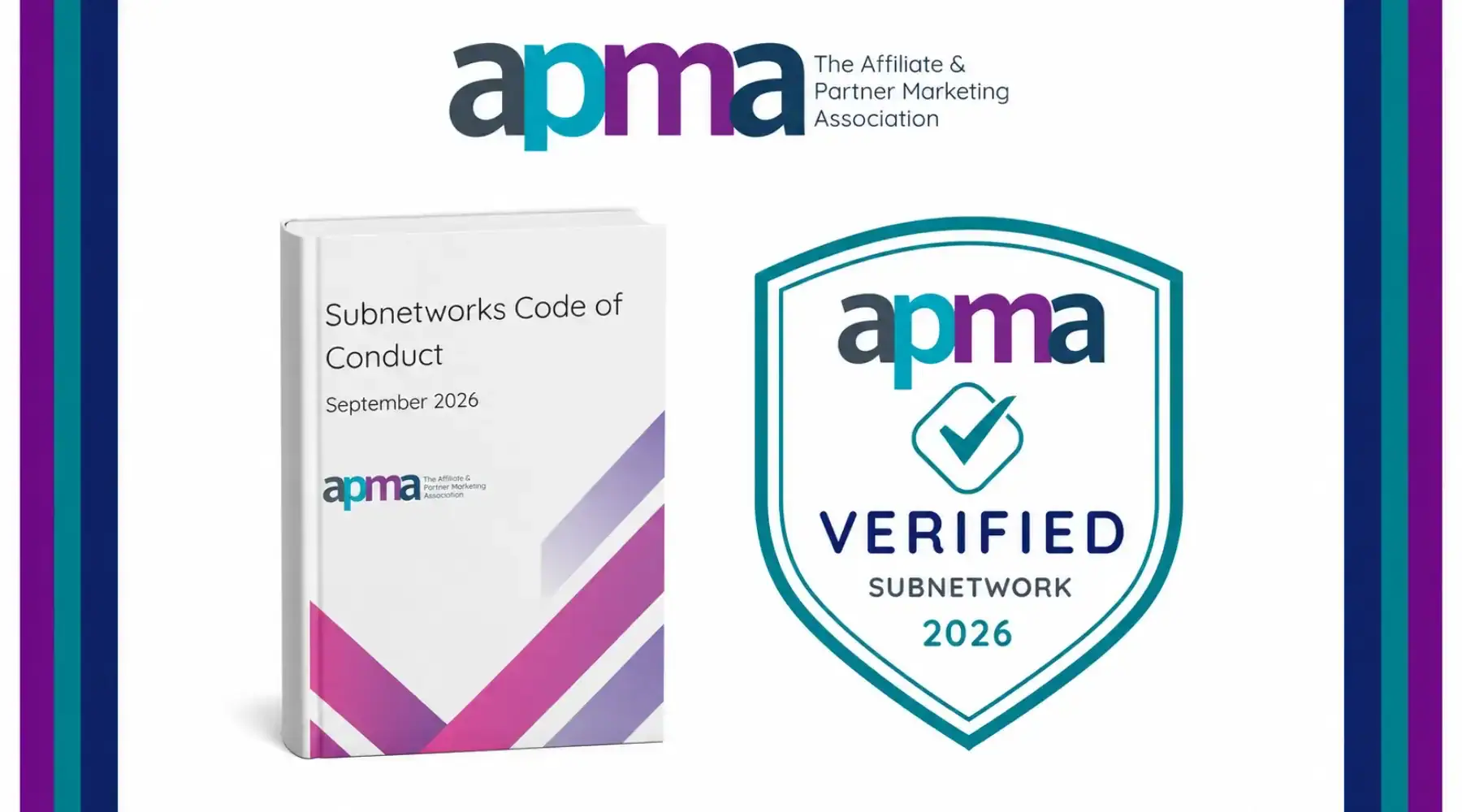
The Affiliate & Partner Marketing Association (APMA) opened applications on November 11 for a voluntary scheme for affiliate subnetworks. The scheme’s launch announcement introduces a code of conduct developed with the UK affiliate marketing industry. It sets standards for identifying the publishers behind clicks and sales, explaining how they promote offers, and enforcing advertiser restrictions.
An affiliate subnetwork brings multiple publishers under one account. That gives an advertiser access to more publishers through a single relationship, but the account alone may reveal little about who sent the traffic. The code sets out what participating subnetworks should be able to show when an advertiser, agency, or network asks for more detail.
Key Takeaways From APMA’s Subnetwork Code of Conduct
- Traffic transparency was the most cited concern. In APMA’s 2025 survey, 67% of brands and 76% of agencies flagged transparency in subnetwork traffic.
- Each click or sale must be traceable. Signatories must be able to identify the publisher, show where the traffic came from and how the offer was promoted, and provide daily reporting by publisher on request.
- Advertisers can act on individual publishers. Brands, agencies, and networks must be able to approve, restrict, or remove a publisher. The code bars removed publishers from rejoining the same program through a subnetwork.
- Signatory status costs £200 plus VAT per year. Applicants submit a signed self-assessment. Accepted signatories renew their declaration annually and may face APMA spot checks.
What the Code Requires From Subnetworks
The published code says a subnetwork must be able to name the publisher behind a referral and show where and how it promoted the offer. An advertiser could ask for the website, app, or other placement that generated a sale, along with a publisher ID it can match to that source. Where the advertiser requires prior approval, the subnetwork must have a way to flag new publishers before they start promoting the program.
The code also covers what counts as an intentional click. Hovering over an offer falls short of the standard, and the code bars hidden redirects and background clicks. Subnetworks must disclose when publishers use tools that can affect tracking, such as browser extensions, automatic coupon tools, or link rewriting. On request, they must explain when the tool changes tracking and whether it can override a previous referral. The US Performance Marketing Association has also proposed an affiliate toolbar standard.
A publisher removed from a program cannot use a subnetwork to regain access. The code requires subnetworks to apply restrictions at the publisher level and act promptly when a brand, agency, or network asks them to remove a publisher already dropped from the program.
How APMA Signatory Status Works
Applicants name a compliance contact, complete a self-verification checklist, and sign a declaration. Accepted businesses pay the annual fee before appearing on APMA’s public list and renew their declaration each year. APMA’s announcement describes the scheme as accreditation. Its scheme terms define signatory status as a commitment based on the signed self-assessment and allow APMA to conduct spot checks, review complaints, and suspend signatories in cases of serious risk.
What Advertisers Can Ask Subnetworks to Show
If a subnetwork’s sales spike, a program manager can ask which publisher drove the orders, which placement generated the traffic, and how the tracking recorded it. The code calls for daily reporting by publisher and enough transaction-level detail to explain material changes. Lo/Digital reported removing fraudulent subnetwork publishers from a retailer’s program in a case featured in APMA’s affiliate marketing case study library.
The same questions apply when onboarding a partner. A sample report and a walkthrough of how the subnetwork blocks an individual publisher can show how the code’s commitments work alongside the advertiser’s own program terms.
Everflow
Connect
Tradedoubler
Connect
1win Partners
Connect
Shopnomix, a Nomix Group Company
Connect
Huffson Group
Connect
Kawaii Partners
Connect
Trackdesk
Connect
Share your expertise and expand your reach and become a content contributor with us today!
Contact Us To Find Out More