Amazon’s India Influencer Program Doubles to 200,000 Creators
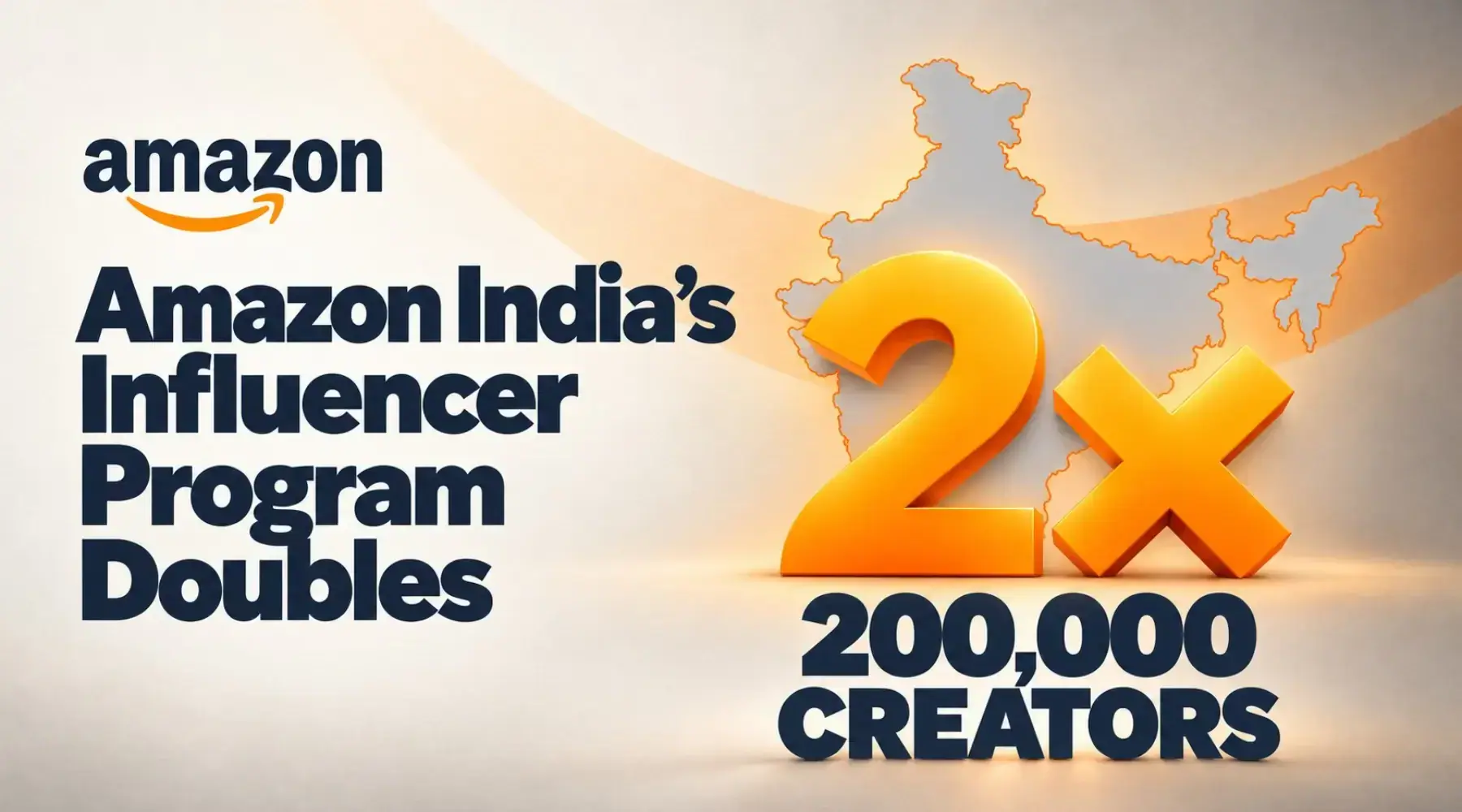
Amazon says its Influencer Program in India has reached 200,000 creators, doubling year over year. Its latest update also details how eligible creators can earn through YouTube and Pinterest product tags. The milestone gives affiliate teams a new measure of participation in India’s creator commerce market, while leaving open questions about how activity translates into sales and income.
Key Takeaways: Amazon’s Creator Expansion in India
- Amazon reports that its India Influencer Program has reached 200,000 creators, doubling year over year.
- About 75% of creators and nearly 70% of shoppers buying through Amazon’s creator programs come from non-metro India.
- Amazon says creators have helped nearly 40 million customers shop on Amazon.in this year.
- Eligible creators can earn commissions on qualifying purchases through YouTube and Pinterest product tags, building on earlier platform announcements.
- These are company-reported figures; participation and shopper reach do not establish typical creator earnings.
Amazon Reports Growth Beyond Major Cities
In its official India update, Amazon says about 75% of its creators come from non-metro India. It also reports that nearly 70% of shoppers buying through its creator programs are from non-metro cities.
These are company-reported figures. The shopper figure covers Amazon’s creator programs more broadly than the Influencer Program alone.
For partnership managers, the geographic mix suggests a reason to assess regional audience knowledge and product relevance when selecting creators. Follower totals alone offer little information about whether a recommendation suits the people watching.
YouTube and Pinterest Provide Different Shopping Routes
The update brings together integrations that have already featured in platform announcements. It should not be read as the first announcement of every feature described.
YouTube Adds Product Tags to Creator Content
YouTube’s India announcement identifies Amazon as part of its expanding retail partnerships. Amazon’s update says eligible creators can tag its products in Shorts, longer videos, and livestreams, with purchases completed on Amazon.in.
YouTube’s product-tagging guidance explains that shopping buttons or stickers let viewers inspect tagged products. Creators need to meet the applicable program requirements; an existing audience does not automatically make every account eligible.
The format creates room for demonstrations, comparisons, and answers to practical product questions. A useful review still needs to identify the exact item shown and explain who it suits.
Pinterest Connects Pins With Amazon Storefronts
Pinterest announced Amazon Storefront linking in early June. Eligible creators can connect their Storefront once, have affiliate information applied automatically when tagging eligible Amazon products, and display their Storefront handle on their profile.
That connects individual recommendations with a wider collection of products. A creator building a room-planning board, for example, could help users explore related items without manually adding affiliate details to each eligible tag.
Participation and Commercial Performance Need Separate Measures
The program’s growth is a recruitment milestone. It does not tell a brand how many participants publish regularly, generate qualifying orders, or remain active after an initial campaign.
Affiliate managers assessing the opportunity should build a view of those stages. A creator who joins but never publishes requires different support from one who produces useful content that reaches an unsuitable audience.
Commercial reporting should then connect activity with approved earnings and the costs required to produce it. Samples, production fees, and campaign support can affect the economics of a partnership.
It would also be premature to infer a typical creator’s income from the size of the program. Averages can conceal a wide spread of outcomes, particularly when a smaller group produces a large share of sales.
A useful test would follow a defined creator cohort over time, recording participation, publishing, orders, and repeat earnings. That would show whether growth is producing a broader base of productive partners.
India’s Creator Partnerships Give Brands More to Evaluate
The announcement follows other retailer activity, including Myntra’s Instagram affiliate product tags in India.
For brands, these developments create more choices about where recommendations appear and how shoppers reach a retailer. Choosing between them requires attention to audience, content format, eligible products, and the commercial terms available in each account.
Teams planning a pilot can begin with a small set of relevant products and creators, then evaluate whether shoppers receive useful advice and whether qualifying sales support continued investment. Amazon’s milestone establishes scale; campaign-level evidence will determine where the opportunity works.
Everflow
Connect
Tradedoubler
Connect
1win Partners
Connect
Shopnomix, a Nomix Group Company
Connect
Huffson Group
Connect
Kawaii Partners
Connect
Trackdesk
Connect
Share your expertise and expand your reach and become a content contributor with us today!
Contact Us To Find Out More