Admitad Reports Over 80% Growth in International Affiliate Orders During Double 11
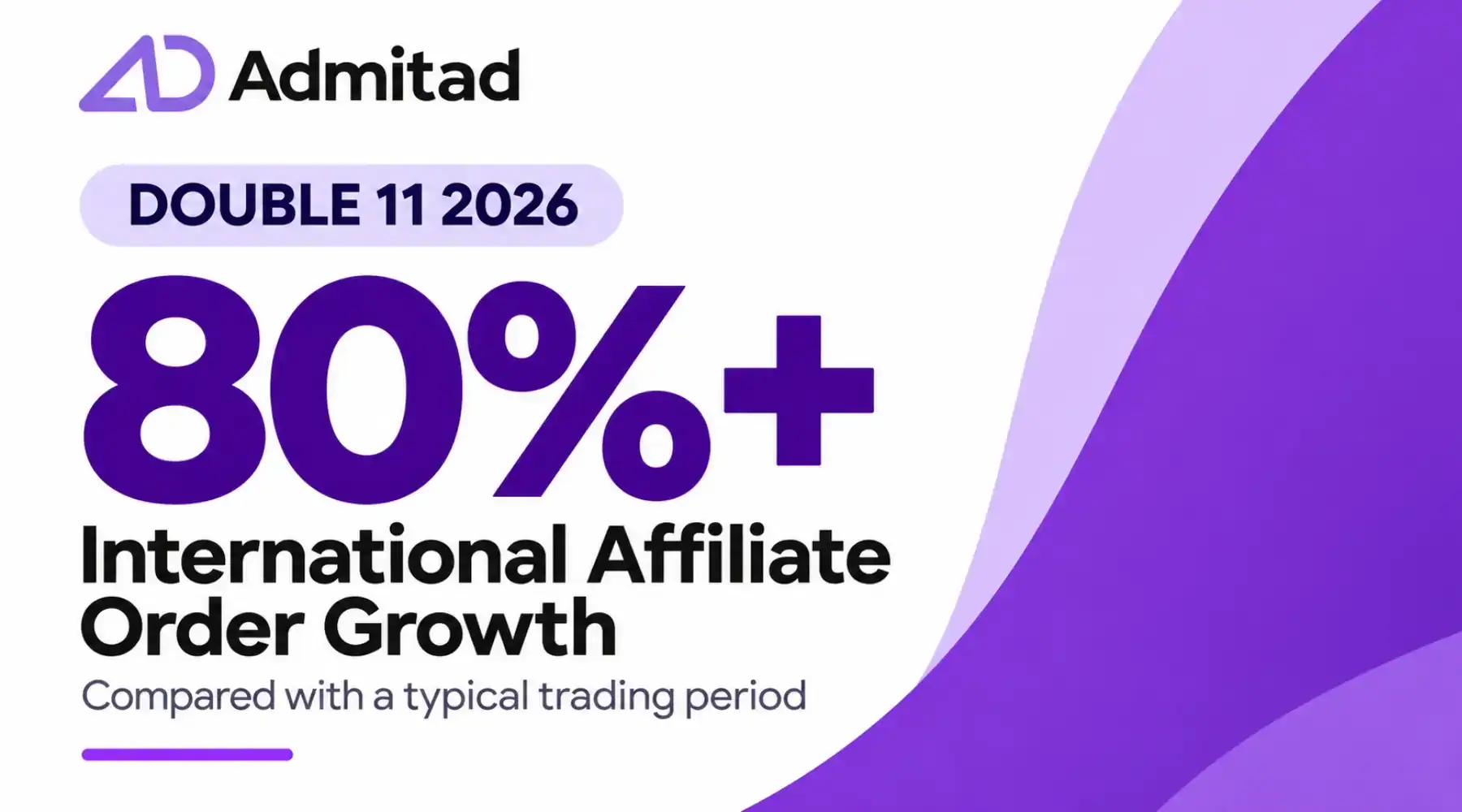
International affiliate orders for Chinese brands increased by more than 80% during the 2026 Double 11 shopping week compared to a typical trading period, according to data released by affiliate network Admitad on November 25. Order volumes rose by more than 125% on the event’s peak day, while gross merchandise value (GMV) increased by over 70% during the promotional week.
The findings, based on an analysis of more than three million orders, offer insights into regional shopping behavior, product demand, and the affiliate traffic channels generating international sales for Chinese retailers. Published ahead of Black Friday and Cyber Monday, the results provide affiliate managers with another benchmark for evaluating performance during major seasonal shopping events.
Key Takeaways From Admitad’s Double 11 Performance Data
- International orders for Chinese brands increased by more than 80% during the Double 11 shopping week compared to a typical period.
- The Commonwealth of Independent States and Latin America recorded the strongest increases in order volumes.
- Home and garden, fashion, and electronics accounted for 60.4% of total orders.
- Contextual and targeted advertising, price comparison websites, and coupon platforms were the leading affiliate traffic channels.
- The number of Chinese brands using affiliate marketing to reach international customers increased by 17%.
Cross-Border Affiliate Orders Surge During Double 11
Admitad’s official announcement covers transactions generated by publishers promoting Chinese brands and marketplace sellers through its network. The company’s advertiser portfolio includes AliExpress, Alibaba, DHgate, Vevor, SHEIN, and Temu. Across the analyzed transactions, the average order value reached $33.
Commenting on the performance of this year’s shopping event, Admitad said:
These results have once again surpassed the records set last year.
However, the reported increase of more than 80% represents growth against a typical trading period rather than a year-over-year comparison.
This distinction matters for affiliate managers assessing campaign performance. Seasonal promotions can generate considerable increases in transaction volumes without necessarily producing equivalent improvements in profitability, customer lifetime value, or incremental revenue.
CIS and Latin America Lead Regional Order Growth
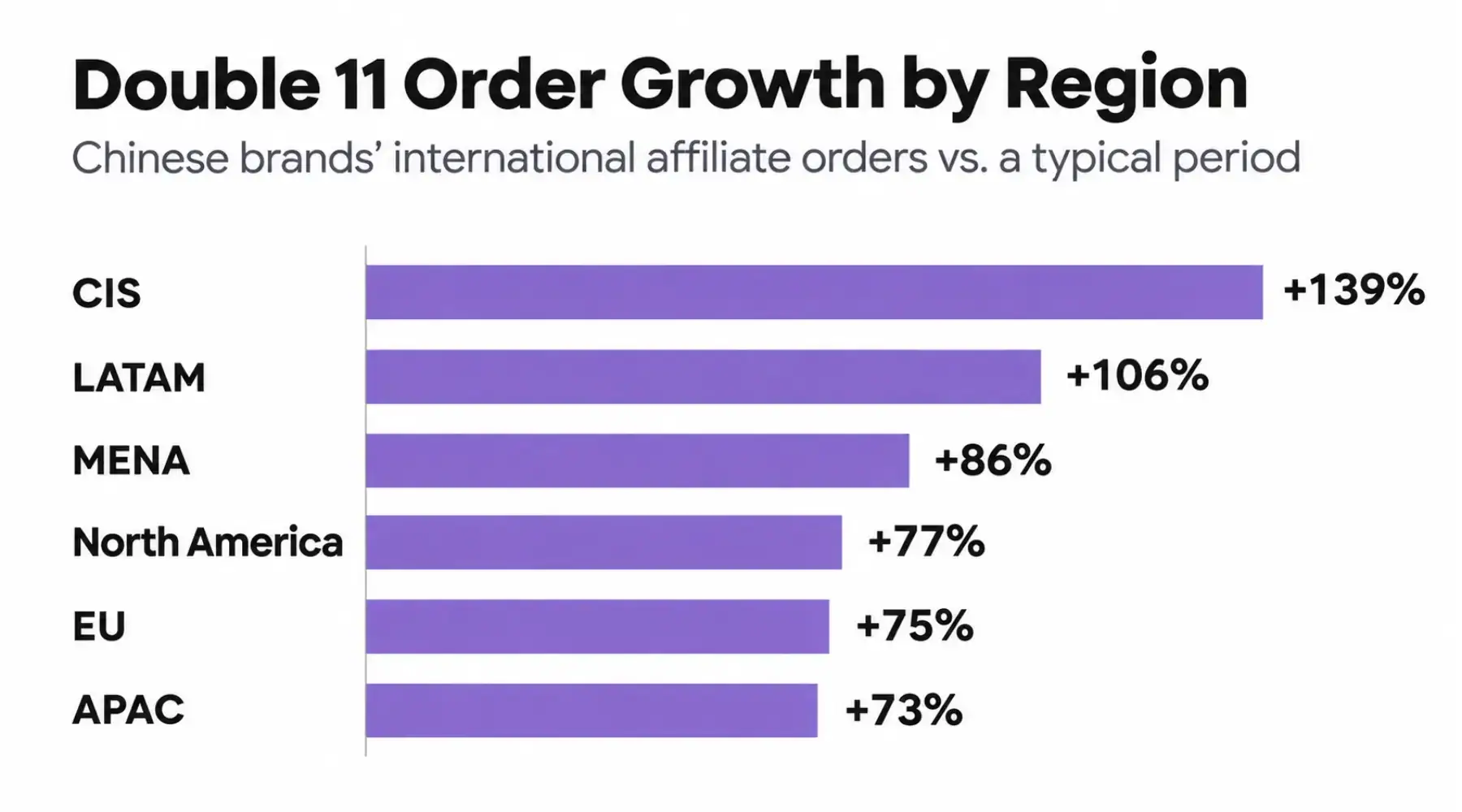
Admitad recorded substantial increases across all six regions included in its analysis. Order volumes rose by 139% in the CIS, followed by 106% in Latin America and 86% in the Middle East and North Africa. North America recorded 77% growth, while the European Union and Asia-Pacific saw increases of 75% and 73%, respectively.
The regional differences highlight the importance of adapting international affiliate campaigns to local shopping behavior rather than applying a uniform promotional strategy across markets. While established eCommerce markets continue to offer significant opportunities, faster-growing regions may provide additional avenues for publisher recruitment and advertiser expansion.
However, percentage growth alone does not establish the size or profitability of an individual market. Admitad did not disclose absolute transaction volumes for each region, making it difficult to determine which market generated the highest overall revenue. As Affiverse previously explored in its analysis of the global shopping calendar and cultural intelligence, international campaign planning requires an understanding of regional shopping events, consumer preferences, and promotional timing.
Home and Garden Leads Product Demand
Home and garden products represented 23.5% of total orders, followed by fashion at 21.4% and electronics at 15.5%. Automotive products accounted for a further 7.9%, while toys and hobbies contributed 7.8%. The fastest-growing categories presented a different picture. Lighting demand increased by 145%, followed by home appliances at 135% and underwear at 110%.
For affiliate publishers, the distinction between transaction share and demand growth matters commercially. Established categories may offer greater transaction volumes, while faster-growing segments can reveal emerging opportunities for niche publishers and specialized shopping content. Affiliate managers can use these differences to identify gaps in their publisher portfolios and assess whether their promotional activities are too heavily concentrated around traditionally popular product categories.
Which Affiliate Traffic Channels Generated the Most Sales?
Contextual and targeted advertising accounted for 21% of international sales in Admitad’s analysis. Price comparison websites contributed 16.5%, followed closely by coupon and promotional code platforms at 16.1%. Together, these three channels represented 53.6% of sales. Browser extensions accounted for another 10%, content platforms contributed 9%, and social media generated 8%.
Cashback services and mobile applications each represented 7%, while email marketing contributed 3.5%. The distribution suggests that established affiliate models remain commercially relevant alongside newer creator-led shopping experiences. Although creator commerce continues to expand, as demonstrated by Shopee’s affiliate sales growth in Singapore, publishers focused on comparison, discounts, and purchase-stage assistance remain important participants in the conversion journey.
The figures nevertheless represent sales contribution rather than channel profitability. Without corresponding acquisition costs, commission expenditure, and incrementality measurements, marketers cannot establish which publisher types delivered the strongest return on investment.
What Double 11 Reveals Ahead of Black Friday
The 17% increase in Chinese brands using affiliate marketing internationally during Double 11 reflects growing advertiser participation during competitive promotional periods.
For affiliate managers preparing their Black Friday and Cyber Monday campaigns, Admitad’s findings highlight the value of regional diversification, publisher segmentation, and performance-based budget allocation.
The challenge is converting temporary promotional demand into sustainable commercial results. Evaluating customer acquisition costs, repeat purchases, commission efficiency, and incremental revenue will help determine whether seasonal campaigns contribute to longer-term growth.
Admitad’s data provides a useful benchmark for this assessment, although its findings represent activity within its own affiliate network rather than the entire international eCommerce market.
Everflow
Connect
Tradedoubler
Connect
1win Partners
Connect
Shopnomix, a Nomix Group Company
Connect
Huffson Group
Connect
Kawaii Partners
Connect
Trackdesk
Connect
Share your expertise and expand your reach and become a content contributor with us today!
Contact Us To Find Out More