Google Integrates Wallet With AI Mode to Personalize Cashback and Credit Card Rewards
Google began rolling out a new Google Wallet integration with Personal Intelligence in AI Mode on November 23, 2026, allowing users to receive personalized recommendations based on their linked payment cards. The update brings credit card rewards, cashback categories, and travel benefits directly into the AI-powered search experience.
For affiliate marketers, cashback providers, and loyalty platforms, the development adds another point of influence in the consumer purchase journey, especially when shoppers decide how to pay and which financial rewards to prioritise.
Key Takeaways From Google’s Wallet Integration With AI Mode
- Google has started rolling out an opt-in Wallet integration with Personal Intelligence in AI Mode.
- Users can receive personalized recommendations based on the benefits associated with their existing payment cards.
- AI Mode has read-only access to financial information and cannot manage or transfer funds.
- Google Drive and the Gemini app will become available as additional connected services in the coming weeks.
- Google has not announced integrations with merchant-funded cashback programs or affiliate commission systems.
How Google Wallet Works Within AI Mode
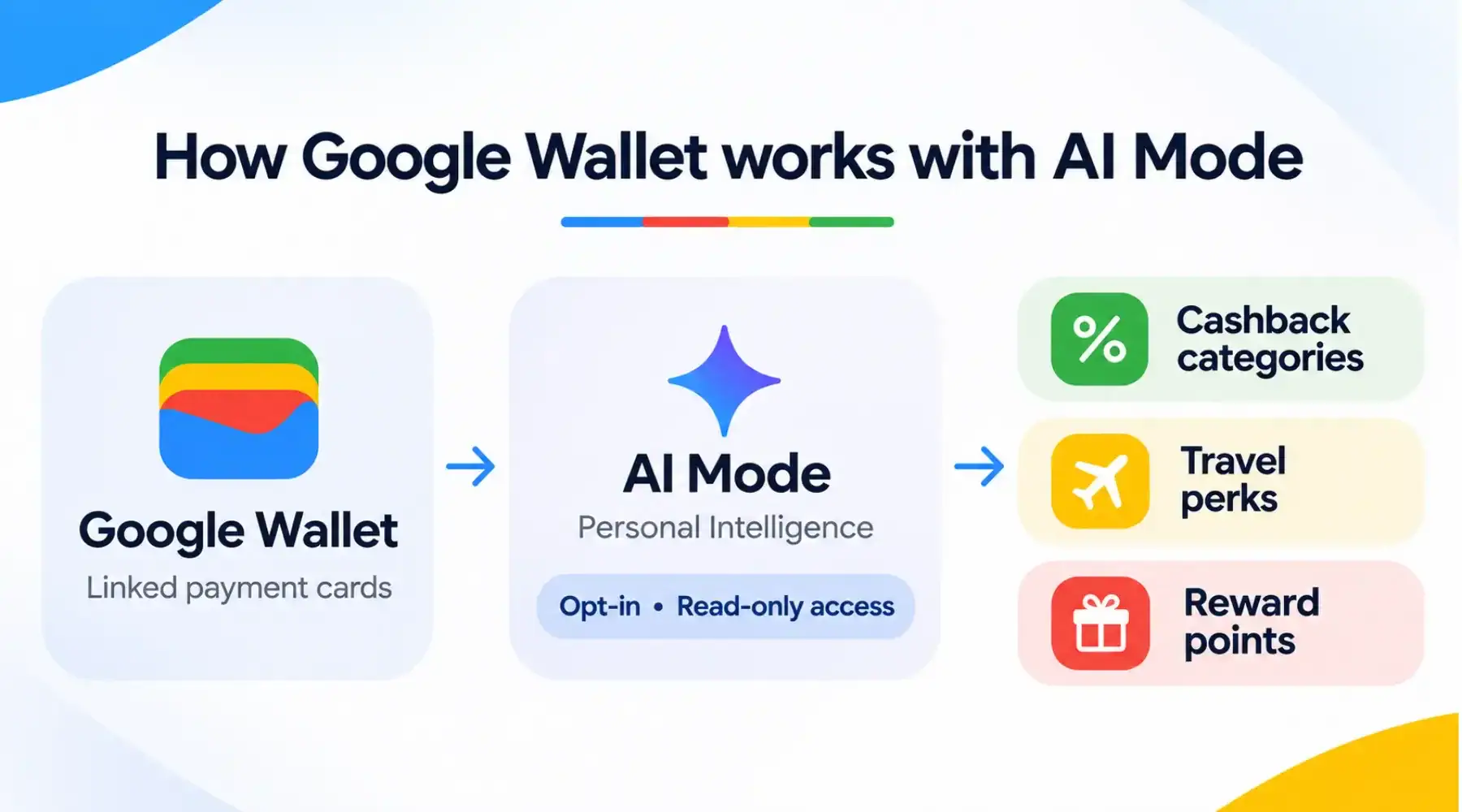
The integration expands Google’s Personal Intelligence capabilities, which already incorporate information from services including Gmail, Google Calendar, and Google Photos to provide more relevant search responses. Users can activate the Wallet connection through the Connected Apps section of their Search Personalization settings and disconnect it at any time.
Once connected, AI Mode can help users understand spending patterns, identify potential savings, and assess the benefits associated with their cards. In the official announcement, Robby Stein, VP of Product for Google Search, said:
AI Mode can only read information from your accounts; it can’t move, manage, or invest your money.
The November announcement does not specify additional markets or confirm a global rollout. Google previously expanded Personal Intelligence in AI Mode to US personal accounts in March 2026.
What the Integration Means for Cashback and Card-Linked Offers
Cashback and loyalty providers have traditionally helped consumers discover financial incentives through dedicated websites, mobile applications, banking platforms, and browser extensions. Google’s integration introduces another way for shoppers to access reward recommendations without necessarily visiting those services. However, credit card rewards and merchant-funded cashback operate through different commercial arrangements. While card issuers typically provide rewards under their existing card terms, merchant-funded offers reward eligible purchases through participating retailers and commercial partnerships.
As Affiverse previously explored in its coverage of card-linked affiliate marketing, transaction-based rewards can connect affiliate activity with both online and offline purchases. Affiliate networks are already investing in this infrastructure. In October 2026, Awin introduced its Proof of Purchase API to support card-linked offers through near-real-time transaction reporting. Google has not confirmed whether its Wallet integration will incorporate comparable merchant-funded offers, share transaction information with affiliate networks, or support commission payments.
AI-Powered Recommendations Add Another Layer to Affiliate Attribution
Google’s latest update follows wider developments in AI-assisted commerce, including the recent launch of ChatGPT Wallet for agent-assisted purchases. Although the two developments serve different purposes, both demonstrate how AI platforms are becoming involved in decisions traditionally made across separate shopping, comparison, and payment services.
For affiliate publishers, the challenge is determining how that influence translates into measurable commercial value. A shopper might discover a retailer through an affiliate comparison website before consulting AI Mode about the most rewarding payment card. The resulting purchase could involve several sources of influence, without necessarily generating an additional trackable referral. The IAB’s AI-Era Attribution Blueprint addresses similar challenges by distinguishing between human-owned, AI-assisted, and AI-executed purchases.
What Affiliate Managers Should Monitor Next
For now, Google’s Wallet integration changes how consumers receive financial reward recommendations rather than how affiliate commissions are recorded. Affiliate managers should monitor whether future updates introduce merchant-specific incentives, commercial placements, or partnerships with cashback and loyalty providers.
Understanding how existing tracking systems recognize AI-influenced purchases will also become increasingly important. As personalized search moves closer to financial decision-making, affiliate businesses need to establish whether their contribution remains visible throughout the customer journey. Google has not yet announced a commercial framework for these recommendations, leaving the implications for affiliate monetization open.
Everflow
Connect
Tradedoubler
Connect
1win Partners
Connect
Shopnomix, a Nomix Group Company
Connect
Huffson Group
Connect
Kawaii Partners
Connect
Trackdesk
Connect
Share your expertise and expand your reach and become a content contributor with us today!
Contact Us To Find Out More