TopCashback Report Finds Shoppers Use Cashback to Choose Retailers
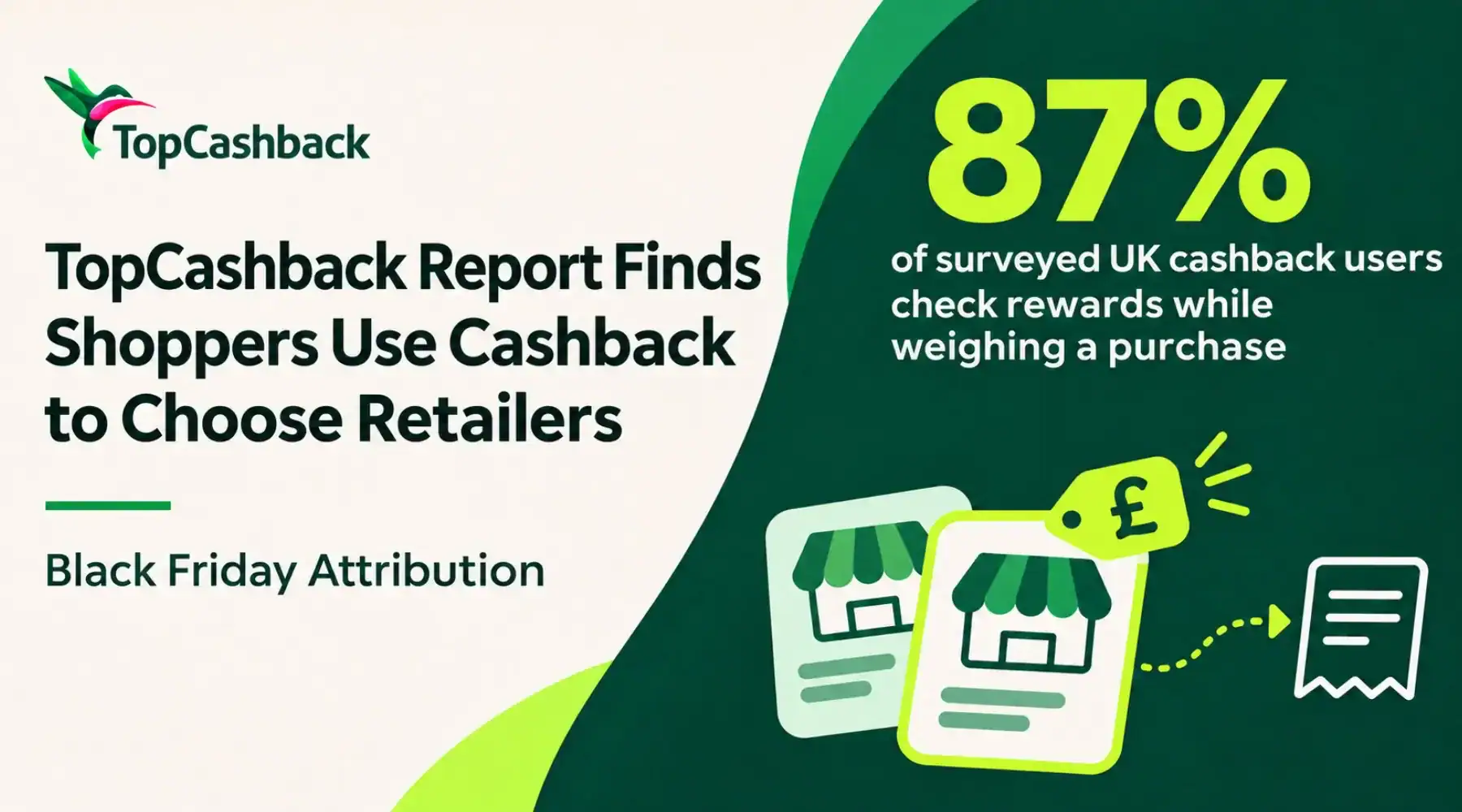
TopCashback has published the first installment of its State of Cashback 2026 report, finding that 87% of surveyed UK cashback users said they engage with offers while researching products, comparing retailers, or finalizing a purchase. Ahead of Black Friday on November 27, the findings highlight why affiliate teams should look at which partners shoppers visited before the sale.
Key Takeaways on Cashback and Retailer Choice
- Cashback rates can influence where shoppers buy. Of 1,461 TopCashback members surveyed, 84% said they had chosen one retailer over another because it offered a better cashback rate.
- Cashback can appear early in the purchase journey. In Awin’s UK data, TopCashback appeared at the start or in the middle of about 40% of the tracked journeys it was involved in.
- More than £1 in every £7 spent online during the 2025 UK Cyber Weekend was tracked through an affiliate link. The estimate covers the wider affiliate channel, according to the Affiliate & Partner Marketing Association’s State of the Affiliate Nation report.
Cashback Enters the Decision Before Checkout
The 87% figure comes from a Vision One survey of 2,000 UK adults and applies to respondents who already use cashback.
TopCashback also analyzed 13.3 million searches on its platform from January through March 2026. In 17% of searches, members went on to engage with a retailer other than the one they initially searched for. Most of those interactions were with retailers in the same shopping category.
The timing matters for publishers and retailers planning promotions. A cashback listing that goes live while a shopper is comparing stores can reach them before they have settled on one. A notification about a higher rate sent to someone who already intends to buy reaches that shopper at a different stage. Both interactions can generate a tracked sale, with different implications for what the promotion contributed.
What Awin Saw in Tracked Purchase Journeys
In Awin’s UK network data, 40% of recorded TopCashback involvements occurred in the upper or middle stages of the purchase journey. Awin classified 15% as upper funnel and 25% as mid-funnel, according to TopCashback’s State of Cashback 2026 report.
A shopper might visit a retailer through a cashback link while checking a price, then return through a comparison publisher to place the order. The comparison publisher may receive the commission under a last-click model. The tracked journey can still show both referrals.
Awin also reported higher basket values and conversion rates for journeys involving TopCashback, with figures for cashback partners as a group and the wider UK network.
| Partner group | Higher basket value | Higher conversion rate |
|---|---|---|
| TopCashback | 37% | 19% |
| All cashback partners | 27% | 17.5% |
| Wider Awin network | 8.7% | 11% |
These figures describe associations in tracked journeys. Customer mix and purchase intent can affect both measures, alongside any contribution from the cashback offer.
TopCashback was the only affiliate touchpoint Awin recorded in 36% of tracked sales involving the platform. Other marketing channels may still have contributed, and earlier affiliate visits can drop out of the record when shoppers clear their cookies. How networks handle overlapping referrals can also affect which publisher earns the commission, as Affiverse covered in its reporting on the APMA’s UK affiliate attribution audit.
What a Higher Cashback Rate Can Tell Retailers
TopCashback examined 141 enhanced cashback promotions across 62 merchants from January through March 2026. On promotional days, the share of first-time customers was seven percentage points higher on average than in the preceding ten days. Around Black Friday, changes in site traffic, discounts, and competing offers can also influence who buys.
To estimate how many additional sales the higher rate generated, a retailer could compare similar audiences during the same period. One eligible group would receive the higher rate and the other would remain on the standard offer. With pricing and other promotions held as consistent as possible, the team could compare confirmed orders and the margin left after cashback and other campaign costs. Awin describes controlled tests and other approaches in its guide to measuring affiliate performance.
The retailer can also check whether any gain lasts beyond the offer. If orders climb during a rate increase and fall immediately afterward, some purchases may have moved forward. Measuring both periods gives the team a better view of the promotion’s effect on total sales.
How Affiliate Teams Can Review Black Friday Performance
For teams running cashback in November, a useful review can start with three questions once enough time has passed for orders and returns to register.
- Where did cashback appear? Look at journeys where the publisher introduced the retailer, assisted a sale credited to another partner, or earned the commission. Compare those patterns by placement if the data is available.
- Which customers bought? Review first-time and returning customers alongside confirmed orders, basket values, and returns. A placement aimed at acquisition needs a different readout from one designed to bring existing customers back.
- What did the campaign earn after costs? Compare the margin on confirmed orders after cashback, affiliate commissions, and any placement fees. A promotion can generate more orders while leaving the retailer with less total margin.
Advertisers and cashback publishers can agree ahead of time on which placements to review and what each side can report. For a promotion intended to reach shoppers early, the publisher could share when the offer ran and how often it was seen. The retailer could then check when referred shoppers first visited and who received credit for their orders. Those findings can guide decisions about which placements and rates to repeat in the next campaign. Affiverse covers the wider planning cycle in its Black Friday affiliate marketing strategy guide.
Everflow
Connect
Tradedoubler
Connect
1win Partners
Connect
Shopnomix, a Nomix Group Company
Connect
Huffson Group
Connect
Kawaii Partners
Connect
Trackdesk
Connect
Share your expertise and expand your reach and become a content contributor with us today!
Contact Us To Find Out More