UK Affiliate Industry Hits £21 Billion as APMA Calls Time on Last-Click Thinking
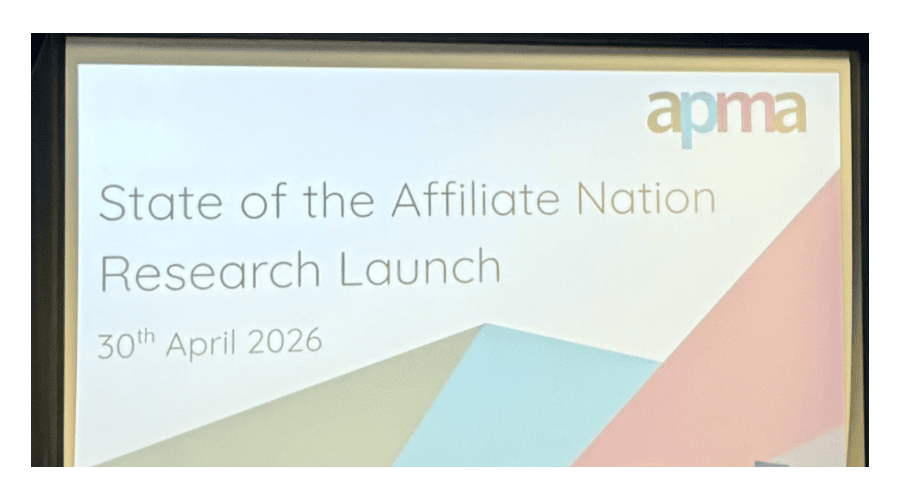
The UK affiliate channel has crossed the £21 billion revenue mark, growing at five times the rate of the wider UK economy, according to new data presented today by Kevin Edwards, Director of the Affiliate and Partner Marketing Association (APMA), at the organization’s State of the Nation 2026 briefing in London yesterday. Against a backdrop of ongoing economic uncertainty, rising geopolitical tensions, and a domestic economy that grew by just 1.4% last year, the affiliate industry posted 7.3% growth. That performance places it firmly within what Edwards called “a British success story” and validates what many in the channel have long argued: performance marketing holds up precisely when marketing budgets come under pressure.
The Institute of Advertising Practitioners’ own Q1 2026 findings appear to back that narrative, noting a broader shift of marketing budgets toward performance-focused investment and short-term ROI. As Edwards pointed out, that framing undersells the channel. Affiliate marketing delivers long-term ROI across always-on campaigns, not just quick conversions, but the directional pull of budget toward the channel is real and measurable.
The Numbers That Define the Channel
Data was collected from 10 networks and modelled for one. Finance and telecoms programs, which generate value through long-term customer acquisition rather than transactional revenue, are not fully captured in that headline number.
Retail accounts for more than 50% of tracked revenue, with travel sitting just under half that figure but accelerating fast. Travel has now posted double-digit growth for two consecutive years through the affiliate channel.
The transaction figures carry equal weight. Around one million sales a day were recorded, tracking at roughly 40,000 sales per hour. Clicks, which Edwards described as “the unsung heroes of the channel,” are being processed at 470 every second, which amounts to close to 15 billion clicks across the year.
One in 10 transactions across UK e-commerce are now originating through an affiliate-tracked link. During the four-day Cyber Weekend window from Black Friday through Cyber Monday, that figure jumps to one in seven pounds spent, with 15.5% of sales flowing through an affiliate link during that period.
There are currently close to 70,000 active publishers across approximately 9,000 affiliate programs in the UK. More than 200 programs are spending in excess of £1 million through the channel, a benchmark Edwards flagged as a useful measure of scale.
Health and Beauty, Travel, and the Sectors Pulling Ahead
The sectoral breakdown produced some of the most striking data points from the briefing. While retail overall grew spend by just 1% year on year, the performance within retail varied enormously.
Electronics was down 12%, which Edwards attributed to a post-COVID upgrade cycle having run its course and consumer caution around high-ticket purchases. Fashion tracked at modest, low-to-mid single-digit growth, broadly in line with the wider market. Health and beauty was the outlier, with spend up 20% and affiliate-tracked revenue up 48% year on year.
That growth was attributed to celebrity-led product ranges, the continued rise of Korean beauty, and what Edwards referred to as the lipstick effect, whereby consumers continue to invest in accessible personal luxuries during periods of economic stress. Travel continued its strong run, with affiliate spend growing at double digits for a second year. Finance grew close to double digits as well. For anyone building or managing programs in those sectors, the growth trajectory is clear.
Publisher Types Reshaping the Channel
The publisher mix data offers the clearest signal yet of where the channel is heading structurally. Cashback, rewards, and loyalty programs remain the largest single category by spend, accounting for around one third of total investment. Voucher sites, despite a 7% decline for a second consecutive year, still generate approximately £51 million in brand revenue every week. When voucher redemption is tracked across all affiliate types rather than just voucher-classified publishers, the figure rises from around 9% to 22% of all sales, confirming the reach of this mechanic well beyond its classification.
The three publisher categories experiencing the fastest growth are influencers and social, Comparison Shopping Services (CSS), and tech partners. All three are growing at double-digit rates. What is particularly notable is that together they map the entire purchase funnel. Influencers and social operate as upper-funnel discovery and product introduction tools. CSS also operates in that discovery space while bridging toward consideration. Tech partners work across the funnel but are most active at the point of basket abandonment, acting as the final nudge before conversion.
Edwards asked a question that the data is increasingly pushing the industry toward: should the channel start thinking separately about a conversion element and an introducing element? Given how the APMA’s attribution audit findings have already highlighted the limitations of current last-click measurement, that question carries real commercial weight.
Beyond Last Click: The Payment Model Is Already Changing
Perhaps the most consequential data point from today’s briefing concerns how brands are actually paying affiliates. Around four in five pounds of affiliate spend is still processed on a last-click CPA basis, which reflects the channel’s heritage and the operational familiarity that brands and networks have built around that model.
But 13% is now allocated to tenancy, 3% to non-last-click CPA, and 2% to other arrangements including CPC. That means roughly one in five pounds is already being spent on models that recognize affiliate contribution beyond the final click. Edwards noted that these figures were tracked at a higher level than in the previous year’s report, partly because the APMA was more prescriptive in how it asked networks to categorize the data.
The shift matters because it points toward a more sophisticated, full-funnel understanding of what the affiliate channel delivers. As content publishers face increasing pressure from AI-driven search behaviour, some may look to renegotiate how they are rewarded for upper-funnel contribution. The APMA’s Voice of the Nation 2025 report identified this tension between brand and publisher perceptions of value as one of the most pressing structural issues in the channel. Today’s data adds a financial dimension to that argument.
The Industry Has a Storytelling Problem
Edwards closed with a point that sits somewhat uncomfortably alongside the headline growth numbers. The affiliate channel accounts for roughly 5% of UK advertising spend and approximately 10% of e-commerce. Those are strong numbers for a channel that operates without the budget intensity of paid search or programmatic. It also means the industry is not punching at its full weight in terms of budget share.
The data is there. The ROI is demonstrable. The scale is significant. What the industry has historically struggled with is translating that performance story into the language that CFOs and CMOs act on, particularly when competing against channels that have invested more heavily in brand-level narrative.
As Edwards put it, the affiliate channel has great numbers and great stories. The work now is in telling them better, and in making the case for full-funnel value before that conversation is forced by external pressures. The full APMA State of the Nation 2026 report, which runs to 93 pages and includes detailed vertical breakdowns, publisher trend analysis, and spend modeling, will be available shortly from the APMA website at theapma.co.uk.
Three Takeaways for Affiliate Managers and Publishers
The health and beauty and travel verticals are producing the strongest affiliate growth numbers right now. If your program operates in either sector, or if you are a publisher building content in those categories, the commission and CPM economics are moving in your favor. This is the moment to consolidate position and negotiate accordingly.
Full-funnel attribution is no longer a future aspiration. With one in five pounds of affiliate spend already flowing through non-last-click payment models, the conversation has moved from “when will this happen” to “how do we position our program to benefit.” Program managers should be reviewing how they currently classify and reward upper-funnel publisher activity before the market standardizes around models that may not reflect their program’s specific needs.
The Cyber Weekend window is more concentrated than most programs account for. One in seven pounds spent online during that four-day period flows through an affiliate link. If your Q4 planning still treats Cyber Weekend as one event in a longer calendar rather than the single highest-density affiliate sales period of the year, that needs to change now. Our previous coverage on Q4 planning for affiliate programs remains a useful starting point for structuring that conversation internally.
The APMA represents the UK affiliate and partner marketing industry and produces the most comprehensive annual dataset on channel performance. If you work in affiliate marketing in the UK and are not yet a member, this is worth examining. The full membership structure, including the Bronze tier launched to support smaller agencies and independent practitioners, is available at theapma.co.uk.
_________________________________________________________________________________________
Taken from the notes made at the live briefing, presented by Kevin Edwards, Director of the APMA, April 30, 2026. Full report data is available to download on theapma.co.uk
Everflow
Connect
Tradedoubler
Connect
1win Partners
Connect
PIN-UP Partners
Connect
Shopnomix, a Nomix Group Company
Connect
V.Partners
Connect
Huffson Group
Connect
Kawaii Partners
Connect
Share your expertise and expand your reach and become a content contributor with us today!
Contact Us To Find Out More