Feedvisor Examines How Shoppers Check AI Product Recommendations
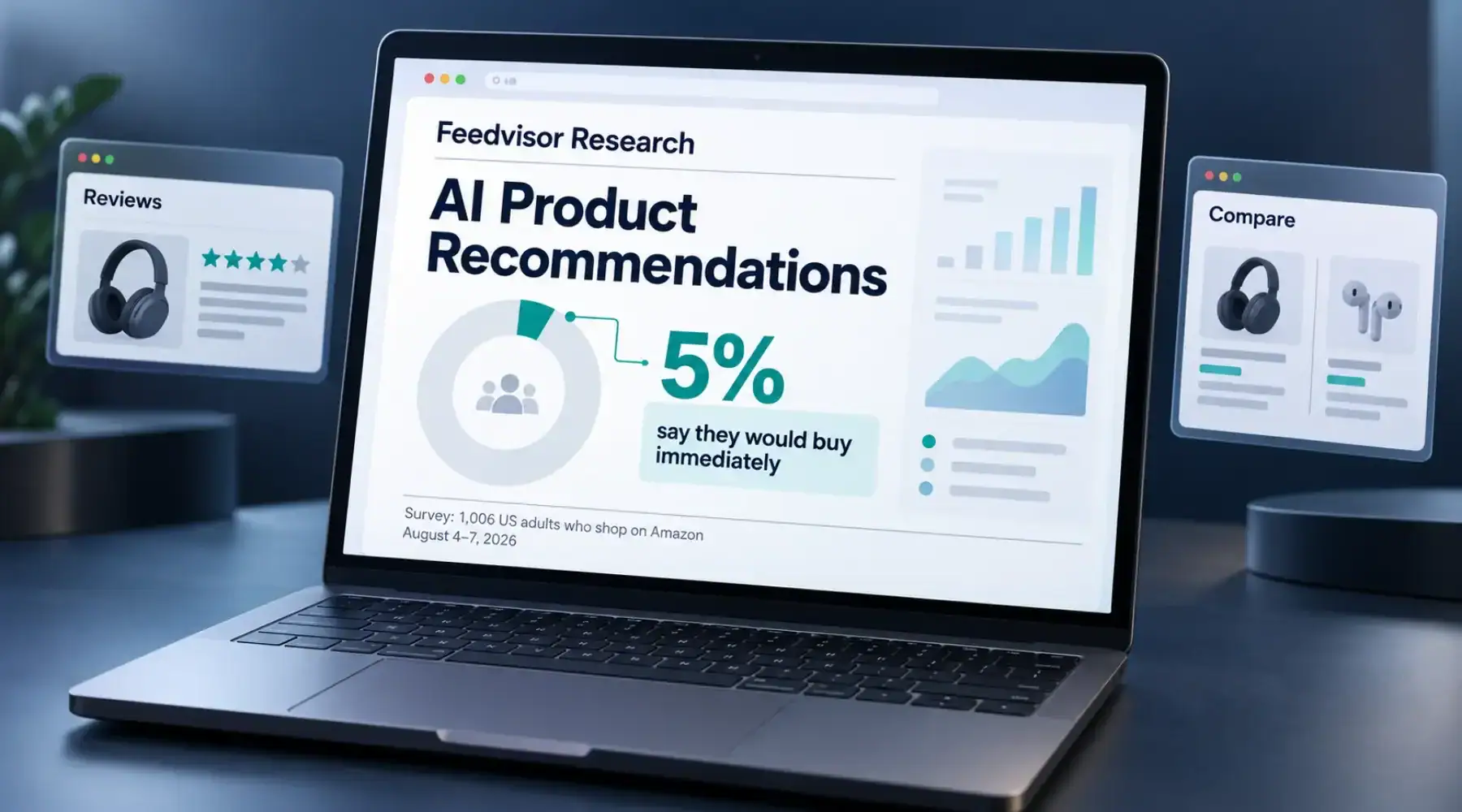
Just 5% of respondents say they would buy immediately after receiving an AI product recommendation, according to Feedvisor research. The company commissioned Zogby Analytics to survey 1,006 US adults who shop on Amazon, with fieldwork conducted August 4–7, 2026.
Feedvisor’s October 22 follow-up puts those August findings in focus ahead of holiday shopping. For review and comparison publishers, the relevant question is what shoppers say they would do after an AI suggestion.
Key Takeaways: What Shoppers Say Comes After an AI Recommendation
- 5% say they would buy immediately after an AI product recommendation, while 19% say they would ignore it.
- 24% say they would search Google and 18% would search Amazon, making Google the largest individual response category.
- 17% say they would read reviews, and 17% would compare alternatives. These responses suggest questions publishers could help answer, although the survey does not establish publisher traffic or affiliate revenue.
How Shoppers Say They Would Respond
Feedvisor reports the following breakdown:
| Stated response to an AI product recommendation | Share |
|---|---|
| Buy immediately | 5% |
| Search Google | 24% |
| Search Amazon | 18% |
| Read reviews | 17% |
| Compare alternatives | 17% |
| Ignore the recommendation | 19% |
Google is the largest individual response category. Reviews and comparisons each account for 17%, indicating interest in additional information among parts of the sample.
However, the 5% figure is not an AI conversion rate. Nor does it mean that everyone else would verify the suggestion: almost one in five say they would disregard it.
What the Survey Measures
The research records self-reported answers from US adults who shop on Amazon. It does not track people moving between platforms or observe completed checkouts, and it should not be treated as a census of US shoppers.
Feedvisor’s separate questions about search starting points and destinations when ready to buy allowed multiple answers. Those responses cannot be joined into a measured conversion funnel.
The broader Feedvisor report overview adds context on AI shopping behavior: 55% reported using AI to research or compare products during the preceding six months. Separately, 62% said they would never let an AI agent order and pay on their behalf. These address different activities, so using AI for research should not be equated with delegating a purchase.
Where Review and Comparison Publishers Could Help
For affiliate publishers, the editorial opportunity is to answer the questions an AI recommendation leaves unresolved. That is an interpretation of the findings, rather than an outcome measured by Feedvisor.
Publisher content can also play a role earlier in discovery. Affiverse’s podcast on AI visibility in affiliate marketing explores how niche publishers and comparison sites can influence the recommendations AI systems generate.
Make Product Evidence Easy to Assess
A shopper checking a suggested laptop might need evidence about battery life, compatibility, or performance under a particular workload. A useful review could explain how the product was tested, which claims the evidence supports, and where its limitations matter.
Separating manufacturer specifications from independent findings, and showing when an assessment was updated, would help readers understand what the publisher has established.
Compare Alternatives for Different Needs
Comparison pages could explain why another product suits a different budget or use case. Clear criteria and specific tradeoffs would give readers a basis for assessing the AI suggestion and deciding whether an alternative better meets their needs.
Keep Holiday Offer Details Current
For holiday coverage, publishers could check prices, availability, delivery estimates, and return conditions alongside their recommendations. Dated offer checks would help readers judge how current those details are before following a retailer link.
Assess Search Visibility and Commercial Results Separately
A respondent saying they would search Google does not establish that they would visit a publisher. Affiverse’s coverage of AI Overviews across commercial searches provides context on another place shoppers may encounter summarized product information.
The survey does not identify affiliate referrals, publisher visits, or earnings. As discussions around publisher AI visibility services develop, publishers will need their own data to assess whether visibility translates into visits and commissions.
Affiverse Take: Give Shoppers a Useful Second Source
Feedvisor’s findings suggest a role for content that helps readers assess an AI recommendation. Product reviews can explain whether a suggested item suits a particular need, while comparisons can show where an alternative offers better value or fewer compromises.
Publishers could review those pages from the perspective of someone arriving with a recommendation already in mind. Can that reader find supporting evidence, understand the tradeoffs, and check whether an offer is current? Answering those questions would make the content useful after AI discovery.
Commercial results require separate assessment through publishers’ own traffic, outbound click, and transaction data, with attribution limits made clear. Affiverse’s webinar on open attribution and AI-assisted shopping explores how publisher contributions could be recognized when their content informs AI recommendations.
Everflow
Connect
Tradedoubler
Connect
1win Partners
Connect
Shopnomix, a Nomix Group Company
Connect
Huffson Group
Connect
Kawaii Partners
Connect
Trackdesk
Connect
Share your expertise and expand your reach and become a content contributor with us today!
Contact Us To Find Out More