QVC Plans TikTok Mega Lives for Black Friday and Cyber Monday
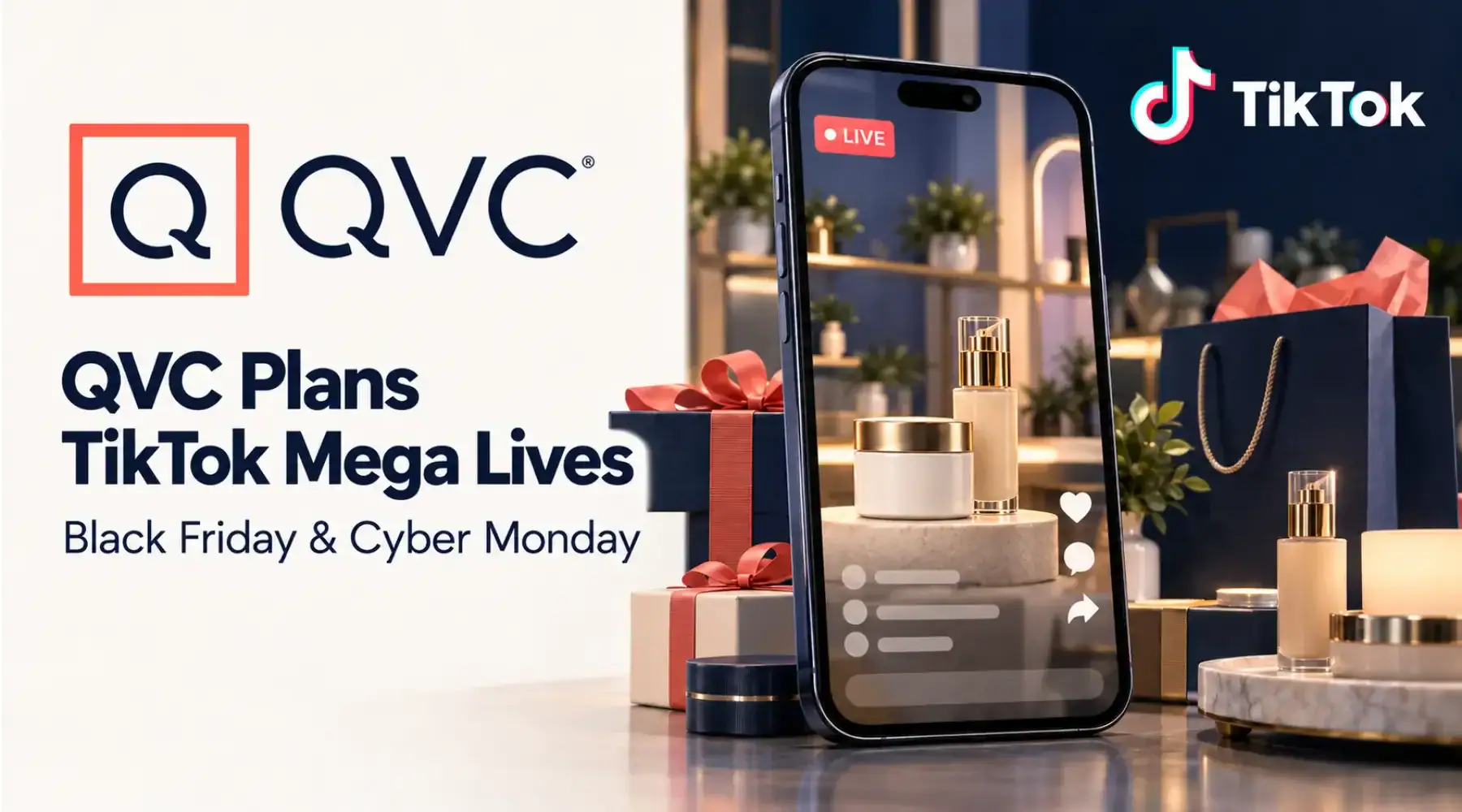
QVC is planning eight- to ten-hour TikTok livestreams for Black Friday and Cyber Monday, according to an October 26 interview with Modern Retail. The retailer’s holiday strategy combines product launches with extended live selling. For affiliate creators and managers, it offers a look at the preparation needed to turn a shopping livestream into a repeatable sales format.
QVC TikTok Holiday Plans in Numbers
- QVC produces around 200 hours of TikTok LIVE each week and operates 10 dedicated TikTok studios, according to its senior vice president of social commerce, Krystyna Taheri.
- QVC promises more than 90 hours of TikTok holiday programming, featuring flash sales and giveaways. Its Nonstop Holiday Party runs November 6–8, with early Black Friday prices.
- For Black Friday and Cyber Monday, QVC plans eight- to ten-hour livestreams, usually shared between two hosts, with a third sometimes joining. Product launches and marketing investment will support the extended broadcasts.
QVC Builds Extended Shows Around Product Drops
Krystyna Taheri, QVC Group’s senior vice president of social commerce, told Modern Retail that the extended livestreams would usually be split between two hosts, sometimes with a third joining. Product drops, marketing investment, and new sets support the format.
Explaining the importance of the holiday sales period, Taheri said:
If you’re in retail and you don’t win Black Friday and Cyber Monday, you don’t win the year.
She also described how QVC previews upcoming product launches during earlier livestreams, encouraging viewers to return for the next broadcast.
For a creator planning an extended broadcast, the offer needs to remain clear as viewers join at different points. A demonstration, a restated price, or an answer to a common question can serve shoppers who missed the opening. Planning those repeated explanations matters as much as filling the schedule.
November Holiday Event Creates an Earlier Sales Window
QVC’s October 21 holiday announcement confirms the Nonstop Holiday Party for November 6–8, with early Black Friday prices. Its TikTok holiday programming will feature flash sales and giveaways. The wider event is scheduled to include Martha Stewart, John Legend, and Teri Hatcher, with programming across television, QVC’s website and app, social media, and streaming platforms. Schedules and guest appearances are subject to change.
The seasonal offer spans home, beauty, fashion, and food, including QVC-exclusive launches from Off/Duty by Coco Rocha and RM Studio by Rebecca Minkoff. QVC has also named Danielle Fishel as its Mrs. Claus for the holiday campaign.
Affiverse’s coverage of TikTok Shop’s US Black Friday campaign sets out the platform’s separate schedule from November 11 through November 30. For teams coordinating several promotional windows, each broadcast needs its own confirmed prices, product list, and offer dates.
QVC Pairs TikTok Studios With Host Training
Taheri described weekly recording reviews with producers and training that focuses on click-through and click-to-order rates. She also contrasted TikTok’s 20- to 30-second sales hooks with seven- to eight-minute television segments.
That distinction gives affiliate teams a useful way to review a session. A video may attract viewers but lose them before they open a product listing. A product may earn clicks without turning interest into orders. Reviewing those stages separately can help identify where the explanation or offer needs work.
Affiverse’s reporting on the Times Square TikTok Shop creator studio describes another retailer’s investment in space for product demonstrations. Creators evaluating such opportunities should assess the production support available alongside the audience they can reach.
Connect Holiday Livestream Plans With Affiliate Results
Affiliate managers planning similar activity can agree who owns product selection, pricing checks, host briefings, and post-event reporting. Longer broadcasts also need a plan for sold-out products and handovers between presenters.
Affiverse’s Black Friday affiliate marketing strategy covers earlier campaign preparation, including partner recruitment and tracking checks. Those arrangements help creators enter a broadcast with accurate offers and a clear basis for assessing performance.
After the event, compare approved commissions and returns with the products and sessions promoted. Engagement figures can explain where shoppers paid attention; the commercial assessment also needs to show which activity generated payable sales.
Everflow
Connect
Tradedoubler
Connect
1win Partners
Connect
Shopnomix, a Nomix Group Company
Connect
Huffson Group
Connect
Kawaii Partners
Connect
Trackdesk
Connect
Share your expertise and expand your reach and become a content contributor with us today!
Contact Us To Find Out More