Google Plans Financial Services Verification in the US and Canada for 2027
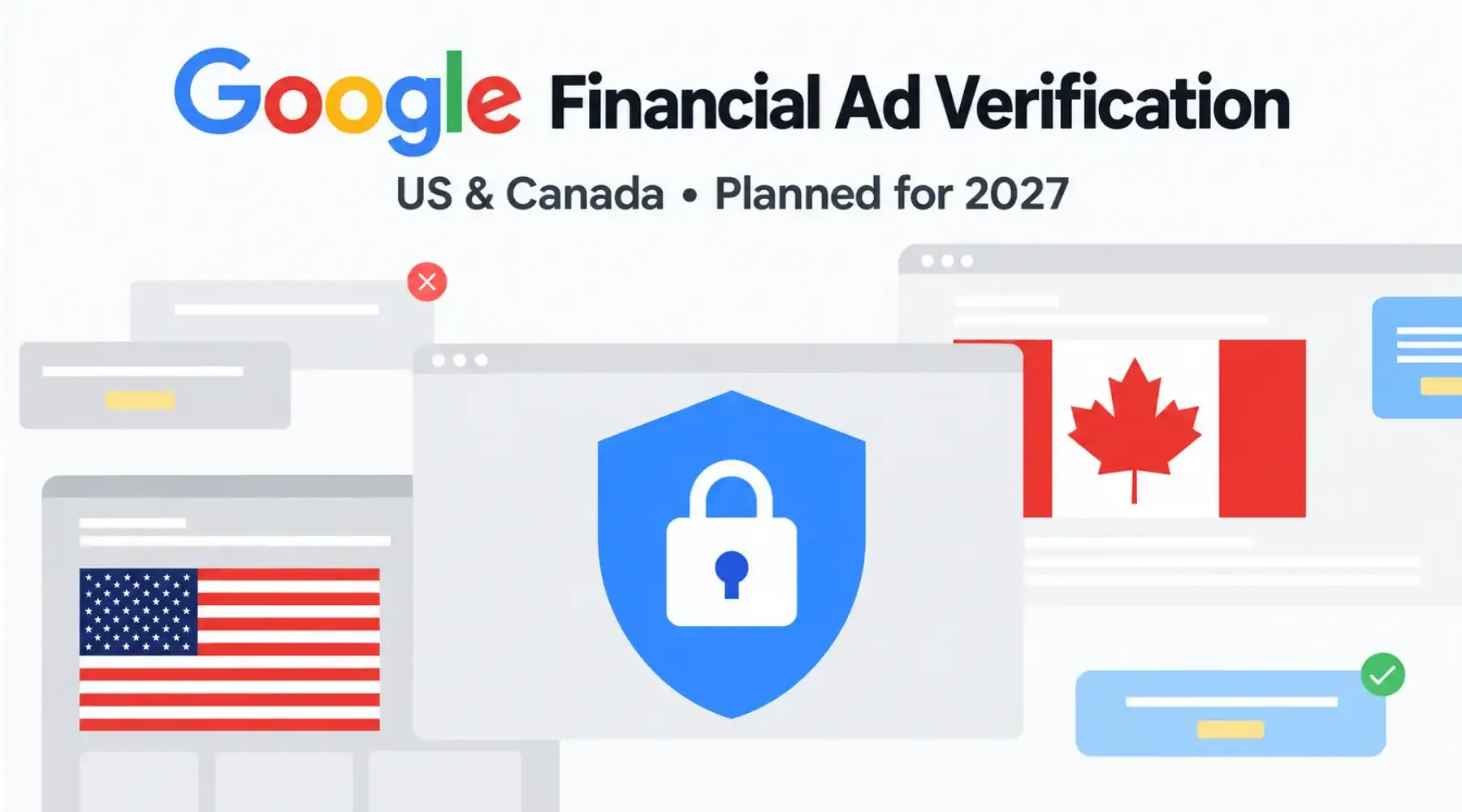
Google plans to introduce Financial Services Verification in the United States and Canada in early 2027, adding checks on advertisers’ credentials before they can run certain financial ads. Announced on October 20, the expansion builds on Google’s existing identity-verification process. The company says it will publish country-specific requirements and notify affected advertisers before enforcement begins, according to its official announcement.
Key Takeaways: Google Financial Services Verification
- Planned timing: The US and Canada rollout is scheduled for early 2027, with country-specific enforcement dates still to follow.
- Additional checks: The program examines financial advertisers’ credentials alongside existing identity verification.
- Banking industry involvement: Google will use an American Bankers Association registry to verify authorized US banks.
- Affiliate relevance: Google’s existing framework includes approved third parties, including affiliates, with requirements depending on the market.
- Further guidance: Accepted registries, required credentials, and onboarding instructions will be published before enforcement.
Verification Adds a Financial Services Check
Google’s existing advertiser-verification program checks identity and business operations. Verified information can appear in ad disclosures and the Ads Transparency Center, helping users identify the business behind an advertisement.
Financial Services Verification adds checks relating to financial-services authorization. Google’s current framework can require information about the services an advertiser provides, its licenses, registration number, and business details.
Requirements depend on the location being targeted. Where financial-services verification is required, Google says it applies across ad formats and assets, with different routes for different advertiser categories.
The expansion follows earlier financial-advertising restrictions introduced in the UK in 2021. Google subsequently extended the program to other markets.
Google Works With Banking Associations
In the United States, Google says it is working with the American Bankers Association to use its registry to verify authorized banks before their ads run.
The ABA confirmed its involvement in an October 20 statement, welcoming the announcement as a step toward preventing bank impersonation.
Paul Benda, Executive Vice President for Risk, Fraud and Cybersecurity at the American Bankers Association, said:
We have worked closely with Google to develop the protocols needed to verify legitimate bank advertisers, and we look forward to seeing the system in operation in the coming months. We will continue to encourage technology and social media companies to partner with America’s banks to protect consumers from fraud and scams.
In Canada, Google says it is engaging with the Canadian Bankers Association as it prepares the rollout. The company describes a phased approach adapted to each country.
Existing Rules Include Approved Third Parties
Google’s current Financial Services Verification guidance identifies approved third parties as advertisers that provide or promote financial services with an authorized advertiser’s approval, while lacking direct regulatory authorization themselves.
The category includes brokers, resellers, and affiliates. Other categories cover authorized providers, government entities, certain non-financial businesses, and financial advertisers exempt from licensing requirements.
Those categories provide context for the expansion. Google’s October announcement does not yet set out the specific US and Canadian application routes for affiliates or other third-party advertisers.
For businesses running affiliate marketing programs in the financial sector, the forthcoming local guidance will determine how those relationships fit into the new process.
Country-Specific Requirements Will Follow
Google says advertisers will receive information about accepted registries, credentials, and onboarding ahead of the planned launch. Once verification opens, affected businesses will be notified if they need to complete it.
Under its existing advertiser-verification process, Google communicates required tasks and deadlines through account notifications or email. Those account-specific instructions remain the place to check what action is required.
Financial brands and partners can use the preparation period to review account ownership, bFinancial brands and partners can use the preparation period to review account ownership, business information, and promotion approvals. Their own affiliate fraud detection and prevention processes should also cover partner vetting, traffic monitoring, and suspicious conversion patterns.
Affiverse’s coverage of finfluencer marketing and affiliate compliance provides further context on disclosures and partner oversight.
Everflow
Connect
Tradedoubler
Connect
1win Partners
Connect
Shopnomix, a Nomix Group Company
Connect
Huffson Group
Connect
Kawaii Partners
Connect
Trackdesk
Connect
Share your expertise and expand your reach and become a content contributor with us today!
Contact Us To Find Out More