AliExpress Plans YouTube Affiliate Expansion Across Four Markets
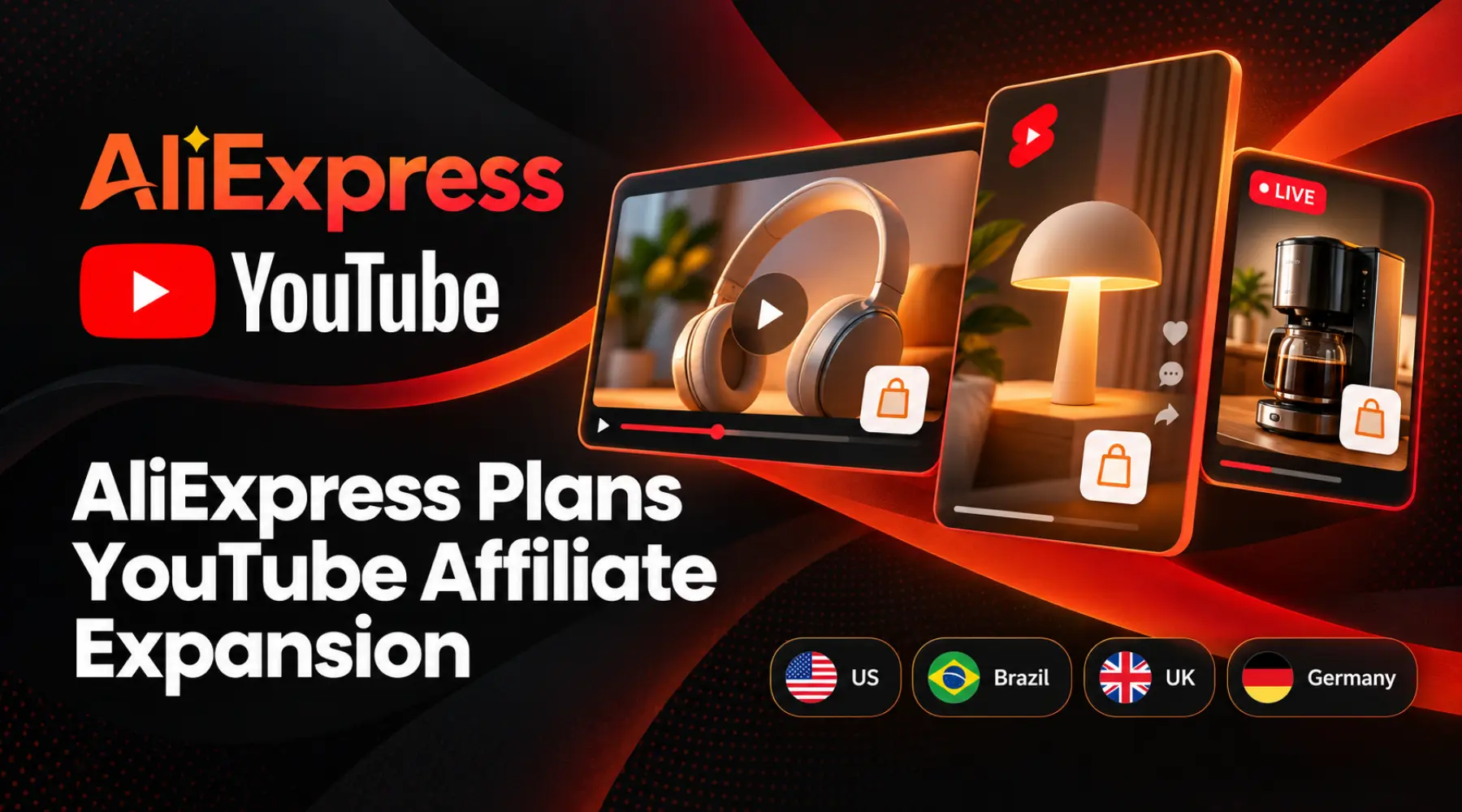
AliExpress plans to expand its YouTube affiliate partnership into the United States, Brazil, the United Kingdom, and Germany. Announced on October 20, the move gives eligible creators another retail catalog to consider when planning shopping content. For affiliate teams, the opportunity depends on local availability, relevant products, and the commission terms attached to individual offers.
Key Takeaways: AliExpress’s YouTube Affiliate Expansion
- AliExpress identifies four expansion markets: the US, Brazil, UK, and Germany.
- The partnership follows a South Korean launch in March 2026.
- Product tagging supports three formats: long-form videos, Shorts, and livestreams.
- Creators need to check eligibility and available offers in YouTube Studio.
- YouTube says commission payouts reflect the rate applying when a purchase occurs, rather than when a product was tagged.
Expansion Follows the South Korean Partnership
AliExpress’s announcement describes a phased expansion linked to YouTube’s affiliate rollout. It does not establish simultaneous access for every creator in the four markets.
YouTube announced the earlier South Korean integration on March 17. That launch added AliExpress products to the platform’s existing shopping partnerships, giving creators another source of items to feature in their content.
The expansion also follows YouTube Shopping’s UK affiliate launch, which brought product tagging to eligible creators working with participating retailers. AliExpress access still needs to be checked before a creator commits to producing a campaign.
Product Tags Bring Offers Into the Viewing Experience
YouTube’s shopping buttons and product stickers help viewers inspect items featured in content. Viewers can use those elements to explore products and continue toward a retailer purchase.
Tags should be relevant to what the audience sees. YouTube warns against indiscriminately tagging unrelated products and says tags that fail its guidelines may be removed.
For a creator comparing household products, that means connecting the recommendation with the item actually demonstrated. Model, size, compatibility, and included accessories can all affect whether the viewer reaches a suitable offer.
The platform already supports Amazon product tags for eligible US creators, bringing another retail catalog into the viewing experience. More choice gives creators additional products to assess, but recommendations still need to fit the audience.
Eligibility and Earnings Depend on the Available Offer
YouTube directs qualifying creators to join through YouTube Studio and review the available shopping offers. Its general documentation also notes that eligibility can differ for pilot programs.
The retailer’s expansion announcement should therefore be treated as a reason to check access, rather than a guarantee that a particular channel can start tagging immediately.
Commission terms need a separate review. YouTube’s earnings documentation says the percentage displayed when a product is tagged is an estimate based on the current rate.
The payout reflects the rate applying on the purchase date. Rates can vary by product and seller, and temporary promotional offers may end while a video remains available.
For international viewers, YouTube may match a tagged product with a participating local seller. In that case, the applicable commission follows the fulfilling seller’s offer. These are general platform rules; creators should check the specific terms shown for their account and products.
Creator Briefs Need Accurate Product Information
Affiliate managers planning activity around the expansion should give creators enough time to assess the item they will recommend. A sample, current product specifications, and a clear contact for questions can help the creator produce a useful demonstration.
Longer videos can explain setup or compare alternatives. A Short can focus on a specific use case, while a livestream can address questions as they arise.
Choose the format around what viewers need to understand. A short promotional clip may leave important questions unanswered when a product requires installation, sizing, or compatibility checks.
Reporting should connect the product and content with the offer available when purchases occur. Keeping a record of commission changes will help explain why earnings differ from an early estimate.
Retailers Are Competing for Creator Recommendations
Amazon’s creator-commerce expansion in India also combines a growing influencer program with product-tagging opportunities on YouTube and Pinterest.
Those developments give creators more retailer relationships to evaluate. For brands and affiliate managers, a productive partnership will need suitable products, accurate information, and terms that support the work involved in producing content.
The immediate next step is to establish which offers a creator can actually access, then assess how well those products fit the audience and the planned recommendation.
Everflow
Connect
Tradedoubler
Connect
1win Partners
Connect
Shopnomix, a Nomix Group Company
Connect
Huffson Group
Connect
Kawaii Partners
Connect
Trackdesk
Connect
Share your expertise and expand your reach and become a content contributor with us today!
Contact Us To Find Out More