ISBA Sets Out Three Models for Managing Creator Marketing
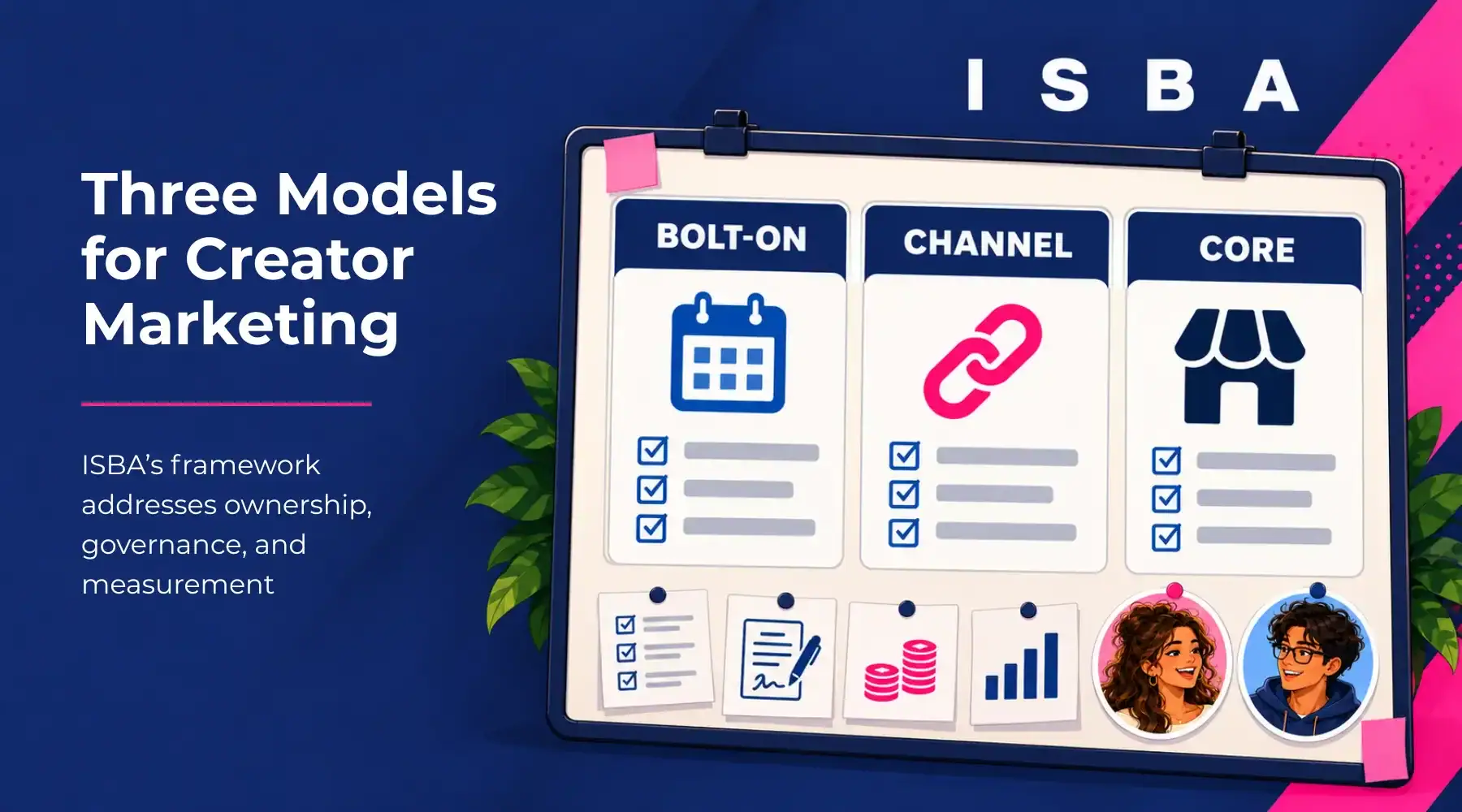
ISBA has released a framework to help brands organize creator marketing as investment outpaces internal ownership, governance, and measurement. Its three models—bolt-on, channel, and core—offer different ways to manage the activity. For affiliate and performance teams, the practical question is who takes responsibility when one creator partnership combines campaign fees, paid distribution, content rights, and sales commissions.
Key Takeaways: Three Ways to Organize Creator Marketing
- ISBA identifies bolt-on, channel, and core operating models.
- Its research found 48% of participating brands managed creator marketing ad hoc; only 9% treated it as core.
- 59% said they could assess creator ROI only “somewhat confidently.”
- ISBA projects UK creator-marketing spending above £1 billion by the end of 2026.
- The models are alternatives, with no expectation that every brand adopts core.
ISBA Research Highlights Gaps in Creator Marketing Ownership
The framework was released on September 30, developed with Responsible Marketing Advisory and ISBA members representing more than £1.75 billion in annual UK advertising expenditure. Almost one-quarter of participating businesses split ownership across teams. None assigned it to a media team.
Bobi Carley, Director of Media & Advertising Relations at ISBA, said:
Creator marketing now commands serious budgets, but the structures around it haven’t kept pace.
The Three Creator Marketing Models
| Model | ISBA’s Public Description | Potential Use (Affiverse Interpretation) |
|---|---|---|
| Bolt-on | Creators activated for particular campaigns or moments. | Product launches, events or seasonal promotions. |
| Channel | Ongoing creator activity, often with a retained agency. | Recurring campaigns requiring consistent support. |
| Core | Creators form part of the brand’s route to market, measured alongside other channels. | Creators influence product, media and sales decisions. |
The complete framework is restricted to ISBA members. The applications below are Affiverse’s analysis of the public announcement.
Creator Ownership Remains Unclear
Creator activity can sit with social, content, media, affiliate, e-commerce, or PR teams, while external agencies handle delivery. These teams may share a partner but work toward different objectives.
Fragmented responsibility can produce inconsistent contracts, incomplete reporting, unclear usage rights and missed disclosure checks. A social team might approve a post while a media buyer extends its use without checking the original agreement.
Tools such as Meta’s Creator Marketing Hub for partnership ads can simplify execution. Brands still need internal rules defining who approves partnerships, spending, and content reuse.
Affiliate Commission Adds Another Layer
A creator may receive a production fee, free products, affiliate commission, performance bonuses, and licensing payments. The brand may also fund paid amplification, adding another campaign cost.
If social funds the post, media pays for distribution, and the affiliate team processes commission, no department may see the full investment. A small commission bill could obscure a much larger partnership cost.
Brands should designate one accountable owner and document which teams approve fees, commissions, tracking, usage rights, and disclosures. A shared partnership record should distinguish creator compensation from media spending and define when performance payments become payable.
This matters when creator agreements combine fixed fees and performance pay. As creator affiliate programs become platform operations, teams also need to understand which reporting rules determine commissions and how returns affect earnings.
Measurement Must Follow the Chosen Model
Objectives should come before metrics. An occasional launch campaign may prioritize reach or reusable creative assets. A recurring sales partnership may require customer acquisition and retention measures.
Depending on the objective, brands could track:
- Approved affiliate sales and new-customer contribution.
- Content production, licensing, and paid-media costs.
- Assisted conversions and brand or search lift.
- Repeat purchases, returns, and cancellations.
Creator ROI should not be reduced to last-click affiliate revenue. A creator may influence demand that converts elsewhere, while a tracked sale can later be returned.
Affiverse’s IAB Creatorfronts coverage highlighted inconsistent definitions and reporting. Adding creator spending without shared measurement rules can make reports larger without making the investment easier to assess.
The Framework Is Not a Maturity Ladder
ISBA’s models do not require brands to progress automatically toward core. A seasonal campaign may fit bolt-on; recurring partnerships may justify a channel approach. The choice should reflect investment, campaign frequency, internal resources, and creators’ role in the customer journey.
Choosing a model should also make the commercial arrangement easier to understand. A creator partnership may combine production fees, affiliate commissions, paid amplification, and content rights. Brands need visibility across that investment and a clear basis for judging whether it delivers against the partnership’s objectives.
For affiliate teams, the practical test is whether the structure closes gaps between departments. Someone should be accountable for the full partnership, even when different teams approve individual elements. A well-managed seasonal campaign does not need to become a creator-led business. Whatever the model, its value depends on clearer responsibilities and evidence that supports better investment decisions.
Everflow
Connect
Tradedoubler
Connect
1win Partners
Connect
PIN-UP Partners
Connect
Shopnomix, a Nomix Group Company
Connect
V.Partners
Connect
Huffson Group
Connect
Kawaii Partners
Connect
Share your expertise and expand your reach and become a content contributor with us today!
Contact Us To Find Out More