Meta Unifies Creator Discovery and Partnership Ads in New Marketing Hub
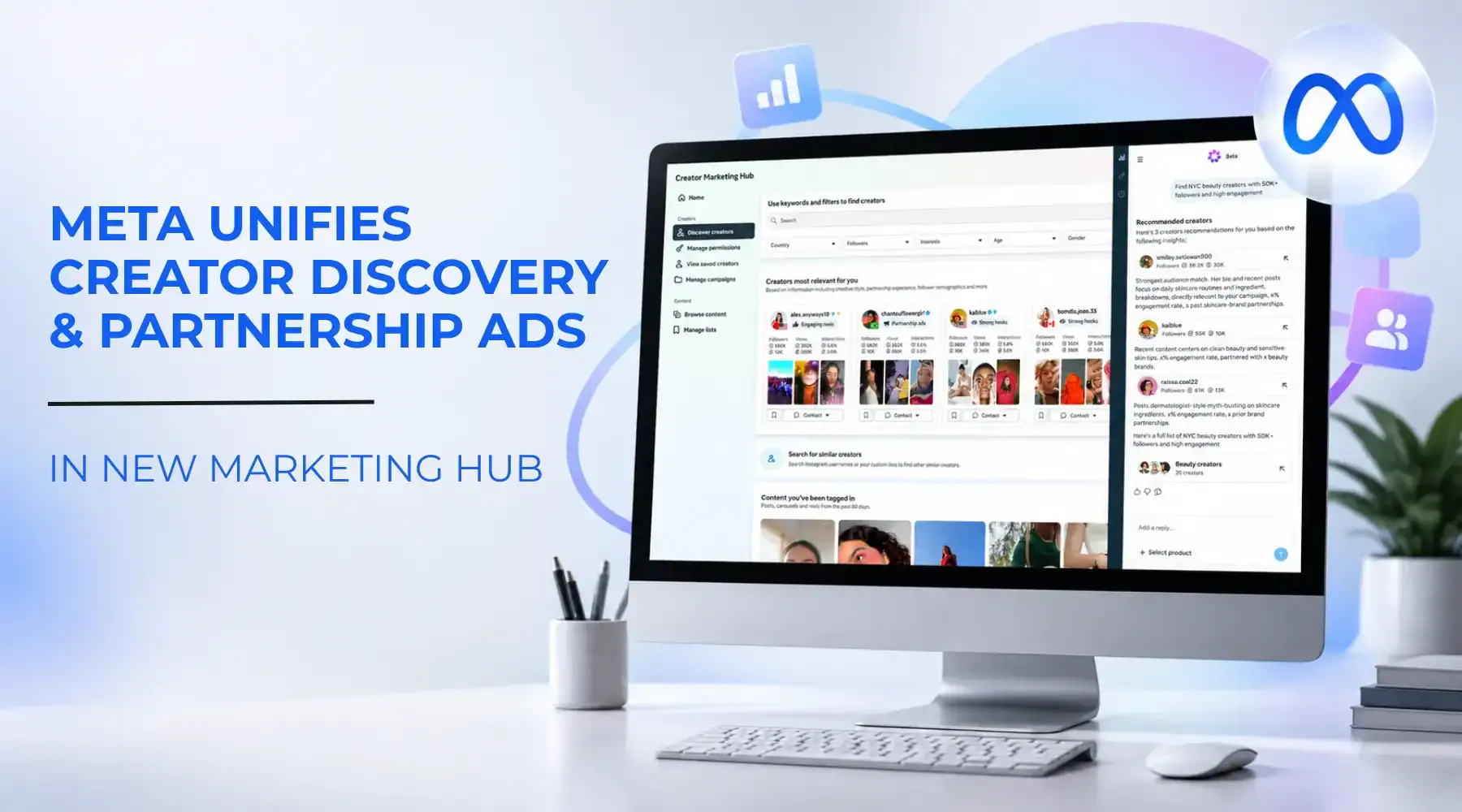
Meta has officially launched its Creator Marketing Hub, bringing creator discovery, content evaluation, permissions, communication and partnership-ad creation into one workflow.
The company first previewed the hub in June and is now beginning its wider rollout. For brands, the change reduces the number of steps between finding suitable creator content and turning it into paid advertising. However, Meta has not announced affiliate commissions, order-level creator attribution or performance-based payments as part of the launch.
Key Takeaways: Meta’s Creator Marketing Hub
- Creator Marketing Hub combines Meta’s Creator Marketplace and Partnership Ads Hub.
- Brands can search for creators and organic content that features their products.
- New discovery options include a “predicted affiliate content” filter.
- Advertisers can create partnership ads directly from creator listings.
- Permissions, expiration dates, messaging and basic ad editing sit inside the same workflow.
- Facebook and Instagram creators are being added to the Creator Marketplace API.
- Instagram live-video partnership ads will become available on September 29.
- Partnership ads remain paid media rather than affiliate links or commission-based creator activity.
From Creator Discovery to Paid Distribution
Meta’s Creator Marketing Hub combines two previously separate parts of its advertising system: Creator Marketplace, which helps businesses identify potential partners, and Partnership Ads Hub, which allows approved creator content to receive paid distribution.
Brands can now search for creators, find organic posts featuring their products and receive content recommendations based on campaign objectives. The new discovery filters include what Meta calls a “predicted affiliate content” search tool, although the company has not presented this as a new commission or attribution product.
Once a brand finds suitable content, it can create a partnership ad from the listing with one click. Content-level permissions and expiration dates can also be managed within the platform, giving creators and advertisers greater visibility over how long an asset can be used.
Editing tools allow advertisers to remove copyrighted music or stickers before converting a post into an ad. Partnership messaging then lets brands contact creators without leaving the workflow.
This closes several operational gaps between creator outreach and media buying. Brands previously had to move between discovery platforms, direct messages, content-rights agreements and Ads Manager before a campaign could go live.
Meta Is Also Expanding Creator APIs
Meta is extending the same workflow to businesses and agencies using third-party creator-marketing platforms.
Facebook and Instagram creators are being added to the Creator Marketplace API, while an updated Messaging API will support creator outreach. The Content Discovery API will recommend organic creator content and provide filters, keyword search, performance insights and an indication of which assets are ready to become ads.
According to Social Media Today, Meta is also adding its AI business assistant to the hub to support creator discovery.
Instagram live-video partnership ads will become available from September 29. These will allow brands to sponsor and distribute a creator’s livestream as paid content, creating another option for product launches, demonstrations and time-sensitive campaigns.
Availability may still vary as the hub and its individual features expand across markets and advertiser accounts.
Partnership Ads Are Not an Affiliate Channel
The platform’s use of “affiliate” terminology could create confusion for performance teams. A predicted affiliate-content filter may help a brand identify creators who are likely to produce commercially useful content, but it does not create an affiliate relationship.
Partnership ads are paid advertising. The brand pays for media distribution and agrees separately with the creator on production fees, usage rights or other compensation.
Affiliate marketing requires another layer: a trackable action, an attribution rule and an agreed payment when that action occurs. Meta has not announced creator commission rates, order-level sales reporting or performance-based payments within the new hub.
Instagram already offers affiliate links for eligible Reels, but that commerce feature should not be treated as part of every Creator Marketing Hub campaign.
The distinction also matters when brands reuse posts originally published by customers or creators. Instagram’s recent Add to Grid feature can increase the visibility of tagged content, while the new hub can make approved assets easier to amplify. Neither automatically grants unrestricted usage rights or determines how the creator should be paid.
What Affiliate Teams Should Watch
The launch shows creator marketing moving closer to a conventional media-buying workflow. Discovery, communication, rights management and distribution increasingly sit inside the same advertising system.
What remains unresolved is how creators receive credit when their content influences a purchase beyond the immediate ad campaign.
That question becomes more important as shoppers use creator recommendations across social platforms, search engines and AI tools. Recent research found that AI shoppers want creator input but place the greatest trust in everyday reviewers.
Meta is making creator content easier for brands to find and buy. The next step for performance marketing would be connecting that activity to transparent sales attribution and compensation. Creator Marketing Hub does not yet provide that bridge.
Everflow
Connect
Tradedoubler
Connect
1win Partners
Connect
PIN-UP Partners
Connect
Shopnomix, a Nomix Group Company
Connect
V.Partners
Connect
Huffson Group
Connect
Kawaii Partners
Connect
Share your expertise and expand your reach and become a content contributor with us today!
Contact Us To Find Out More