YouTube Tests Local Retailer Matching for Affiliate Product Tags
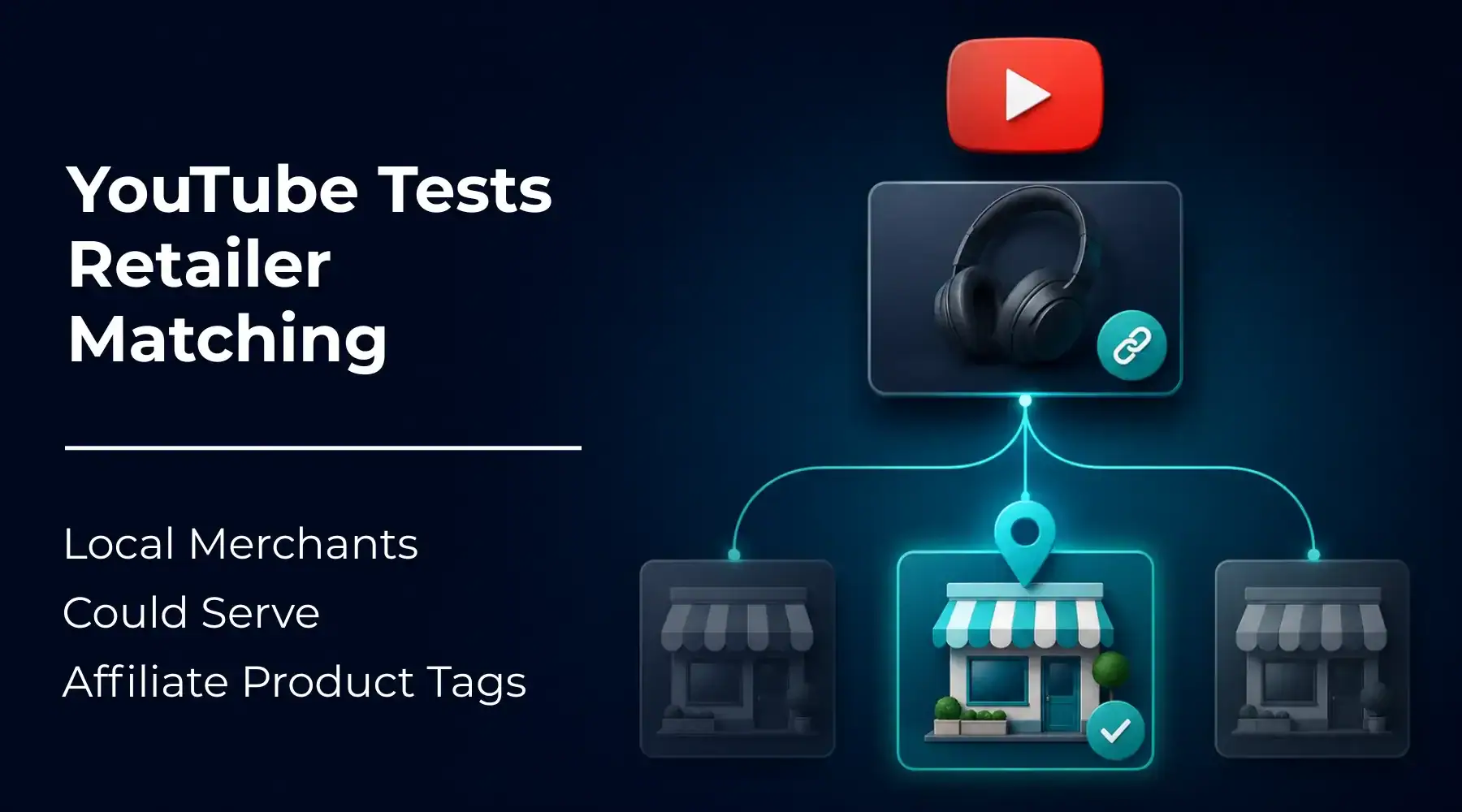
YouTube is testing whether it can improve shopping performance by showing a creator-tagged affiliate product from a different eligible local retailer. The experiment means a creator may select the product being recommended, while YouTube determines which participating merchant offer is displayed to individual viewers. The platform is also introducing new branded-content disclosure controls covering audience restrictions and automated labeling.
Key Takeaways: YouTube Tests Affiliate Merchant Matching
- YouTube is running a small experiment involving products tagged through its Shopping Affiliate Program.
- Viewers may see the same creator-selected product supplied by a different eligible retailer in their market.
- YouTube wants to determine whether automatically selecting local merchants improves shopping performance.
- The test does not apply to videos where creators have enabled the Paid Product Placement setting.
- YouTube is separately adding age and location controls for branded content.
- The platform may automatically add a disclosure label when its systems detect undeclared branded content.
- YouTube has not explained how merchant switching affects commission rates, creator reporting or retailer selection.
How YouTube’s Local-Retailer Test Works
YouTube described the change as a limited affiliate shopping experiment. Rather than changing the product a creator tagged, the platform may source the same item from another eligible retailer available to the viewer.
The test only applies to affiliate product tags used through the YouTube Shopping Affiliate Program. It will not affect tags on videos where the Paid Product Placement setting has been enabled, according to details reported by Social Media Today.
YouTube said it is testing whether automatically choosing which local merchant serves an offer can improve shopping performance. A local retailer may provide better availability, faster delivery, or a more familiar purchasing experience, although YouTube has not published results showing how those factors affect conversion rates.
The experiment builds on YouTube Shopping’s international expansion, including the recent launch of its affiliate program in the UK. Eligible creators can tag products in videos, Shorts and livestreams, allowing viewers to open product information and continue to a retailer’s checkout page.
YouTube says creators can monitor resulting clicks, sales, and revenue through its Shopping tools and Analytics.
Amazon Tags Can Also Connect Viewers With Local Merchants
The test follows Amazon’s addition to the YouTube Shopping Affiliate Program for eligible US creators. That integration already introduced a reporting limitation because Amazon purchase data does not identify which individual video or tagged product generated a sale.
Although those creators select products from Amazon’s catalog, their tags can be shown to viewers in other countries. YouTube says it may match the tagged product with an offer from a trusted local merchant, allowing the creator to earn commission on an eligible international purchase.
When an eligible local merchant is unavailable, the viewer may be directed to Amazon’s US website instead.
YouTube Adds New Branded-Content Disclosure Controls
YouTube is separately updating the disclosure label shown on videos containing paid partnerships. The company says the revised label will give viewers clearer information about branded content.
Creators will also receive controls allowing them to restrict branded content by age and location. These settings are intended to help creators and advertisers comply with product-specific or regional rules governing who can see sponsored material.
YouTube is also introducing automated disclosure detection. When its systems identify branded content that was not declared during upload, the platform may add the disclosure label on the creator’s behalf.
The automated label does not remove the creator’s responsibility to declare commercial relationships. This remains particularly important for affiliate links and creator endorsements, where platform-provided labels may not satisfy every applicable disclosure requirement. YouTube’s paid-promotion rules require creators to notify the platform when videos contain paid product placements, sponsorships, endorsements or other relationships requiring disclosure.
What YouTube Has Not Explained
YouTube has not disclosed which countries, retailers, or product categories are included in the local-retailer experiment. It has also not explained whether creators can reject a substituted merchant or choose between eligible offers.
Important commercial details remain unanswered, including whether different retailers can offer different commission rates, how merchant substitutions appear in creator reporting, and which attribution terms apply when a viewer receives an alternative offer.
What the Test Means for Affiliate Creators
Local sourcing could make tagged products easier to purchase by improving availability, delivery times, or familiarity with the merchant. If that produces additional eligible sales, creators could benefit from the broader reach of their existing content.
However, automatically selecting the retailer also gives YouTube more influence over the commercial route behind a creator’s recommendation. A creator may choose the product without having complete control over which merchant receives the transaction.
Creators and affiliate teams should therefore assess merchant-level reporting, commission terms, and international conversion data separately as the experiment develops. Until YouTube publishes more detail, improved shopping performance should not be assumed to mean higher or more predictable affiliate earnings.
Everflow
Connect
Tradedoubler
Connect
1win Partners
Connect
Shopnomix, a Nomix Group Company
Connect
Huffson Group
Connect
Kawaii Partners
Connect
Trackdesk
Connect
Share your expertise and expand your reach and become a content contributor with us today!
Contact Us To Find Out More