What Sports Affiliates Should Publish Before, During, and After Matches
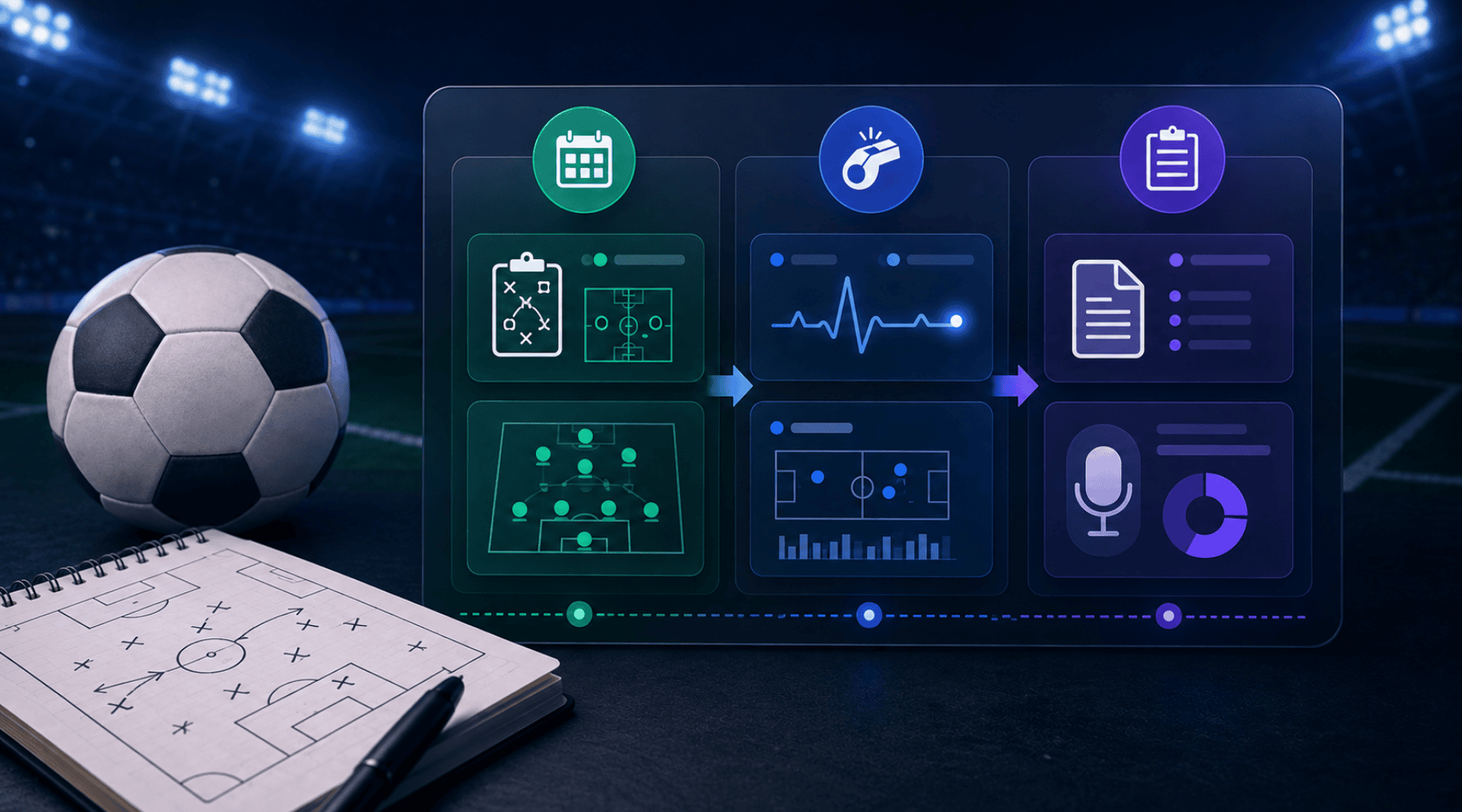
A sporting event creates at least three different editorial moments. Before it starts, audiences want orientation: schedules, likely line-ups, recent form, and the stakes surrounding the fixture. During the action, they need fast context that adds something beyond the broadcast or score application. After the result, attention shifts towards explanation, reactions, and discussions about what happens next. A useful sports affiliate content calendar should therefore organize coverage around changing reader questions, rather than filling every day with another preview.
Research on sports-fan curiosity describes how information gaps can encourage people to seek material about teams, athletes, and events. The practical lesson for publishers is simple: the gap is different at each stage. Before the match starts, your audience may want to see injury updates or a format explainer. Once play begins, those same people can already see the score and may want help interpreting what has changed. Repeating static information undermines their reason to return.
Live-Event Content Needs a Clear Reader Job
Live coverage competes with television, social feeds, official statistics, and instant alerts. It earns attention by interpreting observable events without presenting every swing as a settled trend or prediction. The useful gap is between what the event viewers can already see and the explanation they cannot obtain from a notification or score update alone.
A website such as Lucky Rebel can serve as a concrete example because its editorial task remains focused on what a sports audience needs during play. An editor could begin with an observable event, such as repeated turnovers or a change in field position, then add a verified metric and explain what it may indicate. The wording should keep those layers separate. “The team has lost possession five times” is a recorded fact if the data is reliable. “The press is disrupting its build-up” is an interpretation. “Another goal is coming” is a prediction and requires far more restraint.
Lucky Rebel’s separate editorial material shows how a brand can narrow from a broad product destination to a specific real-time sports subject, while still distinguishing visible evidence from opinion. That distinction gives live copy a purpose the scoreline cannot provide and prevents fast-moving commentary from sounding more certain than its sources allow.
An article about real-time sports activity illustrates the format through discussions of momentum, shot quality, turnovers, field position, and in-game statistics. Its value here is structural: it shows the kinds of signals a sports article might focus on.
Build the Before, Live, and After Matrix
The calendar becomes more useful when every planned item has a reader question, evidence threshold, and expiry decision attached to it.
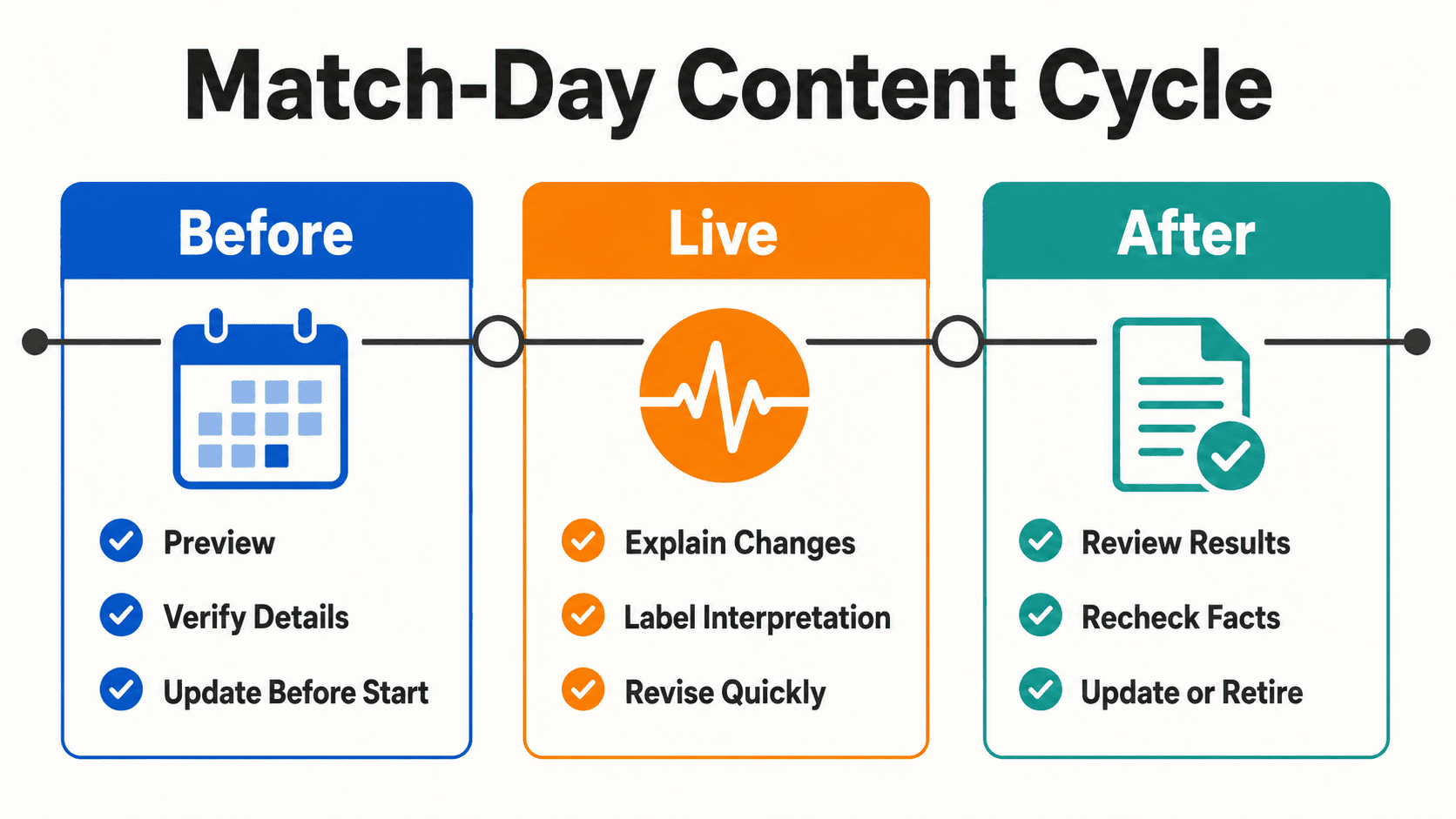
| Phase | Immediate reader question | Best format | Evidence and maintenance |
| Before | What should I understand before the event? | Preview, schedule, rules or player context | Official timings and current team information; update close to the start |
| Live | What has changed, and what does it mean? | Short analysis, verified data note, or developing explainer | First-party statistics and labeled interpretation; revise as events move |
| After | Why did the result happen, and what follows? | Review, reaction, tactical analysis or next-round explainer | Final data and attributable comment; refresh links or retire outdated previews |
This method also exposes weak ideas early. A preview with no current evidence is premature. A live post that merely restates the score has no distinct job. A reaction article that ignores the next fixture may decay within hours.
The expiry field matters because event content does not age evenly. Marking each commission as evergreen, update-required, or event-bound gives editors an action after publication.
The Final Whistle Is a Change of Intent
Post-match demand lasts when coverage moves beyond a basic recap. A disputed decision may require a rules explanation. An unexpected selection can lead to a tactical review. A tournament result may immediately create questions about qualification, recovery time, or the next opponent. Fixtures, interviews, audio analysis, and historical comparisons can also serve fans whose interest is social or interpretive rather than purely informational.
Post-event planning should reserve space for correction as well as continuation. Early reports may rely on provisional statistics or incomplete comments, so the final version needs a defined recheck point. Editors should also decide whether the page will become a lasting analysis, redirect readers toward the next fixture, or remain as a dated record. That choice determines how much context the first draft needs.
That wider appetite appears in a PLOS One study of 13,692 comments across 5 Chinese sports podcast channels. Information seeking was the primary reason identified for listening, while the research also examined cognitive, emotional, and social motivations. The setting is specific and should not be treated as universal, but it supports a useful editorial point: sports interest can continue through analysis and conversation after the live contest ends.
A strong match-day plan therefore assigns each article a moment, a question, and a lifespan. The event supplies the timetable. The reader’s changing needs decide what deserves to be published.
_________________________________________________________________________________________
This content has been produced for Affiverse by an independent Advertiser and expresses their own views, in their own words. If you would like to feature as an advertiser and be interviewed on Affiverse’s media content platform, please email [email protected].
Everflow
Connect
Tradedoubler
Connect
1win Partners
Connect
PIN-UP Partners
Connect
Shopnomix, a Nomix Group Company
Connect
V.Partners
Connect
Huffson Group
Connect
Share your expertise and expand your reach and become a content contributor with us today!
Contact Us To Find Out More