Meta Adds USDC Payments for Ads: What Performance Teams Need to Know
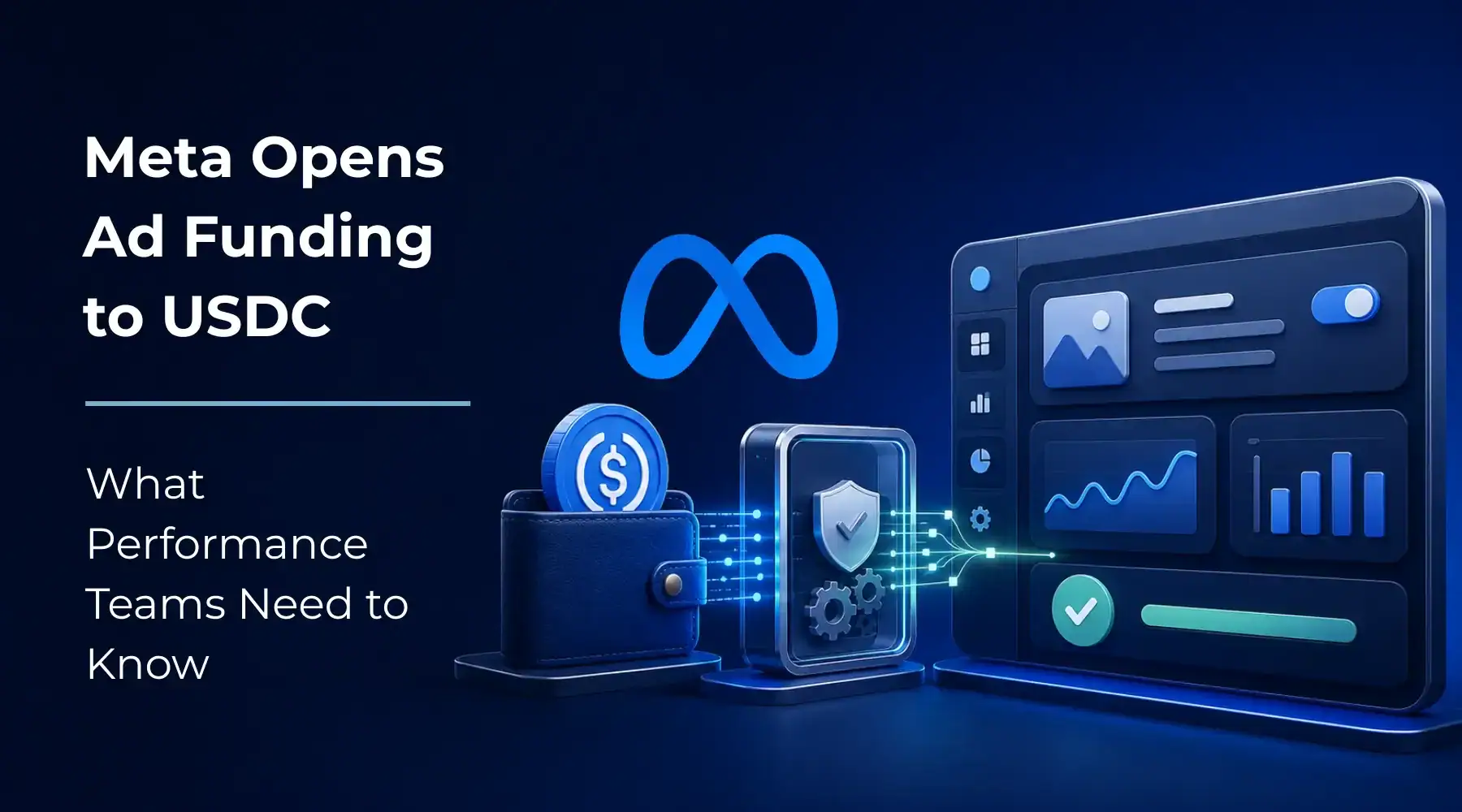
Meta has added a new way for advertisers in selected countries to fund their ad accounts: USDC, the dollar-pegged stablecoin. The option could help international agencies, crypto-native brands and performance teams that already hold digital dollars. But this is not Meta becoming a crypto bank, and it does not remove the need for financial controls.
Key Takeaways: What Advertisers Need to Know About Meta’s USDC Option
- Eligible advertisers can fund prepaid ad balances with USDC, which a third party converts into local currency before Meta receives it.
- The option may be most useful for cross-border agencies, crypto-native brands and teams that already hold USDC.
- Transfers can be irreversible, external fees may apply, and eligible refunds are returned as ad credit rather than USDC.
How Meta’s USDC Payment Option Works
According to Meta’s official help page, stablecoin funding is available only to advertisers in selected countries. An eligible advertiser chooses the stablecoin option when adding money to an ad account, then sends USDC from a crypto wallet to a third-party payment partner.
That provider converts the USDC into the advertiser’s selected local currency and settles the payment with Meta. The corresponding amount appears as a prepaid balance in the ad account. Campaign spending and balances still appear in conventional currency inside Ads Manager; advertisers are not buying ads priced in crypto.
Meta says it does not hold, transmit or process the stablecoin. USDC is the funding rail, while the advertiser’s working balance remains fiat-denominated ad credit. Meta does not charge its own fee for using the option, although wallet providers, exchanges and blockchain networks may apply fees. Meta also warns that minor exchange-rate movements may affect the final amount credited when USDC is converted into local currency.
Why USDC Could Matter to Advertisers
USDC may offer little advantage to advertisers with reliable cards, bank transfers and invoicing. Its value is clearer for teams funding campaigns across borders, where banking delays, card limits and currency conversions can slow media spend.
Eligible agencies, crypto-native businesses and regional teams could use USDC to fund Meta ad accounts more directly, although the option is only available where Meta enables it.
For affiliate and performance teams, this reflects the wider shift towards crypto payments and real-time payouts as practical tools for reducing payment friction across markets.
The Risks Move Outside Ads Manager
Faster funding does not mean risk-free funding. Blockchain transfers are generally irreversible. Meta says funds sent to an incorrect address or through an unsupported network cannot be recovered or refunded. Advertisers are also responsible for the security of the wallet used to make the payment.
Refunds are another important limitation. Any eligible refund of unused stablecoin-funded balance follows Meta’s normal billing rules and is returned as ad credit, not as USDC sent back to the original wallet. Teams should therefore treat the transaction as a conversion into platform credit, not as a reversible crypto deposit.
Finance leads will need records of the USDC acquisition cost, network charges, conversion value and credited amount. That matters when agencies fund accounts for clients or allocate one balance across campaigns.
In other words, the convenience at the payment layer creates extra work at the controls layer. Wallet permissions, approval thresholds and transaction checks should be defined before a media buyer is asked to fund an account.
What Performance Teams Should Do Now
Eligible teams should begin with a small test:
- Confirm the wallet address and supported network.
- Record any third-party transaction charges.
- Reconcile the USDC sent with the balance credited in Ads Manager.
- Set transfer approvals and rules for unused credit.
The payment method should not affect campaign measurement. Meta’s Views metric already requires careful interpretation, while its expanding AI search and live commerce tools continue to bring discovery closer to conversion. USDC changes how funds reach an ad account, not how marketers should assess reach, attribution or return on ad spend.
Why Meta’s USDC Move Matters Beyond Ad Payments
Meta’s USDC option is a payments update with strategic implications, not a reinvention of digital advertising. Its value will be highest for cross-border and crypto-native teams that already understand wallets, stablecoins and treasury controls. For everyone else, cards and bank payments may remain simpler.
The larger signal is that stablecoins are entering the performance-marketing stack. When Meta uses USDC as a route into ad spend, while keeping crypto away from Ads Manager, the technology starts to look less like a campaign theme and more like financial infrastructure.
Everflow
Connect
Tradedoubler
Connect
1win Partners
Connect
PIN-UP Partners
Connect
Shopnomix, a Nomix Group Company
Connect
V.Partners
Connect
Huffson Group
Connect
Kawaii Partners
Connect
Share your expertise and expand your reach and become a content contributor with us today!
Contact Us To Find Out More