Selena Gomez’s Rare Beauty Joins Pushback Against AI TikTok Shop Content
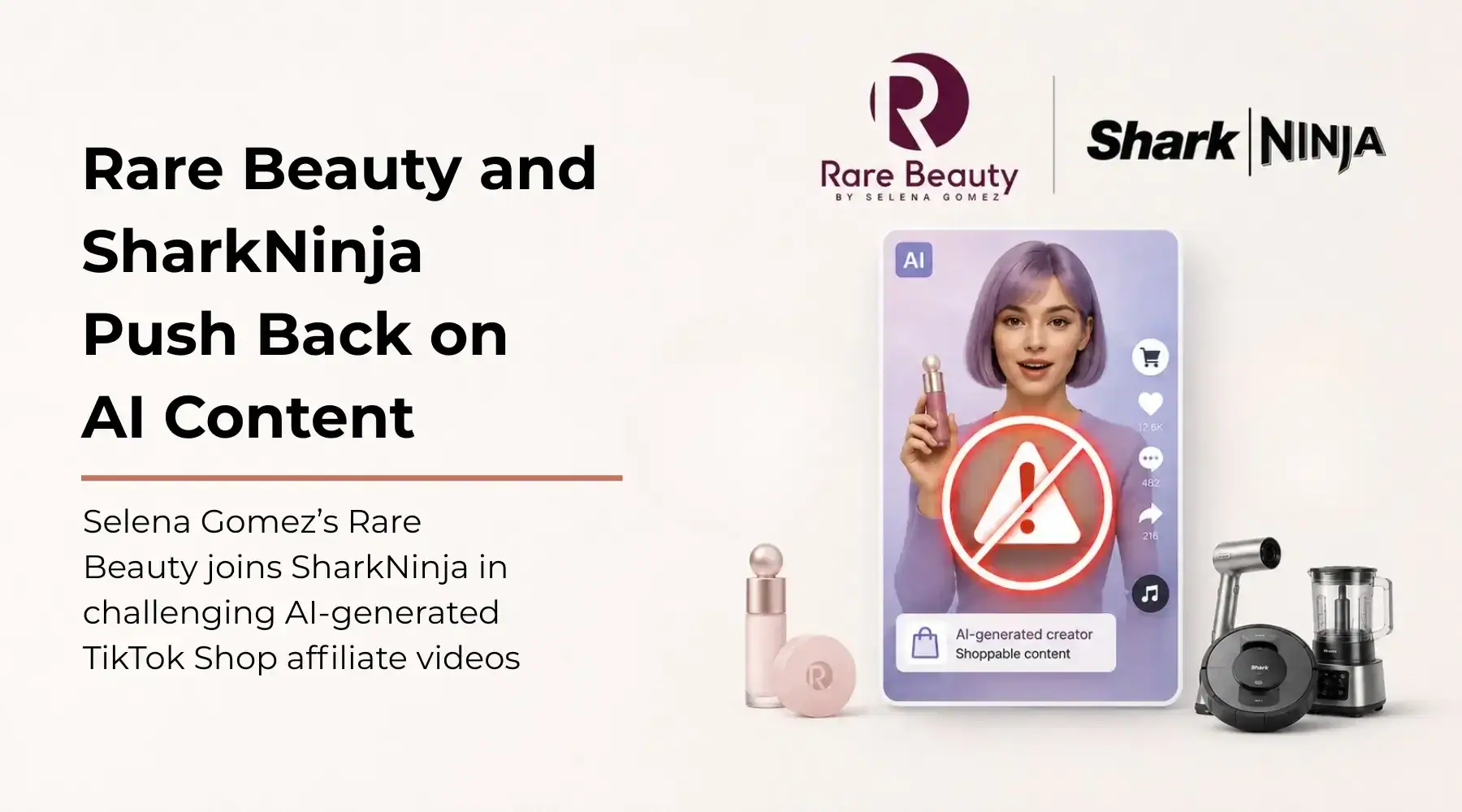
Selena Gomez’s Rare Beauty has pushed back against AI-generated TikTok Shop affiliate videos featuring its products, joining SharkNinja among the brands raising concerns about synthetic content in social commerce.
Rare Beauty told The Wall Street Journal that it had no connection to the videos and does not work with AI-generated creators or digital duplicates. The posts showed an artificial version of a creator appearing to use the company’s cosmetics.
Key Takeaways: Rare Beauty and SharkNinja Push Back on AI TikTok Shop Content
- Selena Gomez’s Rare Beauty has rejected any connection to AI-generated TikTok Shop videos featuring its products.
- SharkNinja has prohibited AI-generated affiliate content and warned that commissions may be removed when affiliates breach the policy.
- The cases highlight the difficulty brands face in controlling how products are promoted through TikTok Shop’s open affiliate model.
AI Videos Feature Rare Beauty Products
The creator featured in the WSJ report posted affiliate videos showing an AI-generated version of herself applying Rare Beauty products. Any resulting purchases would have been eligible for commission, despite the posts having no direct connection to Rare Beauty.
TikTok Shop’s open affiliate model allows creators to select available products, add them to shoppable content and earn commissions from attributed sales. The TikTok Creator Monetization Guide explains how this model differs from direct partnerships, where brands normally approve creators and agree on the content before publication.
Open programs can help brands reach more potential customers without manually recruiting every affiliate. However, they can also reduce oversight when creators use artificial presenters, digital duplicates, or synthetic product demonstrations.
The spread of AI-generated videos across TikTok Shop is already prompting brands to reconsider how they manage affiliate content. A video can carry an AI disclosure while still leaving viewers unsure whether the product was physically tested or whether the brand approved how it was presented.
SharkNinja Introduces a Formal No-AI Policy
SharkNinja has taken a more direct approach by formally restricting AI-generated content within its TikTok Shop affiliate program.
In a memo obtained by The Wall Street Journal, the home and beauty appliance company said TikTok’s AI Video Maker was “not permitted under our affiliate program’s No AI-Generated Content policy.” Affiliates using AI-generated content to promote Shark or Ninja products were also warned that their commissions would be removed.
SharkNinja Chief Commercial Officer Neil Shah explained the reasoning behind the policy:
We didn’t want an AI-generated Shark vacuum cleaning an AI-generated floor. We want real consumers seeing real products being used by real people.
The policy gives affiliates a clear restriction and enforcement consequence. Rare Beauty, by comparison, has publicly distanced itself from AI-generated promotions featuring its products but has not announced equivalent commission-removal rules.
TikTok Shop’s Affiliate Program Continues to Grow
Approximately 11.3 million creators had generated sales through TikTok Shop’s global affiliate program during 2026 to date, according to Charm.io data cited by the WSJ. Around 945,000 of those creators were based in the US, compared with 2.3 million global creators in 2024.
US TikTok Shop sales are projected by eMarketer to reach $23.41 billion in 2026, representing an increase of 48%. The platform’s growth makes open affiliate programs an increasingly significant distribution channel, but it also increases the amount of content that brands may need to oversee.
The development also adds to the wider debate around AI influencers in affiliate marketing. Synthetic creators can publish at high volume and earn through many of the same commission systems used by human affiliates.
What the Pushback Means for Affiliates
Affiliates should not treat access to a product through an open marketplace as approval for every content-production method. Brand-specific terms may be stricter than TikTok’s general platform policies, particularly where AI avatars, generated demonstrations, or digital duplicates are involved.
Brands may also need to state more clearly whether AI can be used for editing and production support or whether all synthetic representations of people and products are prohibited. Affiverse’s AI Affiliate Marketing Guide examines how automation can support affiliate content without obscuring who created a recommendation or how its claims were verified.
Everflow
Connect
Tradedoubler
Connect
1win Partners
Connect
PIN-UP Partners
Connect
Shopnomix, a Nomix Group Company
Connect
V.Partners
Connect
Huffson Group
Connect
Kawaii Partners
Connect
Share your expertise and expand your reach and become a content contributor with us today!
Contact Us To Find Out More