AI-Generated Videos Spread Across TikTok Shop as Brands Review Affiliate Controls
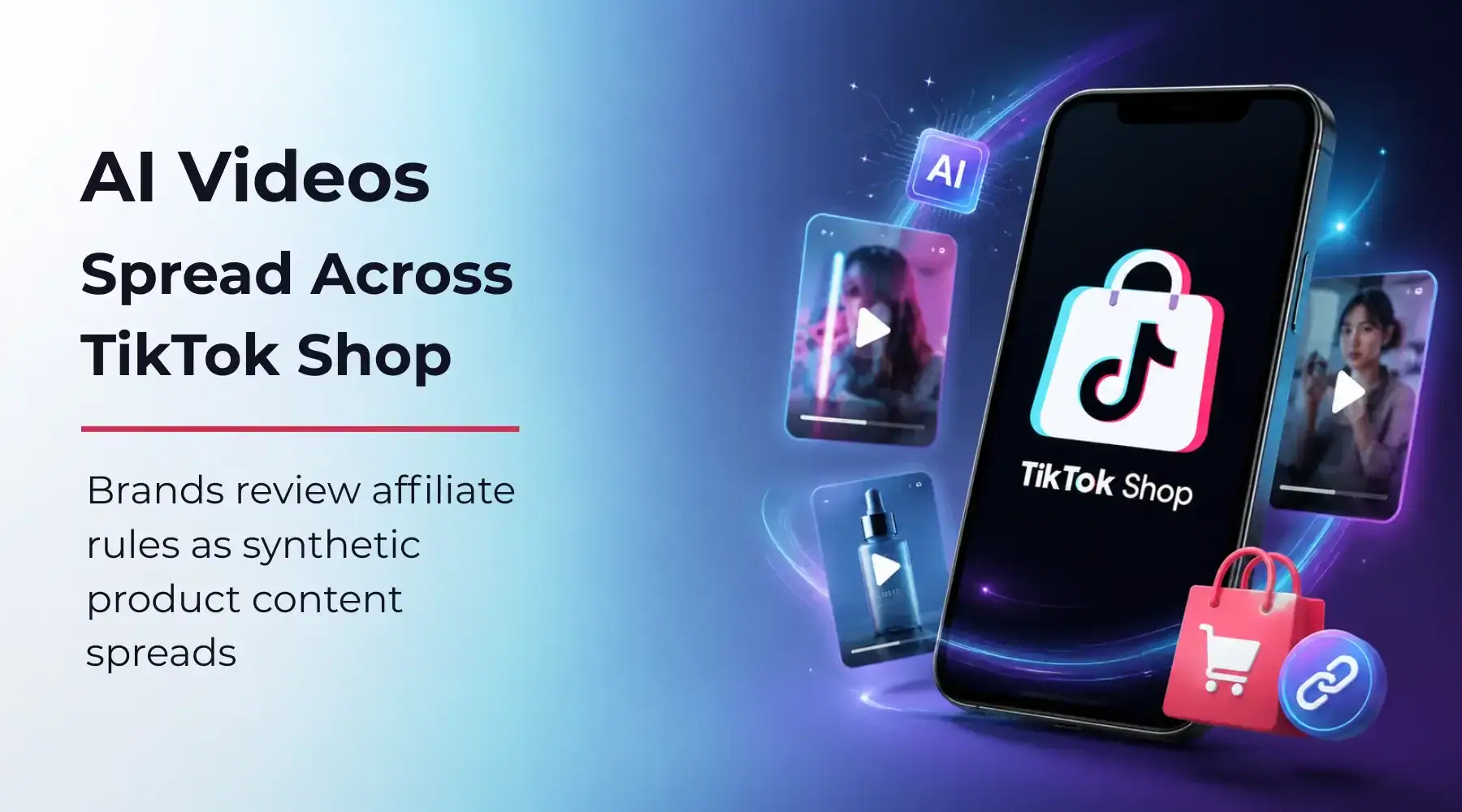
AI-generated product demonstrations are becoming more common across TikTok Shop, giving sellers and affiliate creators a faster way to produce shoppable content while raising questions about product accuracy, consumer trust and competition with human creators.
The development is also pushing brands to decide whether AI-generated affiliate videos should be allowed under their program terms and how closely content produced through TikTok Shop’s open affiliate model needs to be monitored.
Key Takeaways: How AI Videos Are Changing TikTok Shop Affiliate Content
- AI-generated product demonstrations are appearing more frequently across TikTok Shop.
- TikTok allows AI-generated affiliate content when it is clearly disclosed, accurate and not misleading.
- TikTok’s AI Video Maker lets sellers create shoppable videos from existing product images and clips.
- Some human affiliates argue that synthetic videos compete with creators producing real product demonstrations.
- Brands are beginning to introduce their own restrictions, including policies that remove commissions from prohibited AI content.
AI Product Videos Become Easier to Produce
The Wall Street Journal reported that AI-generated makeup demonstrations, clothing videos and product showcases are spreading across TikTok Shop, where creators can receive commissions from purchases attributed to their content.
The report highlights a growing tension between the speed offered by synthetic content and the product-led reviews traditionally produced by affiliate creators who physically own and test the items they promote. Some creators have expressed frustration that AI-generated videos can receive advertising support and generate sales without requiring the same production process as a hands-on demonstration.

Source: TikTok Seller Center page.
TikTok has been adding tools that make this type of production easier for sellers. Its updated Seller Center AI Video Maker, introduced in June, combines the platform’s previous image-to-video and automated video-generation tools. Sellers can select a product, upload images or video clips and generate a ready-to-post shoppable video. The tool also supports changes to the video length, language, voiceover, templates, prompts, scripts and overlay text. TikTok says the updated model is intended to produce more realistic and visually compelling content.
The expansion comes as TikTok Shop Affiliate becomes a more established creator income route. As explained in Affiverse’s TikTok Creator Monetization Guide, Shop Affiliate differs from the Creator Rewards Program by connecting creator earnings directly to product sales and attributed orders rather than eligible video performance.
Human Affiliate Creators Face New Competition
AI tools allow creators to produce multiple product videos without filming every demonstration themselves. Videos can include synthetic presenters, virtual product scenes or AI-generated versions of the creator.
According to the report, some affiliates are now using custom avatars to produce promotional videos and earn through a combination of sales commissions and direct brand agreements. The report cited data from Charm.io indicating that approximately 11.3 million creators had generated sales through TikTok Shop’s global affiliate program during 2026, including around 945,000 in the US.
For human creators, the concern is not necessarily the use of AI for editing, translation or production support. The larger question is whether a video presented as a product experience accurately reflects how the item looks and performs in real use. The issue builds on the wider growth of AI influencers in affiliate marketing, where virtual personalities can promote products, use tracked links and earn commission through much of the same infrastructure available to human creators.
Brands Introduce Their Own AI Affiliate Rules
TikTok permits AI-generated affiliate content, but individual brands can apply stricter conditions to creators promoting their products. WSJ reported that home and beauty appliance company SharkNinja had told members of its TikTok Shop affiliate community that AI-generated content was not permitted under its program. The company warned that commissions could be removed when affiliates used AI-generated content to promote its products. Explaining the policy, SharkNinja Chief Commercial Officer Neil Shah said the company wanted “real consumers seeing real products being used by real people”.
The decision reflects the difficulty brands face when balancing affiliate reach with control over how their products appear. TikTok Shop sellers can use an open affiliate plan, allowing a broad range of eligible creators to promote their products, or take a more targeted approach by selecting partners individually. Open access can increase the number of creators producing content, but it also creates a larger monitoring task for brands. A company may therefore appear in AI-generated affiliate content even when it has not directly approved the individual creator or the video’s presentation.
What TikTok’s AI Content Rules Require
TikTok Shop allows content that has been created or significantly modified using AI, provided creators remain transparent and do not mislead viewers. Its policy requires creators to disclose content that is fully generated or significantly altered by AI. Disclosure can be added through on-screen text, a watermark, the video description or TikTok’s built-in AI-generated content setting. Content produced through official TikTok AI features may also be labelled automatically.
TikTok’s rules prohibit creators from:
- Making false or exaggerated product claims.
- Using AI to inaccurately change a product’s size, colour, features or performance.
- Fabricating unrealistic results.
- Creating false endorsements or impersonating another person.
- Using a person’s likeness, voice, name or intellectual property without authorisation.
TikTok says content will not be restricted solely because the AI label has been enabled, as long as the video complies with its wider platform and Shop policies. However, undisclosed, misleading or inaccurate content can lead to removal, reduced visibility or account-level enforcement.
The platform has separately announced that it is testing stronger detection systems for accounts that mass-produce AI-generated spam and crowd out original creators.
Why TikTok Shop Affiliate Programs Need Clearer AI Rules
The rise of synthetic TikTok Shop content may require affiliate programs to define where AI use is permitted. This could include rules on AI-assisted editing, virtual presenters, product ownership and fully synthetic demonstrations. Affiliate disclosure also remains separate from AI disclosure. Brands therefore need to ensure creators clearly communicate commercial relationships while accurately labeling AI-generated or significantly altered content.
As explored in Affiverse’s guide to AI-generated endorsements and affiliate compliance, programs may need dedicated AI policies, disclosure standards and monitoring processes rather than relying on general affiliate terms. AI video can help sellers and affiliates produce content more quickly, but its long-term value will depend on whether product accuracy and consumer trust are maintained.
Everflow
Connect
Tradedoubler
Connect
1win Partners
Connect
Shopnomix, a Nomix Group Company
Connect
Huffson Group
Connect
Kawaii Partners
Connect
Trackdesk
Connect
Share your expertise and expand your reach and become a content contributor with us today!
Contact Us To Find Out More