Google Adds Search Console Reporting for Social and Video Content
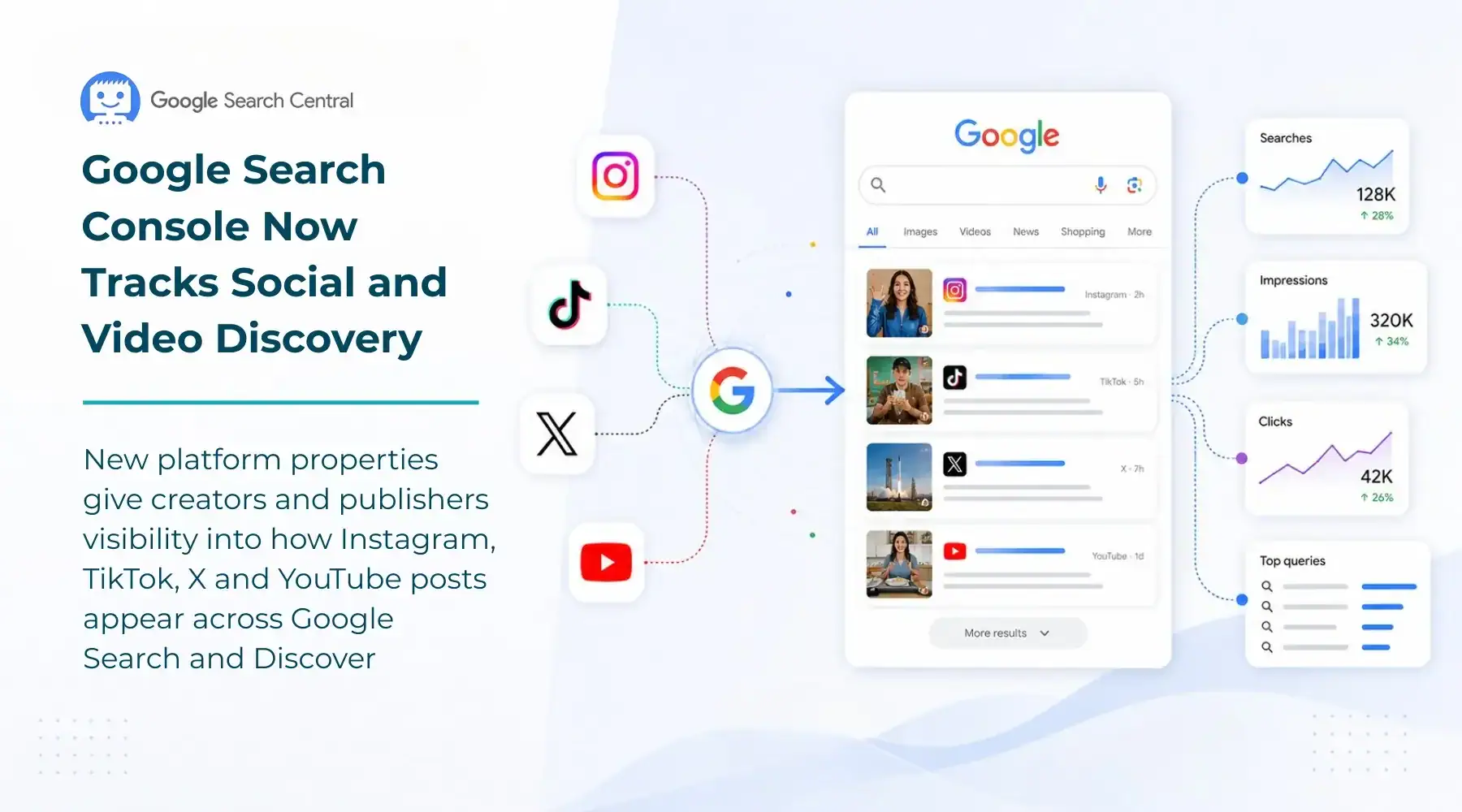
Google has introduced a new Search Console property type for social and video platforms, giving creators, publishers and content teams a clearer view of how their off-site content performs across Google Search and Discover.
According to Google Search Central, the new platform properties are designed to help users understand how posts from Instagram, TikTok, X and YouTube are discovered through Google. The update means creators and publishers can now track which search terms lead people to their platform content, which posts are driving visibility, and how audiences are interacting with those posts.
For affiliate marketers, the update matters because discovery no longer happens only on owned websites. Social posts, short-form videos, creator recommendations and platform-native content can all influence a user before they click through to a publisher, brand or merchant site.
Key Takeaways: What Google’s Platform Properties Update Means
- Google Search Console is adding platform properties for Instagram, TikTok, X and YouTube.
- Creators and publishers will be able to see Search and Discover performance for supported social and video content.
- Reports include clicks, impressions, queries, top-performing posts, recent traffic trends and growth milestones.
- The feature is rolling out gradually over the coming weeks.
- For affiliate teams, the update adds another layer to creator measurement, content planning and off-site search visibility.
Search Console Expands Reporting Beyond Websites
The new platform properties sit inside Search Console and work as a separate property type from a traditional website property. Once connected, users can access reporting for supported social and video accounts.
Google says the Performance report will show total clicks, impressions and additional metrics, with the ability to filter and sort data by posts and queries. Users can also export the data for analysis elsewhere.
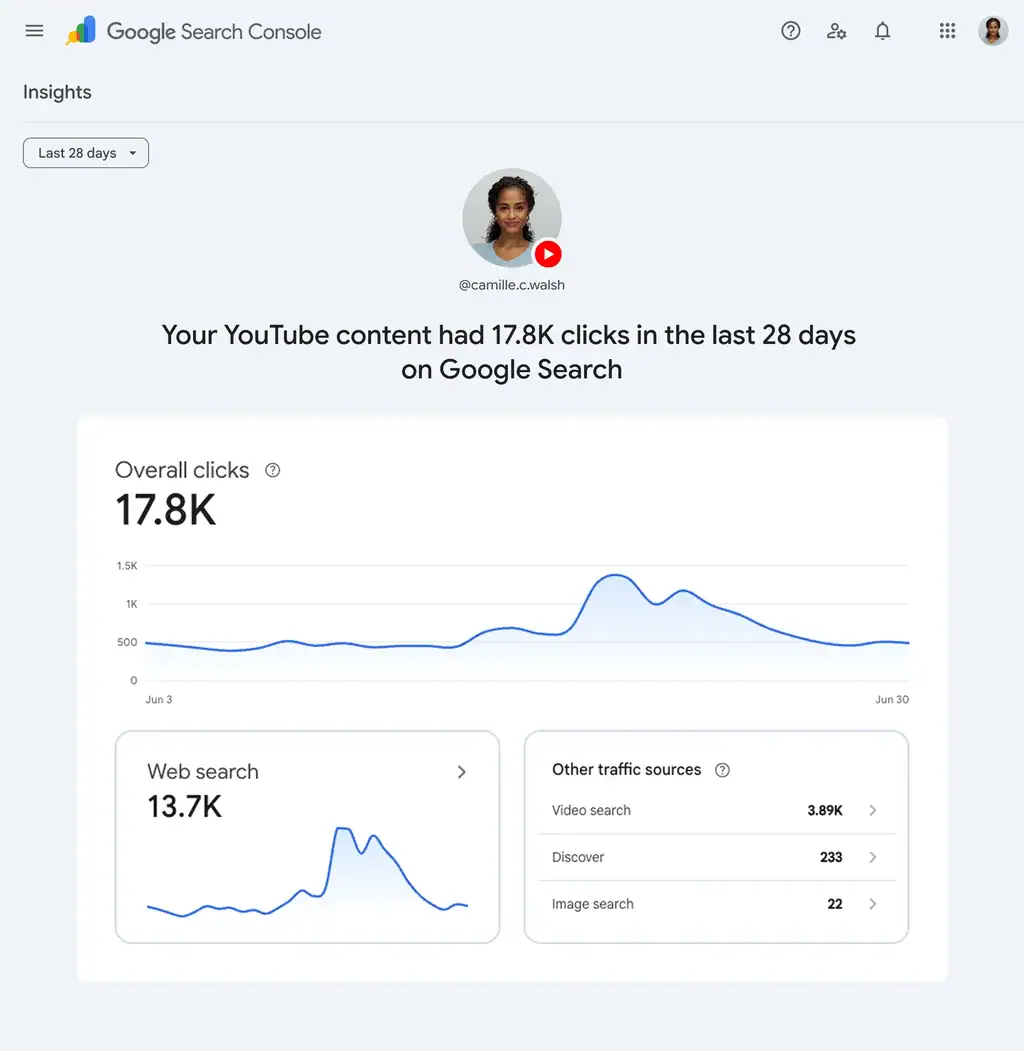
Source: Google Search Central
The Insights report gives a higher-level view of recent traffic trends, top-performing posts and how people discover an account through Google. There is also an Achievements section for tracking growth milestones, such as reaching a new threshold for clicks from Google Search over the past 28 days.
The update follows Google’s recent introduction of Search Generative AI performance reports in Search Console, which added more visibility around AI Overviews, AI Mode and Discover. Together, these reporting updates show how Search Console is expanding beyond traditional website performance to cover more of the ways content is discovered across Google.
Why Off-Site Search Visibility Matters for Affiliates
For affiliate and performance marketers, this is another sign that Google is treating off-site content as part of the wider discovery journey. A product review may still live on a publisher website, but the first touchpoint might come from a TikTok video, an Instagram Reel, a YouTube Short or a post on X. Until now, much of that content was harder to evaluate from a Search perspective. Platform analytics could show engagement inside each app, but they did not give the same view of Google Search demand.
If a creator’s YouTube video is appearing for high-intent search terms, or an Instagram post is picking up visibility in Discover, that content may be doing more than driving likes or follows. It may be influencing product research, brand recall and later conversion behavior. This connects closely to the wider measurement problem seen across AI, social and affiliate channels. As more discovery happens before a trackable website visit, tracking AI traffic in GA4 has become part of a broader reporting challenge for affiliate teams. Google’s new platform properties do not solve attribution, but they give teams more data around content discovery before the final click.
Social and Search Are Becoming Harder to Separate
The update also reflects a broader shift in how users find content. Search, social and video are no longer separate stages of the funnel. A user might see a creator post, search the product on Google, watch a YouTube comparison, return to social, and then convert through a publisher or merchant link. That shift is already visible in TikTok search behaviour, where product reviews, tutorials and creator recommendations increasingly act as discovery touchpoints. For affiliate teams, this means social content can influence search intent before a user ever reaches a trackable offer. That makes content planning more connected. SEO teams can no longer look only at website pages. Social teams can no longer judge content only by platform engagement. Affiliate managers also need to understand which creators and publishers are shaping demand before users arrive at a trackable offer.
This is the same direction seen in other platform updates. Meta has been moving AI search, live commerce and affiliate partnerships closer together across Facebook and Instagram, creating more ways for creator content and product discovery to overlap. Google’s own AI search and shopping updates have also pushed commercial visibility closer to AI-led recommendations and product surfaces. For affiliate programs, the practical question is not whether social content “counts” as performance activity. The question is how much of the user journey it influences, and whether teams have enough data to judge that influence fairly.
How Query Data Can Shape Social and Video Content Strategy
The most useful part of platform properties may be query-level reporting. If creators and publishers can see which search terms lead people to their social and video posts, they can make stronger decisions about future content.
For example, the data could help teams identify:
- Short-form videos appearing for comparison-led searches.
- Instagram or TikTok posts gaining visibility around product questions.
- YouTube explainers supporting topic clusters that already perform well on a publisher website.
That can help teams connect off-site content with owned content, product pages, campaign planning and partner reporting. It also makes creator selection more practical. Instead of judging creators only by audience size or engagement rate, teams can start looking at how their content performs across Google Search and Discover.
This is especially relevant as Instagram affiliate links in Reels and other platform-native commerce tools make creator content more directly connected to sales journeys. The YouTube element is also worth watching, as brands look for clearer YouTube creator performance data when planning partnerships and reporting on campaign value.
How to Add a Platform Property in Search Console
To add a platform property, users need to connect a supported social or video account through Google Search Console. The feature currently supports Instagram, TikTok, X and YouTube.
- Open Google Search Console.
- Go to the Search Console verification page, or use the property selector drop-down and click “Add property.”
- Choose one of the supported platforms: Instagram, TikTok, X or YouTube.
- Follow the on-screen verification steps to securely authorize the account.
- Once verified, use the platform property reports to review Search and Discover performance, including clicks, impressions, queries, top posts and recent traffic trends.
Google says platform properties are rolling out gradually over the coming weeks, so some users may not see the option immediately.
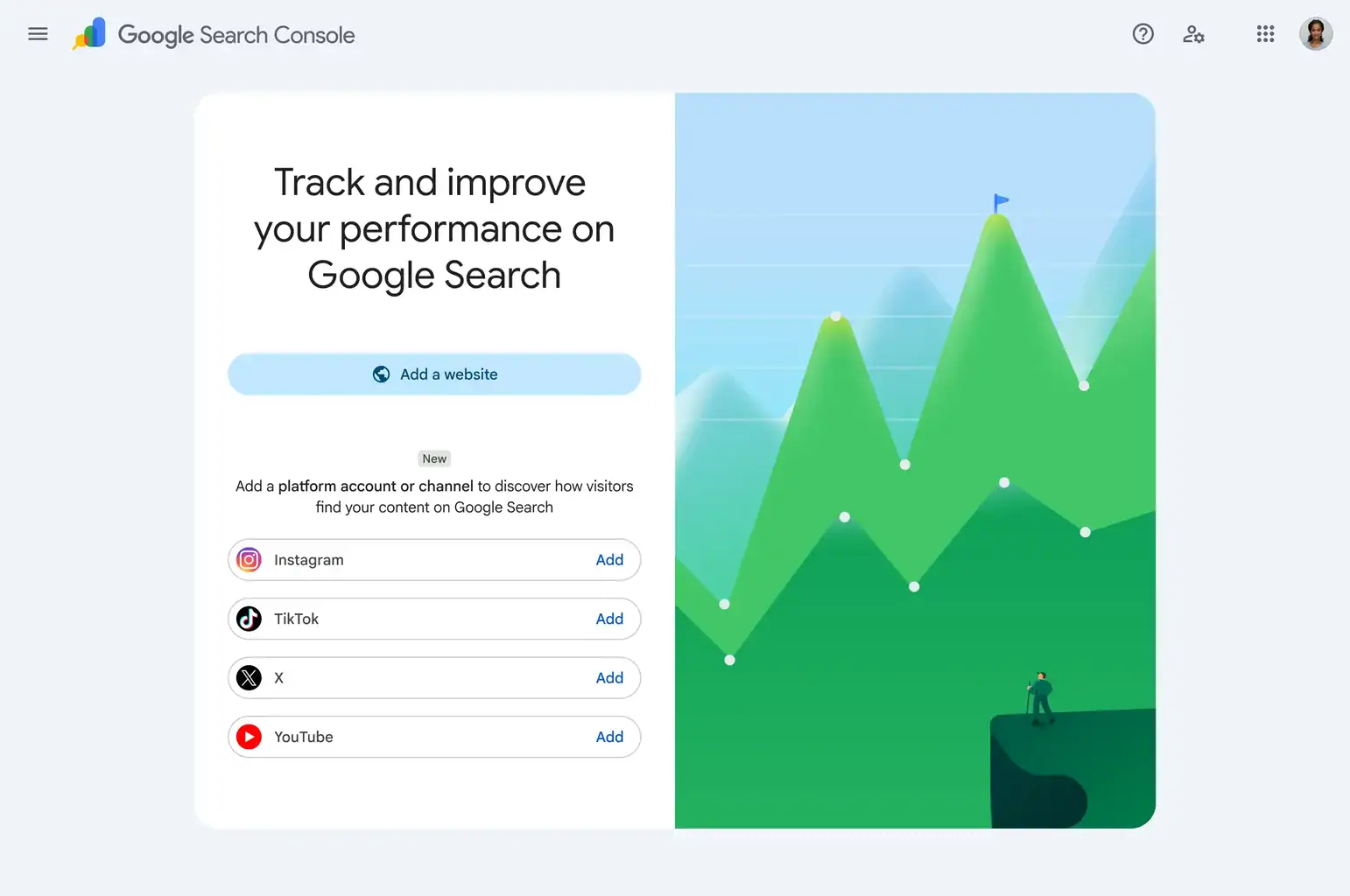
Source: Google Search Central
For publishers, affiliates and creator-led teams, this is worth checking as soon as access becomes available. It gives teams another way to compare how social and video content performs in Google alongside their existing website Search Console data.
How Marketers Should Use Platform Property Data
The next step for marketers is to check whether key creator, publisher and brand-owned accounts can be added as platform properties once the rollout reaches them.
After that, teams should compare platform property data with website Search Console data, GA4 reports, affiliate platform reporting and native social analytics. None of these sources will show the full customer journey on its own, but together they can give marketers a clearer view of how social and video content supports discovery before a tracked visit or conversion. This also fits the wider creator and measurement trends seen at Cannes Lions 2026, where discovery, influence and commerce became harder to separate.
This is especially useful as users move between Search, Discover, TikTok, Instagram, YouTube, AI search and publisher websites before taking action. Google’s platform properties do not solve attribution, but they do help creators and affiliate teams understand which off-site content is being found, which queries are driving visibility and where social or video posts may be influencing demand.
Everflow
Connect
Tradedoubler
Connect
1win Partners
Connect
PIN-UP Partners
Connect
Shopnomix, a Nomix Group Company
Connect
V.Partners
Connect
Huffson Group
Connect
Kawaii Partners
Connect
Share your expertise and expand your reach and become a content contributor with us today!
Contact Us To Find Out More