5 Cannes Lions 2026 Takeaways for Affiliate Marketers
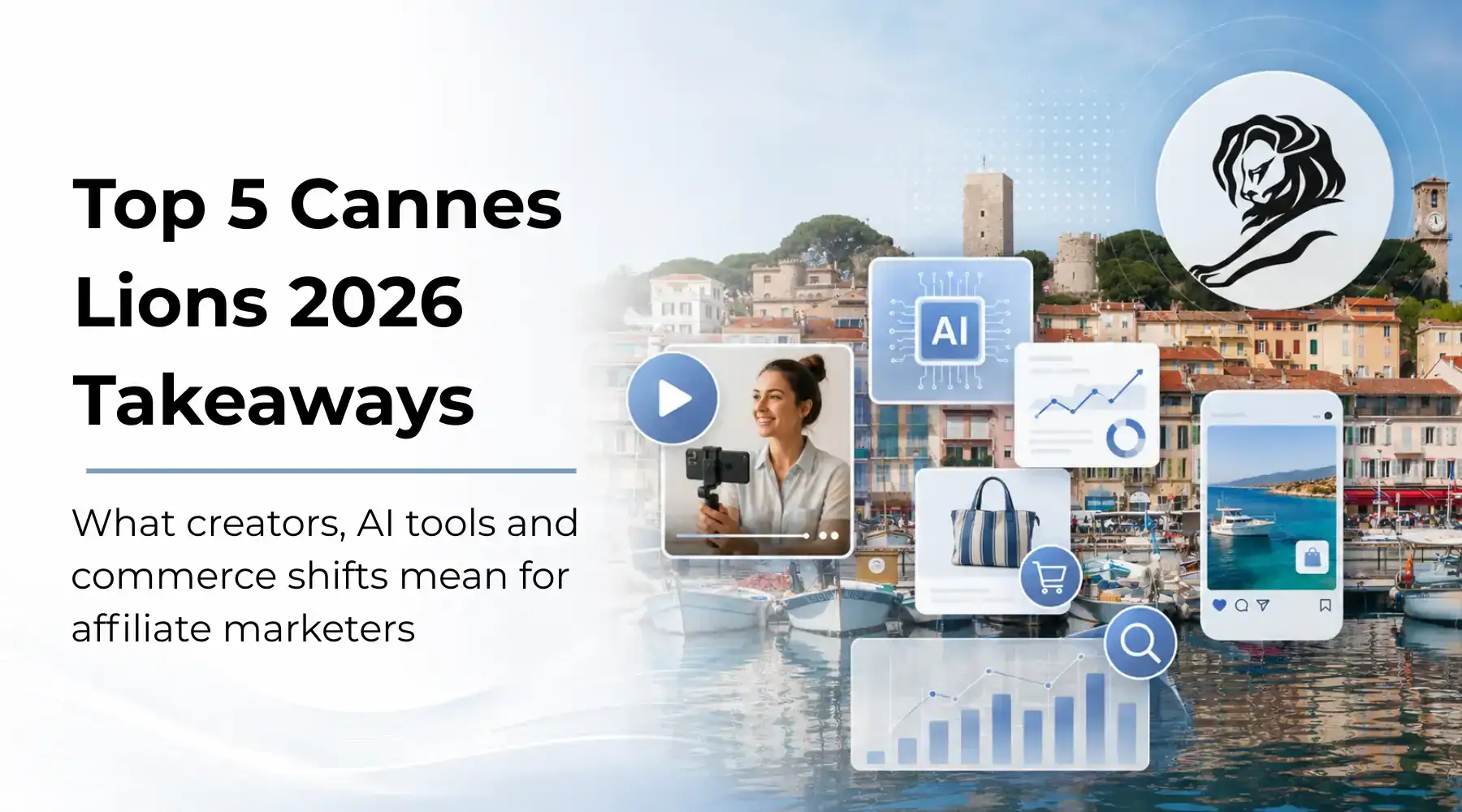
Cannes Lions 2026 brought the advertising, media and marketing industry back to Cannes from June 22–26, with creators, AI tools, retail media and commerce high on the agenda. For affiliate marketers, the useful signal came from how platforms now connect discovery, creator content and purchase activity. A buyer may compare products through AI search, engage with a creator and convert inside a closed platform, leaving less visibility for last-click reporting.
Key Takeaways from Cannes Lions 2026
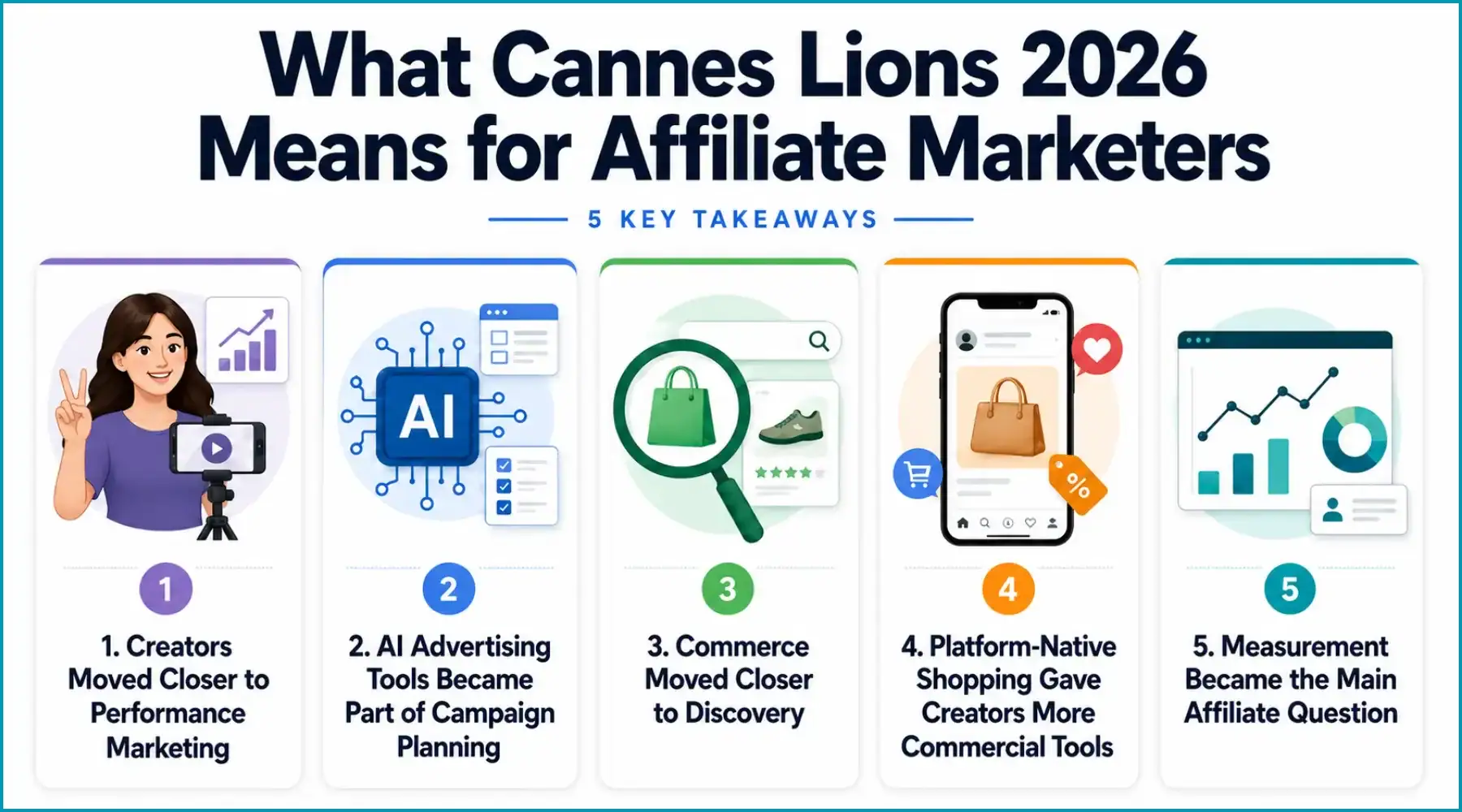
- Creators moved closer to performance marketing.
- AI advertising tools became part of campaign planning.
- Commerce moved closer to product discovery.
- Platform-native shopping gave creators more commercial tools.
- Measurement became the main affiliate question.
What Cannes Lions 2026 Means for Affiliate Marketers
For affiliate marketers, the main Cannes Lions 2026 signal sits in how quickly discovery, influence and conversion now overlap. Creators can shape demand before search, AI tools can guide product research, commerce platforms can shorten the path to purchase, and platform-native shopping can keep more of the journey inside closed environments. That makes measurement harder to read.
The five takeaways below look at what this means for creator partnerships, AI-led campaign planning, retail media, social commerce and attribution.
1. Creators Moved Closer to Performance Marketing
Creators no longer sit neatly inside brand awareness. Their content now feeds paid social, affiliate campaigns, live shopping, retail media, product education and community-led discovery. One post can spark demand, answer a product question, push a buyer into search and support a later purchase. That is why creators and affiliates are no longer separate budget lines for many partner teams.
For affiliate managers, this creates a planning issue. A creator may shape the shortlist without owning the final click. A publisher may close the sale after the user has already seen the product explained elsewhere. That doesn’t reduce the value of affiliate partnerships. It changes how teams judge them. The practical question: which creators can drive both trust and measurable action?
2. AI Advertising Tools Became Part of Campaign Planning
AI featured heavily at Cannes Lions 2026, but the most useful updates focused on campaign workflow. Google announced new YouTube tools built with Gemini, including deeper trend data in Google Ads Insights Finder, Brand Pulse metrics inside Insights Finder, a Content and Creator Insights API for partners, and upcoming Demand Gen creative tips. The same pattern showed up in TikTok’s Symphony Agent announcement at Cannes Lions 2026, where AI supports ad creation, creator content search and campaign execution across Symphony Creative Studio, Content Suite and TikTok One.
For affiliate teams, this matters because campaign planning will depend more on structured inputs. Product claims, audience data, creator briefs, content examples and performance signals need to move cleanly between teams and tools. The wider Google and Amazon AI ad tool updates point in the same direction: AI can speed up execution, but it can’t fix a vague brief. Bad inputs will still produce weak campaigns. Faster, maybe. But still weak.
3. Commerce Moved Closer to Discovery
Amazon’s Cannes Lions 2026 announcements pointed to a shorter route between seeing an ad and completing a purchase. Alexa+ Agentic Ads offered the clearest example, with Amazon describing a format where a customer can move from ad exposure to purchase inside a single Alexa+ conversation. For affiliate marketing, that cuts through the old funnel. A buyer may no longer move from search result to article, from article to merchant and then to checkout. They may ask an assistant for help, compare a short list of options and buy inside the same interface.
That puts pressure on attribution and connects directly to how AI is reshaping influence and attribution in affiliate marketing. If AI assistants, retail media platforms and marketplaces capture more of the purchase journey, affiliate teams need better ways to prove where product discovery began. The sale may happen inside Amazon, TikTok, Meta or another closed platform. The influence may start with a creator, comparison guide, review page, newsletter or search-led publisher. That gap needs attention.
4. Platform-Native Shopping Gave Creators More Commercial Tools
Creator commerce works best when the buyer doesn’t have to work too hard. That explains why major platforms keep building tools that connect content, product discovery and shopping inside their own environments. Product tags, live shopping tools, affiliate-style placements, AI search and recommendation features can all reduce friction between interest and purchase. The same direction showed up in Meta’s AI search and live commerce updates, where discovery and shopping sit closer together across Facebook and Instagram.
For affiliates and publishers, the trade-off comes through visibility. Platform-native shopping can improve conversion inside an app, but it can also limit how much partner teams can see across the wider journey. A creator may perform well inside one platform’s reporting dashboard, while a publisher drives research demand elsewhere. A retail media campaign may capture the sale, while a review page helped the buyer decide what to buy. Each channel wants credit. The buyer doesn’t care. They just move.
5. Measurement Became the Main Affiliate Question
The biggest Cannes Lions 2026 takeaway for affiliate marketers comes back to measurement. Creators influence demand before search. AI tools shape product research before a user reaches a website. Retail media captures purchase behavior close to checkout. Social commerce keeps more of the transaction inside the platform. Last-click reporting can’t explain that journey on its own.
Affiliate managers need to read partner performance with more context: assisted influence, branded search movement, creator engagement, content quality, AI search visibility, retail media overlap and conversion timing. Tracking AI traffic in GA4 gives teams one more signal to work with, but it won’t solve attribution across every platform. The bigger task is knowing which partners drive demand, which partners close it and which partners help buyers feel confident before they buy. Those roles won’t always belong to the same partner.
Affiverse Take on Cannes Lions 2026
Cannes Lions 2026 showed how closely creators, AI advertising tools and commerce now work together. For affiliate marketers, the issue is no longer whether these shifts matter. It’s how quickly partner teams can adjust their planning and reporting around them.
Creator content can start the journey. AI search can shape the shortlist. Retail media can capture the final sale. Platform-native shopping can keep the conversion inside a closed environment. The click still matters. It just doesn’t tell enough of the story.
Everflow
Connect
Tradedoubler
Connect
1win Partners
Connect
PIN-UP Partners
Connect
Shopnomix, a Nomix Group Company
Connect
V.Partners
Connect
Huffson Group
Connect
Kawaii Partners
Connect
Share your expertise and expand your reach and become a content contributor with us today!
Contact Us To Find Out More