Meta One Puts Links in Organic Posts and Reels Behind a Paid Tier
Meta has officially launched Meta One, bringing its existing Instagram, Facebook and WhatsApp subscriptions together with new paid plans for creators, businesses and frequent AI users.
For affiliate and performance teams, the most commercially relevant feature sits inside the Advanced plan, which starts at $49.99 per month. It includes links in organic posts and Reels, exportable analytics, deeper audience insights and the ability to schedule Stories up to 30 days in advance.
Direct links could shorten the journey between social content and a merchant’s website. However, Meta has not clarified whether every affiliate URL will be permitted, how link clicks will appear in its analytics or whether linked posts will receive different distribution.
Key Takeaways From the Meta One Launch
- Meta One plans are now available globally, although features, prices and eligibility can vary by region, app and account.
- The Advanced creator and business plan starts at $49.99 per month.
- It includes links in organic posts and Reels, exportable analytics, Story scheduling and deeper audience insights.
- Direct links could reduce reliance on link-in-bio pages and shorten the path to a merchant’s website.
- Meta has not confirmed how affiliate links, click attribution or linked-content distribution will work.
- The core versions of Instagram, Facebook, WhatsApp and Meta AI remain free.
Meta Brings Its Paid Plans Under Meta One
Instagram Plus, Facebook Plus and WhatsApp Plus launched earlier in 2026 and now sit within the wider Meta One subscription offering. The individual plans start at $2.99 or $3.99 per month and focus mainly on customization, messaging and interaction features.
Meta One expands that model through bundled plans for individuals, AI users, creators and businesses. Meta says the launch includes more than 50 features across Instagram, Facebook, WhatsApp and Meta AI. The company also reports 15 million subscriptions and trials to date, although that figure combines paying subscribers with people using trials.
The core apps remain free, while the paid plans provide higher AI usage limits and additional publishing, analytics and account-management tools.
Meta has previously tested other paid platform features tied to professional accounts and link sharing. The full Meta One launch turns that earlier experiment into part of a broader subscription strategy.
Meta One Plans and Pricing
| Plan | Starting Price | Main Focus |
|---|---|---|
| Instagram Plus | $3.99/month | Additional Instagram customization and interaction features |
| Facebook Plus | $3.99/month | Facebook and Messenger customization and Reels insights |
| WhatsApp Plus | $2.99/month | Messaging organization, themes and personalization |
| Meta One Core | $7.99/month | App subscription features and higher Meta AI usage |
| Meta One Premium | $19.99/month | Higher AI generation limits and expanded creative tools |
| Meta One Essential | $14.99/month | Professional tools, verification features and Meta Business Agent access |
| Meta One Advanced | $49.99/month | Content links, scheduling, analytics and audience insights |
| Meta One Expert | $149/month | Higher feature access and Meta Business Agent capacity |
| Meta One Max | $499/month | Meta’s highest level of access for teams operating at scale |
Note: Prices are monthly starting points. Meta says pricing, availability and included benefits may vary by region, app and account.
What the Meta One Advanced Plan Includes
Meta One Advanced includes several tools aimed at creators, businesses and teams managing commercial accounts:
- Links in organic posts and Reels
- Stories scheduled up to 30 days in advance
- Exportable analytics
- Deeper audience insights
- Team access without password sharing
- More linked WhatsApp devices
- Business broadcast credits
- Additional Meta Business Agent capacity
Across its creator and business plans, Meta also highlights enhanced profiles that can display websites, locations and reviews. Other features include a more prominent follow button on Reels and automatic follow invitations for people who engage with an account.
What Paid Links Could Mean for Affiliate Teams
Direct links in organic posts and Reels could remove a step from the social-commerce journey. Instead of asking users to visit a profile and open a link-in-bio page, eligible creators and businesses may be able to send them directly to a merchant, product page or campaign landing page.
That could make UTM tracking and affiliate attribution easier, but only if Meta accepts affiliate and redirect URLs and reports the resulting clicks clearly. Its announcement does not explain what click-level reporting will be provided or whether posts containing links will be treated differently by recommendation systems.
The feature should not be confused with Instagram’s existing native affiliate links for Reels, which allow eligible creators to tag products and earn commissions. Meta One appears to provide broader linking inside organic content, but detailed eligibility and usage rules have not been published.
Should Affiliate Teams Pay for Meta One Advanced?
Affiliate teams already use Meta’s platforms for paid social, creator partnerships, community building, remarketing and content distribution. Direct links and exportable analytics could make the Advanced plan useful, particularly for agencies or businesses managing several accounts.
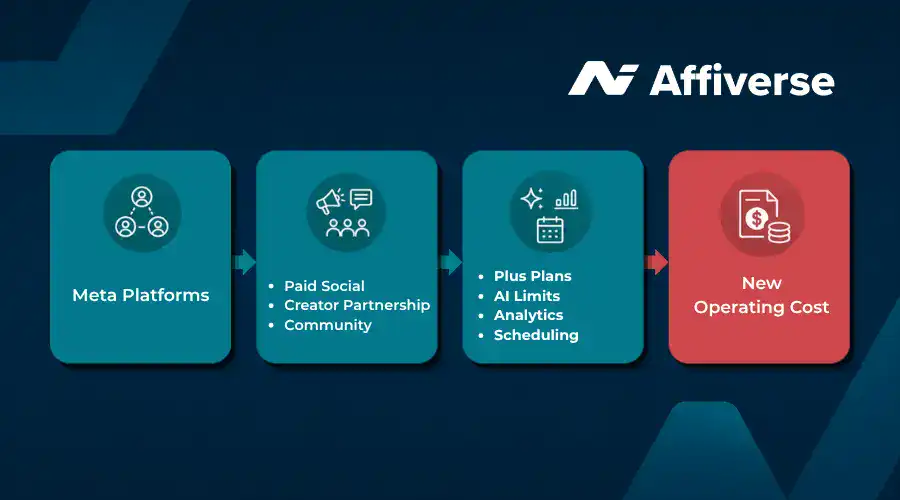
The value will depend on whether the tools improve measurable performance. Teams should consider whether direct links increase qualified traffic, whether exported data improves campaign reporting and whether Meta’s scheduling and account-access features replace existing third-party tools.
Availability will also matter. Meta says features can differ by app, region and account, meaning businesses should confirm what their subscription includes before treating the plan as part of their acquisition strategy.
The launch reinforces a familiar concern around platform-dependent marketing strategies. When acquisition and audience development depend heavily on one platform, previously free or limited features can become new operating costs.
Meta One does not require an immediate budget change for every affiliate team. Until Meta publishes clearer link policies and reporting details, the Advanced plan should be treated as a new testing opportunity rather than a confirmed attribution solution.
Everflow
Connect
Tradedoubler
Connect
1win Partners
Connect
Shopnomix, a Nomix Group Company
Connect
Huffson Group
Connect
Kawaii Partners
Connect
Trackdesk
Connect
Share your expertise and expand your reach and become a content contributor with us today!
Contact Us To Find Out More