Facebook Tests £9.99 Monthly Subscription to Share More Than Two Links
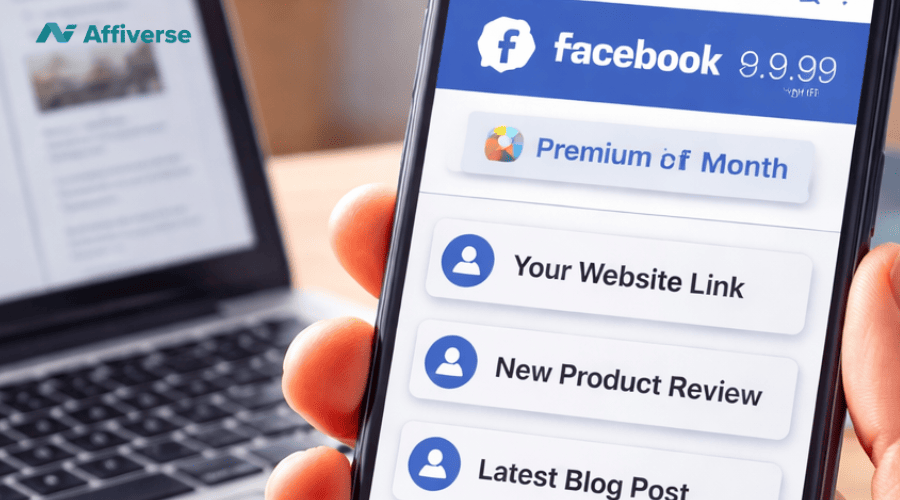
Meta has begun testing a new restriction that could fundamentally change how affiliates use Facebook for traffic generation. Select users in the UK and US are receiving notifications that they can only share two links per month in Facebook posts—unless they pay £9.99 monthly for expanded access.
The test specifically targets users of Facebook’s “professional mode” and Pages features, tools widely used by creators and businesses to promote content and track performance metrics. For affiliate marketers who have relied on Facebook as a traffic channel, the implications are significant.
What We Know About the Test
Meta has described the restriction as “a limited test to understand whether the ability to publish an increased volume of posts with links adds additional value” for subscribers. The test began rolling out on 16 December 2025 to a select group of users.
Social media expert Matt Navarra, who received the notification himself, told the BBC this represents Meta’s continued push to monetise platform features that were previously free. “This isn’t really about verification as much as about bundling survival features behind a subscription,” he said.
The move follows Meta’s broader strategy of placing features behind its Meta Verified subscription tier, which already offers users a blue tick, enhanced account support, and impersonation protection.
The Affiliate Marketing Impact
Facebook remains the most-used platform among affiliate marketers, with 75.8% of affiliates actively using it to reach audiences. The platform’s nearly 3 billion monthly active users and sophisticated targeting capabilities have made it a cornerstone of many affiliate traffic strategies.
If this test expands beyond its current limited scope, affiliates using Pages or professional mode would face a choice: pay the subscription fee, dramatically reduce their link-sharing activity, or shift traffic generation efforts elsewhere.
Navarra’s assessment was blunt. “For creators it reinforces a pretty brutal reality that Facebook is no longer a reliable traffic engine and Meta is increasingly nudging it away from people trying to use it as one.“
He added: “If you’re a creator or a business, I think the message is essentially if Facebook is a part of your growth or traffic strategy, that access now has a price tag attached to it. And that’s new in its explicitness, even if it’s been the direction of travel for a while.“
Part of a Broader Pattern
The link-sharing test arrives alongside other significant changes at Meta. The company recently announced it would replace its fact-checking programme with a “community notes” system similar to the approach X (formerly Twitter) has taken under Elon Musk’s ownership.
Meta’s verification subscription model itself echoed changes Musk introduced at X after acquiring the platform in 2022—a scheme that proved controversial enough that the EU fined X €120 million in December over concerns about its deceptive design.
For affiliates, these shifts represent an acceleration of trends we’ve been tracking around platform monetisation and the declining reliability of social media as a “free” traffic source.
What This Means for Your Strategy
Navarra’s warning to businesses deserves attention: “Tests like this underline why building a business that’s overly dependent on any one platform’s goodwill is incredibly risky.”
This development reinforces guidance we’ve consistently provided around traffic diversification. Affiliates who have built their entire strategy around Facebook link sharing now face potential disruption, while those with diversified approaches across email, search, video, and multiple social platforms have greater resilience.
The test also highlights an uncomfortable reality: what platforms give, they can take away—or charge for later. Features that seemed permanent parts of the Facebook experience are now being reconsidered as potential revenue streams.
Practical Considerations
If you’re an affiliate currently relying heavily on Facebook for traffic:
Audit your current dependence. How much of your traffic originates from Facebook link posts? Understanding this baseline helps you assess the potential impact if restrictions expand.
Evaluate the economics. At £9.99 monthly, the subscription cost may be trivial compared to the revenue Facebook-driven traffic generates. But the principle matters—this may be the beginning of tiered access rather than a final price point.
Accelerate diversification. Whether or not this specific test expands, the direction of travel is clear. Building owned channels like email lists and investing in platforms where you control distribution becomes more valuable with each restriction major platforms introduce.
Monitor the rollout. Meta explicitly called this a “limited test.” How it performs and whether it expands will depend on user response and business results. The test may be modified, expanded, or quietly discontinued.
The Bigger Picture
Meta’s test reflects a broader tension in the creator economy. Platforms initially attracted users and businesses by offering free tools and reach. Having built massive audiences, they’re now exploring how to extract more value from the commercial activities those platforms enable.
As Navarra put it: “Meta will always optimise for Meta, first.“
For affiliate marketers, this serves as another reminder that platform access is rented, not owned. The affiliates best positioned for long-term success are those building direct relationships with their audiences through channels they control—while treating platform presence as a complement to, rather than foundation of, their traffic strategy.
Building a more resilient affiliate strategy? Explore our guide to alternative traffic channels and learn why diversification matters more than ever.
Everflow
Connect
Tradedoubler
Connect
1win Partners
Connect
Shopnomix, a Nomix Group Company
Connect
Huffson Group
Connect
Kawaii Partners
Connect
Trackdesk
Connect
Share your expertise and expand your reach and become a content contributor with us today!
Contact Us To Find Out More