Why AI Search Demands a New Approach to Content
For years, content has played a central role in search visibility. Brands have used SEO pages, affiliate content, and paid placements to rank for relevant keywords, drive traffic, and influence consideration.
But AI search is changing how that content is used. Consumers are increasingly turning to AI tools for direct answers, product guidance, and recommendations. Instead of scrolling through a full search results page, they may receive a short, synthesized answer featuring only a handful of brands.
That shift makes visibility more compressed. Rankings and clicks still matter, but brands are also competing to be understood, compared, and included in the AI-generated answers shaping buying decisions.
For marketers, the question is no longer only: is our content ranking? It is also: does our content give AI systems enough context to understand when and why to recommend us?
Understanding What AI Recommends – and Why
For brands, the first challenge is visibility. Not visibility in the traditional sense of impressions, rankings, or traffic, but visibility inside the answers consumers increasingly use to compare options and make decisions.
- The first step is understanding the prompts that matter. What are consumers asking when they research a category, compare products, or look for recommendations? Which of those questions does your brand appear for, and where is it absent?
- The next layer is context. When your brand does appear, how is it described? Is the information accurate, relevant, and aligned with your positioning? Which competitors are recommended alongside you, and what makes them more visible in certain answers?
- Finally, brands need to understand the sources behind those recommendations. AI-generated answers are shaped by information across owned websites, publisher content, reviews, buying guides, comparison pages, forums, and articles. The question is not only what a brand publishes, but whether enough reliable information exists across the web for AI tools to understand and recommend it.
How Content Strategy Needs to Change
Content has always mattered for search. What changes with AI search is the way content is interpreted and surfaced. Traditional SEO is often built around keywords, rankings, and traffic. AI discovery is more conversational. Instead of simply matching a query to a ranked list of links, AI tools are interpreting information, comparing options, and generating answers that may only feature a small number of brands.
That means content strategy needs to move beyond traditional keyword optimization. Brands need content that answers real consumer questions, explains where the brand fits in a category, supports credible comparisons, and gives AI systems relevant context.
That starts with the way people ask questions. A consumer might ask, “Which brand is best for…?”, “What should I look for before buying…?”, or “How does this product compare with another option?” Content needs to reflect that behavior by answering specific questions clearly and credibly.
It also means moving away from purely promotional content. A product page that only sells the benefits may not be enough. AI tools need information they can interpret: FAQs, buying guides, comparison pages, use cases, expert reviews, and clear category content. The clearer the information, the easier it is for AI tools to understand where the brand fits.
Owned content is only one part of this. AI-generated answers are also shaped by third-party content. Brands therefore, need to look beyond their own website and ask where credible information about them exists.
The content strategy shift is not about producing more content for the sake of it. It is about creating the right content, in the right places, so AI tools can understand, compare, and recommend the brand.
From AI Visibility Gaps to Content Action
Once brands understand where they are missing from AI-generated answers, the next step is turning those gaps into content action. Which topics need to be covered? Which questions need clearer answers? Which publishers could help strengthen the brand’s presence across the wider web?
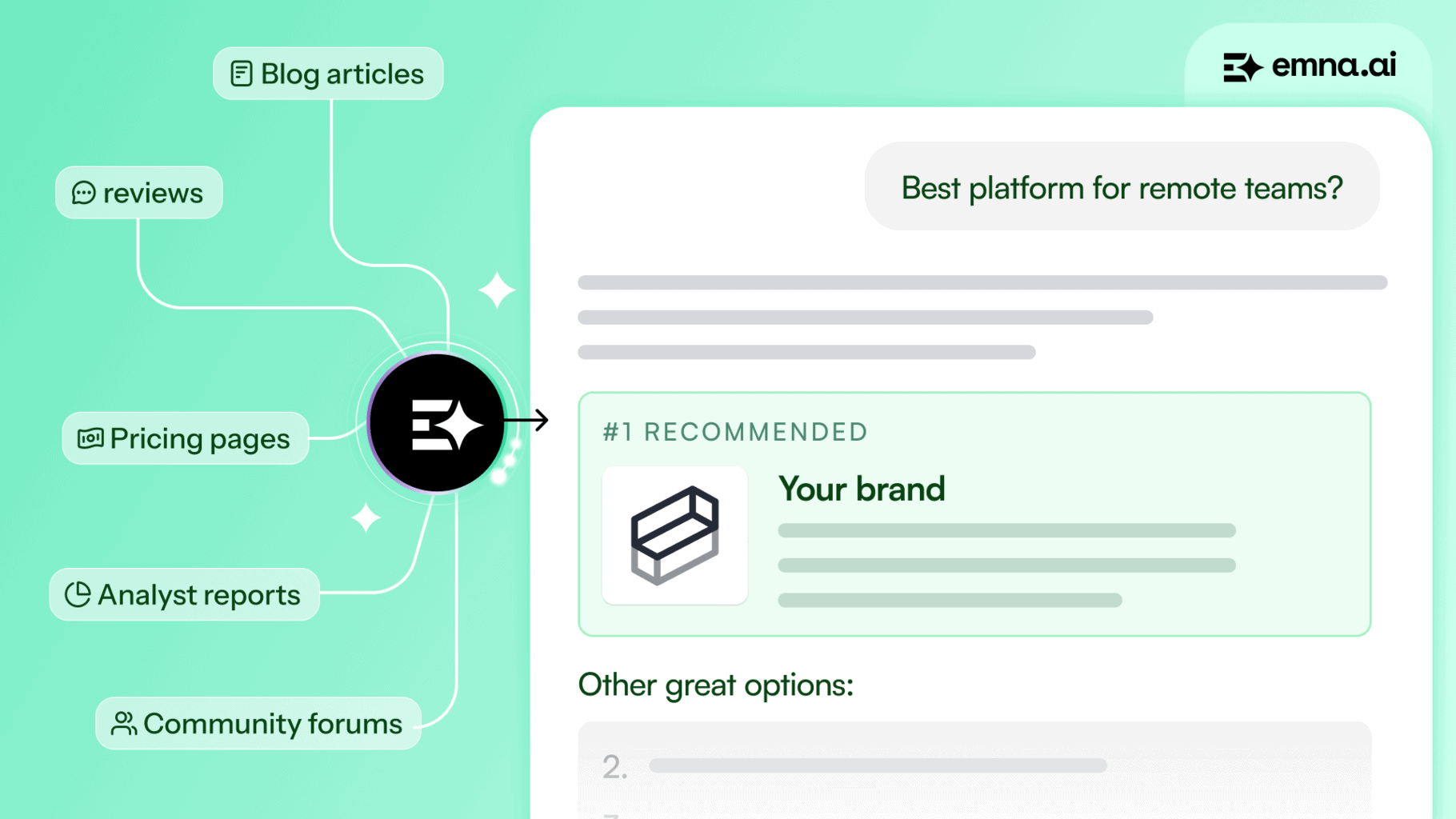
This is where Emna.ai fits in. Tradedoubler built the platform to help brands improve how they appear in AI answers by connecting visibility insights with content creation, optimisation, and distribution through relevant publisher networks.
Emna uses AI visibility tracking to identify where a brand appears, how it is described, and which sources influence those answers. From there, the platform supports the full content workflow: identifying gaps, creating new content in the brand’s tone and style, and enabling distribution through relevant publishers.
Early use cases show what this can look like. One beauty and wellness brand, moved from being nearly invisible in generative AI engines to entering the competitive top five within three months, increasing AI mentions by 83%, from 18 to 33 mentions across high-intent prompts.
In a high-tech example, a brand increased its AI visibility from 66% to 74% over three months, securing the #1 position by month three.
These examples show why AI visibility cannot stop at measurement. The real value comes from using visibility insights to create, improve, and distribute content through credible publisher networks, helping AI systems understand when and why to recommend a brand.
What Marketers Can Learn
AI search changes how content needs to work across the customer journey. It is no longer enough for content to attract traffic or support conversion once someone has already clicked. It also needs to help AI systems understand the brand, compare it accurately, and include it in relevant recommendations.
- First, content needs to answer real consumer questions. AI search is built around prompts. Brands therefore need content that reflects how people actually ask for advice, compare options, and make decisions.
- Second, credibility matters beyond owned channels. Reviews, buying guides, comparison articles, expert recommendations, and partner content can all influence how AI tools understand a brand’s place in a category. This gives publishers and content partners a stronger role in shaping how brands are surfaced and described.
- Third, visibility needs to be measured differently. Rankings, clicks, and conversions still matter, but they no longer tell the full story. Brands also need to understand whether they appear in AI-generated answers, how they are positioned, and which sources support or weaken that visibility.
In an AI-driven marketing ecosystem, content is no longer only about ranking for search terms. It is also about building the clarity, relevance, and credibility needed to appear in the answers consumers increasingly rely on.
_________________________________________________________________________________________
This content has been produced for Affiverse by an independent Advertiser and expresses their own views, in their own words. If you would like to feature as an advertiser and be interviewed on Affiverse’s media content platform, please email [email protected].
Everflow
Connect
Tradedoubler
Connect
1win Partners
Connect
PIN-UP Partners
Connect
Shopnomix, a Nomix Group Company
Connect
V.Partners
Connect
Huffson Group
Connect
Kawaii Partners
Connect
Share your expertise and expand your reach and become a content contributor with us today!
Contact Us To Find Out More