Google Reclaims Kantar BrandZ 2026 Top Spot as AI Resets the Global Brand Order
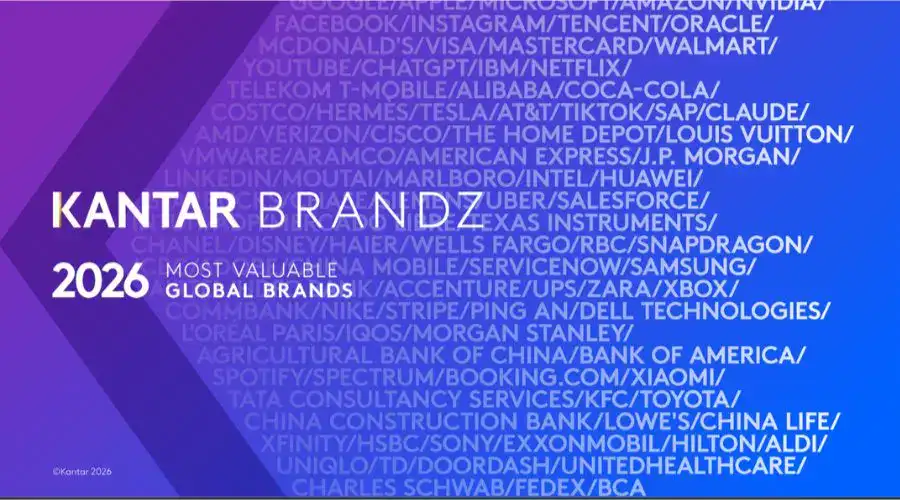
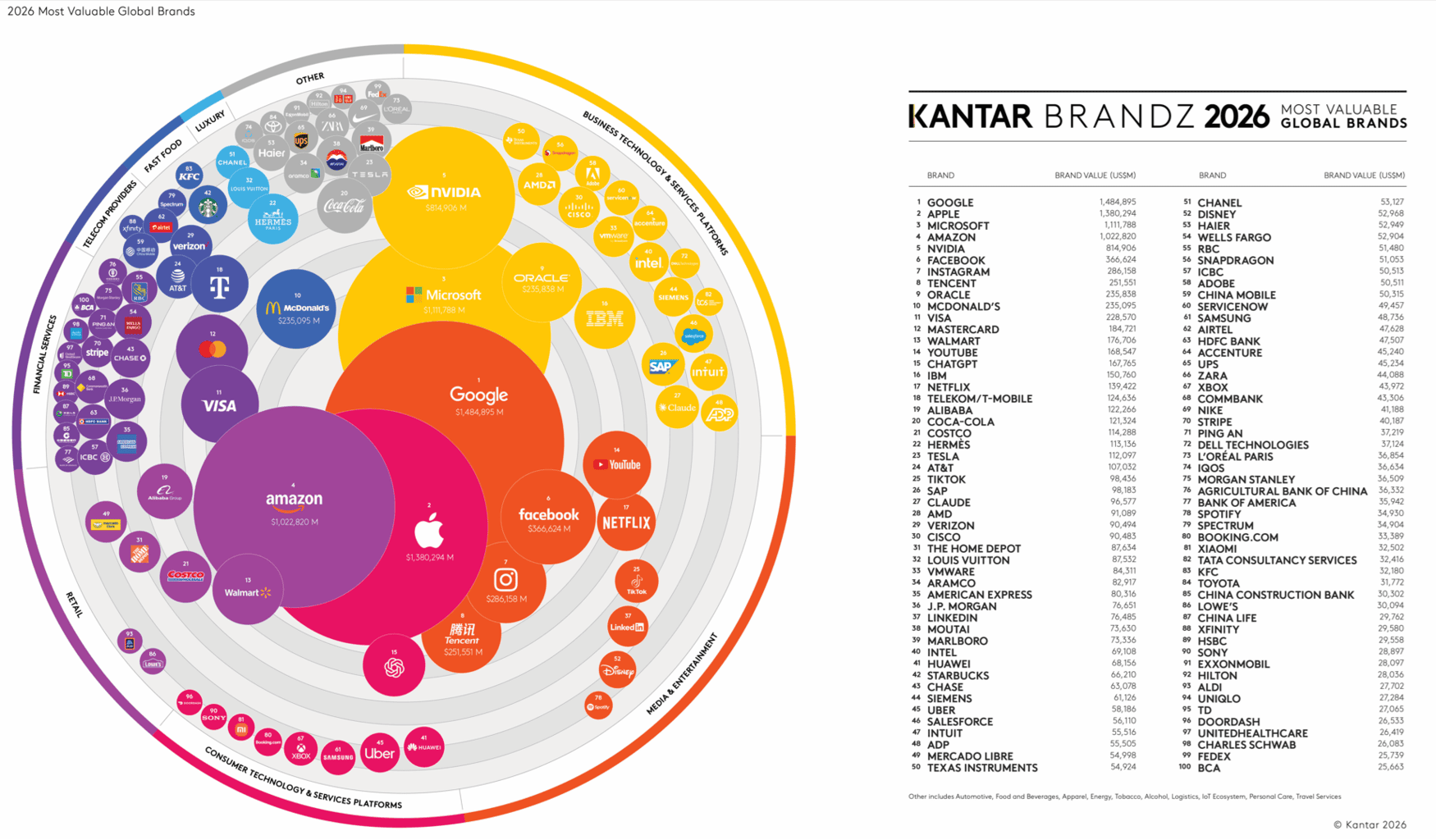
Google has returned to the top of Kantar BrandZ’s 2026 Most Valuable Global Brands ranking for the first time since 2018, ending Apple’s recent run at No. 1. The move comes as the total value of the Global Top 100 reached $13.1 trillion, up 22% year on year. Google now leads the ranking with a brand value of $1.48 trillion, after a 57% annual rise. Apple follows at $1.38 trillion, with Microsoft and Amazon also crossing the trillion-dollar line.
For affiliate marketers, search specialists, and brand teams, the headline cuts deeper than a rankings reshuffle. It fundamentally changes how we approach making an affiliate marketing business plan for the coming year. Google’s win shows how fast AI has moved from product feature to brand value driver. Search no longer just points users toward answers. It increasingly performs the work around the answer.
Key Takeaways: Google’s AI Push Lifts BrandZ Value
- Google reclaimed the No. 1 spot in Kantar BrandZ’s 2026 ranking after a 57% rise in brand value, reaching $1.48 trillion.
- Apple, Microsoft, and Amazon also crossed the trillion-dollar mark, showing how tech brands still dominate the upper end of global brand value.
- Google’s Gemini rollout helped shift the story from search results to AI agents that can compare, plan, and complete user tasks.
- AI-native brands moved fast too, with ChatGPT growing 285% and Claude entering the ranking at No. 27.
- For affiliates, the message is clear: brands now need content that works for human readers and AI-driven recommendation systems.
Google’s AI Comeback Changes the Search Story
Google’s rise to $1.48 trillion came during the same year that Gemini moved deeper across its product stack. Search, Workspace, Android, YouTube, cloud tools, and advertising products now sit closer to the same AI layer. The old Google helped users find pages. The new Google wants to solve tasks.
This sits at the center of the agentic search shift. Users don’t always want ten blue links. They want a hotel shortlist, a product comparison, a recipe adjusted to their diet, a travel plan that fits their budget, or a quick answer that pulls from several sources. As Google pushes further toward AI-led discovery, Google’s AI-only search gives affiliate marketers a clearer view of how search behavior may change when answers replace click paths. Google’s AI products aim to turn search from a referral engine into a task engine.
Affiliates now need content that can survive human reading and machine selection. Clear product data, specific claims, real comparisons, updated pricing, named markets, and transparent testing. Thin review pages will struggle when AI agents can compare offers in seconds and choose which sources deserve visibility. That’s why LLM discovery has become an obstacle, with affiliates needing to supply the data, claims, and proof points that AI systems can read and reuse.
Kantar’s Meaningful Different and Salient framework helps explain why Google had room to regain the top spot. The framework measures brand equity through how well a brand meets needs, stands apart, and comes easily to mind. Google still owns discovery as a habit. People still say, “Google it.” Now the company has tied that salience to a new AI use case: getting things done faster.
The Trillion-Dollar Club Gets Crowded
Kantar’s 2026 ranking now has four brands above $1 trillion, with NVIDIA closing the Top 5 after another AI-driven growth year.
- Google ($1.48 trillion): Google reclaimed the No. 1 spot after a 57% year-on-year rise, helped by Gemini’s deeper role across search, productivity, cloud, and advertising.
- Apple ($1.38 trillion): Apple dropped to second place, but its brand value still reflects the strength of its hardware ecosystem, services layer, and premium consumer loyalty.
- Microsoft ($1.11 trillion): Microsoft held its place in the trillion-dollar group through its cloud, enterprise software, AI tools, and close association with productivity at work.
- Amazon ($1.02 trillion): Amazon remained above the trillion-dollar mark thanks to its role in e-commerce, cloud infrastructure, advertising, and everyday digital convenience.
- NVIDIA ($814.9 billion): NVIDIA took fifth place after 60% annual growth, driven by demand for AI infrastructure and its central role in powering the current AI buildout.
The AI-native brands tell an even sharper story. ChatGPT recorded the fastest annual growth in the ranking at 285%, while Claude entered the Global Top 100 at No. 27 with a valuation of $96.6 billion. As these platforms become work tools and decision filters, affiliates should look toward the best AI tools for affiliate marketing to keep pace with the 285% growth seen by ChatGPT.
AI-native platforms don’t need decades of consumer habits to gain brand value. They can grow through utility, daily workflow, and cultural presence. ChatGPT and Claude have become work tools, search substitutes, writing assistants, coding partners, research layers, and decision filters. Fast adoption creates salience. Repeated usefulness builds trust.
But Google still holds one major advantage: distribution. It doesn’t need to teach the world where to search. It needs to keep users inside its ecosystem while AI changes what search means.
The AI Multiplier Moves Beyond Silicon Valley
Kantar’s 2026 ranking also shows that AI-led growth doesn’t belong only to software companies.
Zara has overtaken Nike to become the world’s most valuable apparel brand. Kantar points to personalized AI-powered shopping experiences as part of that rise, while Spanish business coverage also highlights Zara’s climb above $44 billion in brand value. For brands and affiliates working across e-commerce, Zara shows how faster product cycles, smarter merchandising, and cleaner customer data can turn AI into a commercial advantage.
Hermès also moved past Louis Vuitton to claim the top luxury position. The lesson differs from Zara’s. Hermès doesn’t win by becoming faster or louder. It wins by keeping scarcity, craft, and digital execution aligned. Luxury buyers still want control, story, and access. Digital channels now carry more of that experience.
For affiliates, this matters because AI has become a multiplier for brand clarity. Zara can use data and speed to match demand. Hermès can use digital polish without weakening its exclusivity. Google can use Gemini to turn its existing discovery habit into an agentic product layer.
Treatonomics Gives Utility Brands an Edge
Kantar’s 2026 trends also point to “treatonomics,” where consumers look for small, accessible pleasures during uncertain periods. The report says 36% of consumers would take on short-term debt for things they enjoy.
That helps explain the strength of brands like YouTube and McDonald’s. YouTube rose 89% in BrandZ’s 2026 ranking, while McDonald’s held a Top 10 position with a $235.1 billion valuation.
Google sits in a slightly different place. It gives users utility first, but its ecosystem also provides escape. Search solves. YouTube distracts. Maps guides. Gmail organizes. Gemini assists. The brand touches high-frequency moments with almost no friction. That frequency creates power.
Why Algorithmic Salience Matters Now
The next fight for CMOs won’t only happen in ad auctions, social feeds, or SERPs. It will happen inside AI answers.
Kantar’s own 2026 marketing trends state that brands now need to predispose agents as well as people, with product details, service information, guides, and content made widely findable. It also notes that 74% of AI assistant users regularly seek AI-driven recommendations.
That creates a new rule for brand visibility: algorithmic salience. Brands still need humans to remember, trust, and choose them. But they also need AI systems to understand them well enough to recommend them. For affiliates, that means structured pages, accurate claims, fresh comparisons, and sources that machines can parse without guessing.
Google’s return to No. 1 makes the point cleanly. Search evolved into agents. Now brands have to earn their place in both conversations.
All data and rankings are sourced from the Kantar BrandZ Most Valuable Global Brands 2026 report.
Everflow
Connect
Tradedoubler
Connect
1win Partners
Connect
PIN-UP Partners
Connect
Shopnomix, a Nomix Group Company
Connect
V.Partners
Connect
Huffson Group
Connect
Kawaii Partners
Connect
Share your expertise and expand your reach and become a content contributor with us today!
Contact Us To Find Out More