Five Prompting Principles That Will Make You a Better Affiliate Manager
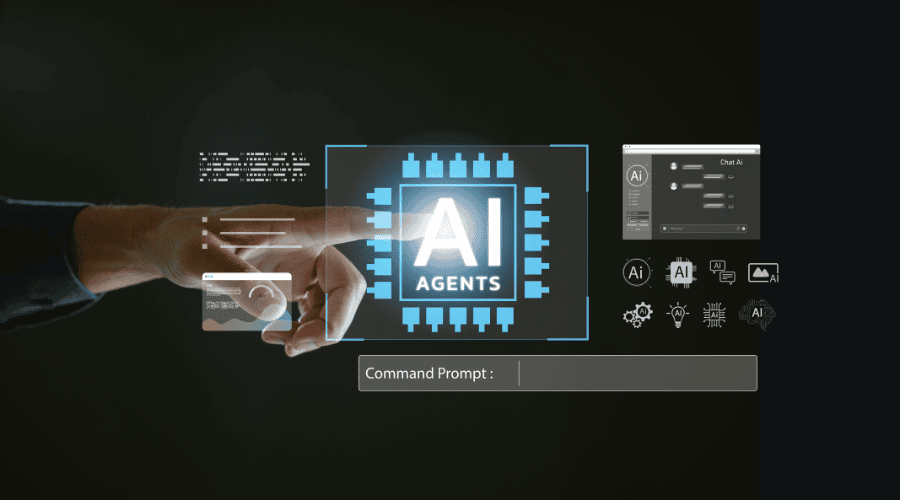
Most affiliate managers have adopted AI tools by now. Fewer have figured out how to use them well.
The gap between getting a generic answer and getting something useful comes down to how the request is framed. AI assistants do not read between the lines. They work with what you give them. Give them vague context and a broad question, and you will get a vague, broad answer. Give them specificity, structure, and the right constraints, and you get output you can actually use.
This is not a deep technical guide to prompt engineering. It is a practical framework for affiliate managers who want to stop re-running the same prompt four times to get something usable, and start building AI workflows that save real hours each week.
There are many useful courses available to help you define how to create great prompts that deliver results that are useful, however partnerships still require human interaction and therefore cannot be replaced with AI agents but tools to create time efficiencies must become a core part of your skill set as we move into a new version of working efficiently.
Why Most Affiliate Prompts Fail
The default behaviour for most people new to AI tools is to prompt conversationally. “Give me ideas for affiliate recruitment outreach.” “Help me analyse this program performance.” “Write a partner brief.” These are all reasonable starting points, but they leave the AI filling in significant blanks from scratch, and what it fills those blanks with is usually generic.
Affiliate marketing is a specific commercial environment with its own language, structures, and performance benchmarks. When you ask a general AI tool for help with your program, it does not know whether you are managing a SaaS partner program with 50 publishers or a retail affiliate program with 5,000. It does not know your network, your commission structure, your top verticals, or the compliance requirements your program operates under. Unless you tell it.
The five principles below are the practical equivalent of briefing a junior team member properly before handing them a task.
1. Give It a Role and a Reason
The most reliable way to improve output quality immediately is to tell the AI who it is and what problem it is solving. This affects how the model prioritizes and frames its response.
Instead of: “Write a recruitment email for a new affiliate partner.”
Try: “You are an affiliate program manager for a mid-market B2B SaaS brand with a CPA model and a 30-day cookie window. Write a cold outreach email to a technology review publisher introducing our affiliate program. The tone should be direct and peer-to-peer — we are talking to someone who runs a serious content business, not pitching a general audience.”
The difference in output quality is significant. The first prompt produces a template. The second produces something closer to what you would actually send.
2. Specify the Output Format Before You Describe the Task
One of the most consistent time-wasters in AI-assisted workflows is receiving a long narrative when you needed a table, or a bullet list when you needed a paragraph suitable for direct use. Stating the format upfront eliminates reformatting work.
For example: “Return this as a three-column table with columns for affiliate tier, commission rate, and activation conditions. Do not include explanatory prose.”
Or: “Write this as a five-point briefing document, each point no longer than two sentences, formatted for pasting into a Slack message.”
For affiliate managers using AI to build partner-facing materials, program documentation, or internal reporting summaries, format specificity is one of the fastest ways to reduce the edit cycle.
3. Use Your Actual Data
AI tools can process numbers and spot patterns when you give them something to work with. Prompts that reference real figures from your program produce output that is relevant to your specific situation rather than hypothetical.
Instead of: “What should I do about an underperforming affiliate?”
Try: “This affiliate sent 1,200 clicks last month, generated three conversions, and has an EPC (earnings per click) of $0.04. Our program average EPC is $0.18. The affiliate primarily promotes through email. Draft a reactivation message that acknowledges the performance gap without being confrontational, and suggests two specific content format changes that typically improve email affiliate conversion rates.”
You have now given the AI a real commercial scenario rather than a generic one. For a broader overview of how data-driven thinking applies to affiliate program health, our guide to essential performance metrics and understanding EPC as a performance signal are both worth revisiting in this context.
Make sure you’re following privacy settings and protocols as set out by your company when inserting real live data into AI agents.
4. Set Constraints
Telling the AI what not to do is as useful as telling it what to do. Constraints reduce the amount of editing you have to do on the back end, and they are particularly valuable when producing content that will go to partners, publishers, or clients.
Examples that matter for affiliate program work:
“Do not use generic marketing language. Do not mention competitors by name. Do not include commission rates in this communication — those will be confirmed separately.”
“This briefing document is for a publisher who already understands performance marketing. Do not explain what an affiliate program is.”
“Keep the total output under 300 words. Every sentence should be directly actionable.”
Constraints are also useful for ensuring AI output matches your program’s tone. Left unconstrained, most AI tools default to a corporate-neutral register that may not reflect how your program actually communicates with partners. The discussion on building ethical, human-led AI workflows in your affiliate program is a useful companion read here.
5. Build Reusable Prompt Templates
The most time-efficient application of AI for affiliate managers is not writing individual prompts from scratch each time. It is building a small library of prompt templates that you can adapt for recurring tasks.
Common affiliate program workflows that lend themselves to templated prompts include monthly performance summaries for internal stakeholders, partner activation sequences, compliance review checklists, publisher recruitment briefs for specific verticals, and commission tier justifications for finance teams.
A template does not need to be complicated. Something like:
“You are drafting a monthly performance summary for [PROGRAM NAME] for [MONTH]. The program is managed on [NETWORK]. Key metrics for the period: clicks [X], conversions [Y], revenue [Z], top performer [AFFILIATE NAME/CATEGORY]. Audience: internal marketing director and finance business partner. Format: three paragraphs, no tables. Tone: confident and data-forward. Flag any anomalies worth discussing.”
Once you have a working version, save it. The next time you need the same output, the setup cost is near zero. For the platform layer that sits alongside prompt-driven workflows, our comprehensive guide to affiliate marketing automation tools covers what is worth building on top of. And if you are still working out where AI fits in your broader program strategy, the agentic AI implementation discussion is worth the listen.
Three Takeaways
Pick the single most time-consuming recurring task in your program and build one well-structured prompt for it using the five principles above. Test it, refine it once, and save the version that works. Most experienced AI users build their workflows one use case at a time, done properly, not by adopting a hundred tools at once and setting up none of them well.
Watch out for over-reliance on conversational prompting. Vague inputs produce generic outputs. The effort you put into briefing the AI upfront pays back directly in the quality of what comes out the other side.
Treat your prompt library as a program asset. The templates you build for recruitment outreach, partner communications, and performance reporting have compounding value. They also become useful onboarding materials if your team grows.
_________________________________________________________________________________________
Stay updated with the latest affiliate marketing strategies and tools — sign up to the Affiverse newsletter at affiversemedia.com.

Everflow
Connect
MiFinity Affiliates
Connect
Semrush
Connect
Tradedoubler
Connect
1win Partners
Connect
PIN-UP Partners
Connect
Sage
Connect
Shopnomix, a Nomix Group Company
Connect
Alpha Affiliates
Connect
V.Partners
Connect
Share your expertise and expand your reach and become a content contributor with us today!
Contact Us To Find Out More