UK Privacy Regulator Warns Agentic AI Developers Over Data Protection Responsibilities
The UK’s Information Commissioner’s Office (ICO) issued a warning on November 24, 2026, reminding organizations developing and deploying consumer-facing agentic AI services of their responsibilities under UK data protection law. The regulator emphasized the importance of consumer privacy as AI systems increasingly move beyond answering questions to taking autonomous actions on behalf of users.
For affiliate networks, advertisers, and marketing technology providers, the announcement comes at a time when AI-powered shopping assistants and personalized recommendations are becoming more integrated into the customer journey.
Key Takeaways From the ICO’s Agentic AI Warning
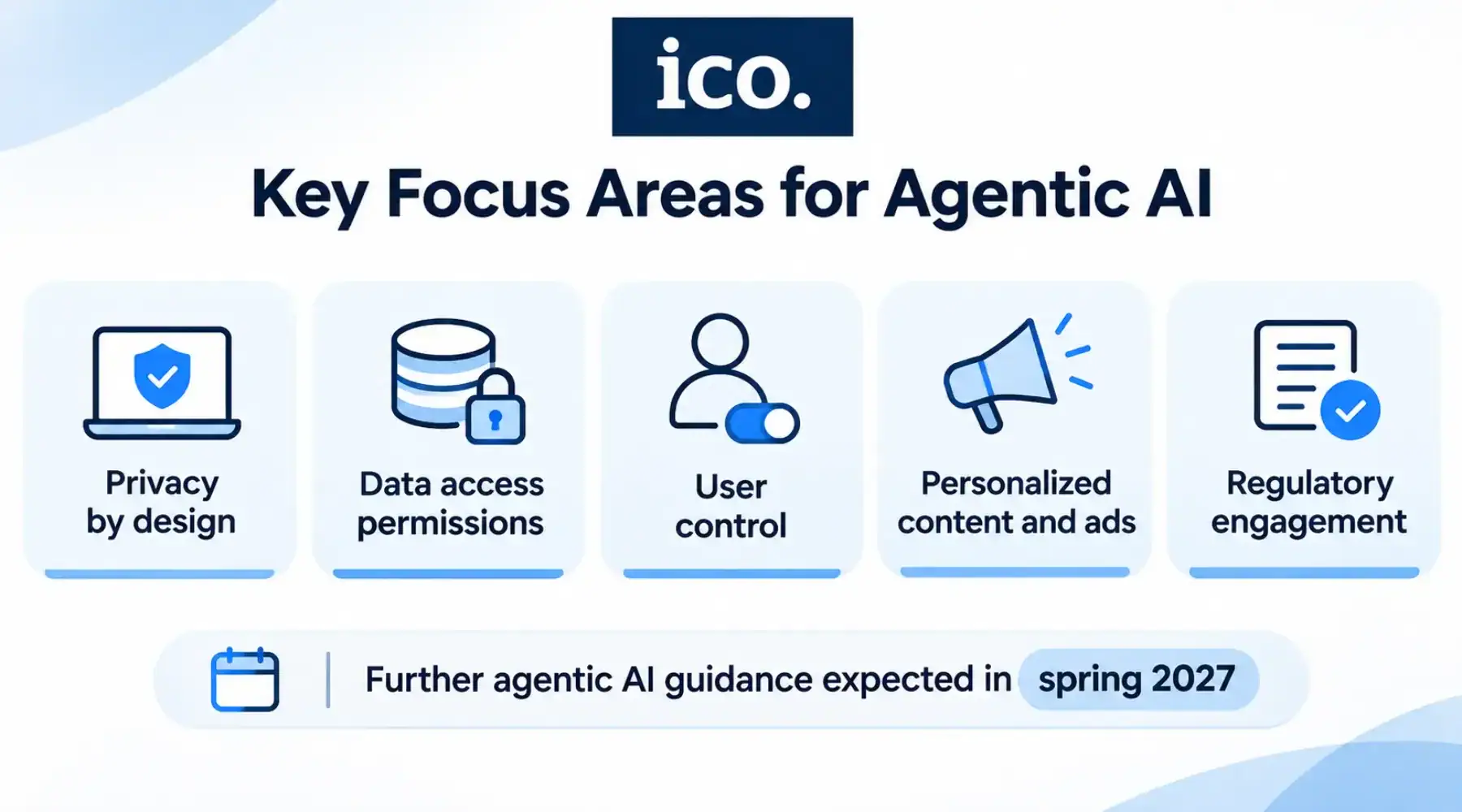
- The ICO expects businesses to incorporate privacy protections into agentic AI products from the outset.
- Organizations must demonstrate ongoing compliance with UK data protection law.
- Changing data access permissions present additional security and transparency challenges.
- Consumers should retain meaningful control over how AI agents access and use their personal information.
- Further regulatory guidance on agentic AI is expected in spring 2027.
ICO Calls for Stronger Privacy Protections in Agentic AI
Unlike conventional chatbots that primarily respond to prompts, AI agents can interact with external services, access connected accounts, and perform tasks with varying levels of autonomy. These capabilities introduce additional privacy concerns, particularly when agents process information belonging to someone other than the user who authorized the task.
In its official announcement, the ICO said:
Where we see organisations rush to market, without considering privacy risks and without building meaningful user controls, we will act.
The announcement also follows the adoption of a Global Privacy Assembly resolution on privacy-protective agentic AI, which the ICO supported.
The resolution identifies risks associated with autonomous access to connected services, retaining personal information in agent memory, and reusing data beyond its original purpose.
What the Warning Means for AI-Powered Marketing
The ICO’s intervention is particularly relevant to businesses incorporating AI agents into product discovery, customer acquisition, and personalized shopping experiences. Recent developments such as the integration of Google Wallet with AI Mode demonstrate how connected financial information can support personalized recommendations.
For marketing technology providers, however, access to consumer information for one service does not automatically establish a lawful basis for using that information for advertising, audience profiling, or campaign measurement. A shopping agent might access a customer’s purchase history to recommend a product. Using that same information to build advertising audiences or support an unrelated commercial partnership raises separate data protection questions.
Affiliate businesses integrating AI-powered tools should therefore examine what information their technology partners collect, how permissions are managed, and whether subsequent data uses are compatible with the original purpose.
Privacy and Affiliate Attribution Remain Closely Connected
The announcement comes amid ongoing discussions about how UK privacy regulation applies to performance marketing. Earlier this month, the Affiliate & Partner Marketing Association (APMA) outlined its case for UK affiliate tracking reform, seeking a narrowly defined consent exemption for transactional attribution and commission payments.
Agentic commerce adds another dimension to this debate. As automated systems participate in product research and purchasing decisions, affiliate networks face pressure to identify additional touchpoints without collecting unnecessary personal information. The IAB’s AI-Era Attribution Blueprint has already highlighted the need to distinguish between human-owned, AI-assisted, and AI-executed purchasing journeys. Developing measurement systems that recognize these interactions while respecting consumer privacy will be an important consideration for the performance marketing industry.
Further Agentic AI Guidance Expected in Spring 2027
The ICO’s call for evidence on agentic AI ran from October 8 to November 20, 2026, covering issues including security, accountability, automated decision-making, fairness, and lawful processing. The regulator plans to publish guidance in spring 2027 and continues to coordinate with other UK regulators through the Digital Regulation Cooperation Forum.
The November announcement does not introduce new legislation or affiliate-specific tracking requirements. Instead, it signals closer regulatory scrutiny of consumer-facing AI services. For affiliate networks and marketing technology providers, the immediate priority is ensuring that increasingly autonomous marketing tools operate within existing data protection requirements rather than waiting for dedicated agentic AI guidance to arrive.
Everflow
Connect
Tradedoubler
Connect
1win Partners
Connect
Shopnomix, a Nomix Group Company
Connect
Huffson Group
Connect
Kawaii Partners
Connect
Trackdesk
Connect
Share your expertise and expand your reach and become a content contributor with us today!
Contact Us To Find Out More