Google Details AI Review Summaries in Search Ads Across Four Markets
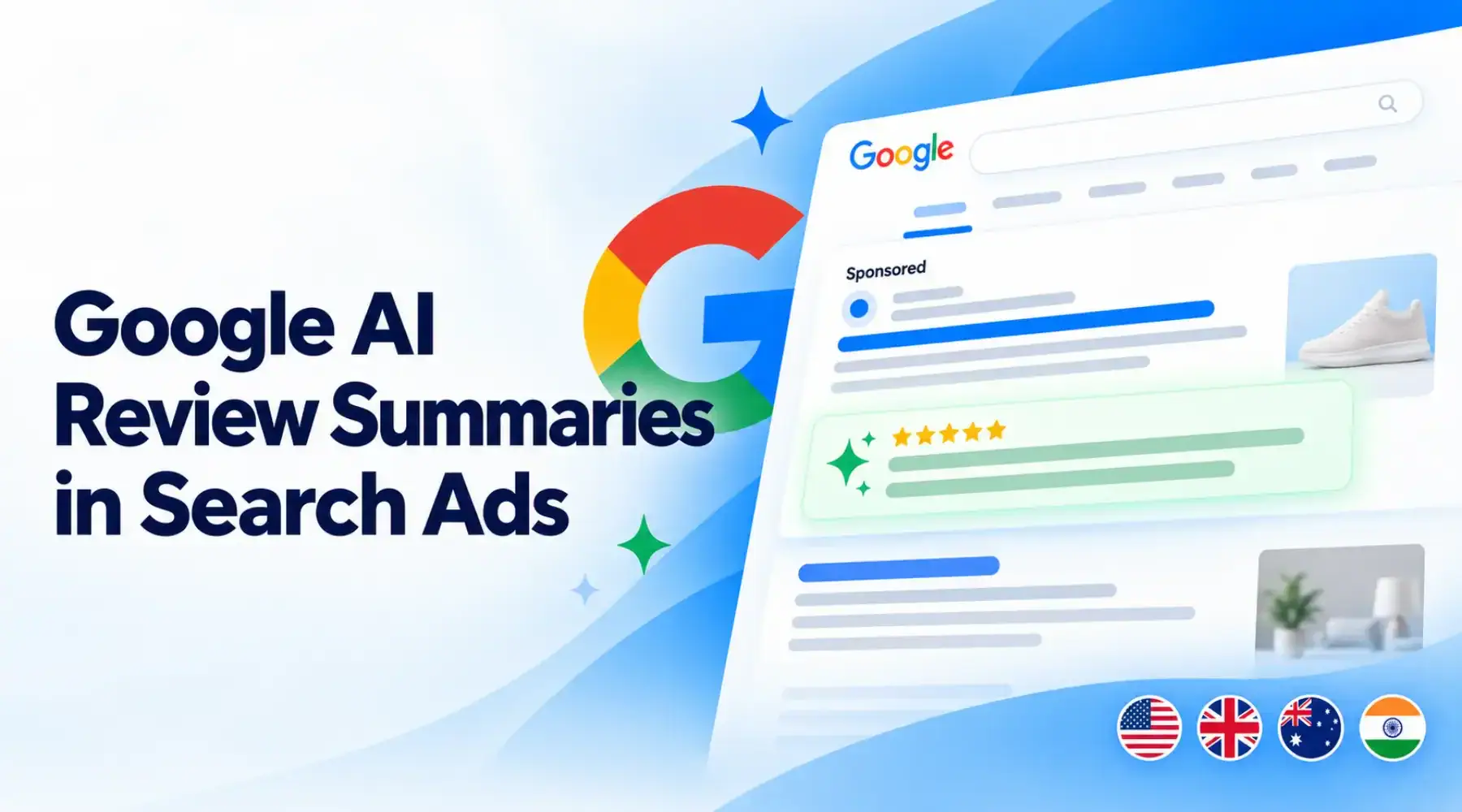
Google’s documentation explains how Google AI review summaries can appear within eligible Search ads across four markets. For campaign teams, the feature raises practical questions about ad messaging and measurement.
Search Engine Land reported the dedicated documentation on October 26, noting that the format had already been observed in sponsored results.
Key Takeaways: Google AI Review Summaries in Search Ads
- Google AI summarizes customer reviews into positive commentary within eligible Search ads.
- Availability covers four markets: the US, UK, Australia, and India, in English.
- Advertisers cannot directly edit the summaries. Google shows them when it predicts a performance benefit.
- Results need separate assessment. Check conversion quality and approved affiliate commissions alongside clicks before drawing conclusions about campaign performance.
Google Review Summaries: Scope and Advertiser Control
Google’s review summaries documentation establishes three points:
- Google generates the message. Its AI combines customer reviews from across the web into positive summaries.
- Advertisers cannot rewrite it. Google says “advertisers cannot directly edit or customize the generated text.”
- Appearance depends on a prediction. Google displays summaries when it expects them to benefit ad performance.
For campaign teams, the practical distinction is between managing their own creative and checking the feedback Google presents alongside it. A prediction of better performance still needs to be assessed against actual business outcomes.
Where Google’s Review Summaries Can Appear
The documented availability covers Search campaigns in the US, UK, Australia, and India, in English. Summaries can appear in all ad positions on Google.com and across supported devices.
Most advertiser categories qualify, with sensitive sectors such as pharmaceuticals excluded. Eligibility does not guarantee that a summary will accompany every ad.
Affiverse has also covered Google’s wider AI advertising changes, including separate AI Mode and Shopping formats.
Customer Feedback Becomes Part of the Ad Message
These summaries draw on customer feedback. That source should be kept distinct from publishers’ editorial product reviews.
Our podcast on paid search, AI, and partner accountability explores why human judgment remains important as campaigns become more automated. Teams reviewing these summaries should consider whether the wording accurately represents the business and whether the landing page gives visitors enough information to assess the qualities it highlights.
If a summary emphasizes a service benefit, for example, the merchant and its campaign partners should check that the current offer supports that expectation. Keeping a record of the wording can also help teams discuss questions about how the business is represented.
How Paid-Search Partners Can Assess the Results
Campaign teams should record observed summaries, including the wording, date, search query, market, and device where possible. These observations can support a campaign review, but occasional sightings cannot establish how often all users see the feature.
For measurement, compare outcomes with a relevant baseline and account for changes in demand, bids, budgets, promotions, and landing pages. A simple before-and-after comparison cannot isolate the summary’s contribution when several campaign conditions change together. Affiverse’s guide to measuring incrementality in affiliate marketing explains the wider question of which sales would otherwise not have occurred.
Useful measures include:
- Clicks and conversion rate: Check whether additional visits translate into completed actions.
- Conversion quality: Review qualified leads, completed purchases, and cancellations where relevant.
- Approved affiliate commissions: Compare validated earnings with advertising costs, allowing time for commission approval.
Advertisers and paid-search partners should also agree on conversion definitions and which records confirm a completed, commissionable sale. Our webinar on measuring affiliate sales impact discusses the need to involve affiliate, paid-media, and data teams when assessing performance.
This follows the principle behind assessing Google’s AI advertising claims: evaluate the results against the business’s own objectives.
The help page does not specify a dedicated reporting breakdown for these summaries. Teams should establish what their available reporting can support before attributing changes to the feature. A change in how an ad looks is an observation; additional profitable sales require separate evidence.
Everflow
Connect
Tradedoubler
Connect
1win Partners
Connect
Shopnomix, a Nomix Group Company
Connect
Huffson Group
Connect
Kawaii Partners
Connect
Trackdesk
Connect
Share your expertise and expand your reach and become a content contributor with us today!
Contact Us To Find Out More