Meta Settlement Would Add New Teen Safety Rules to Instagram and Facebook
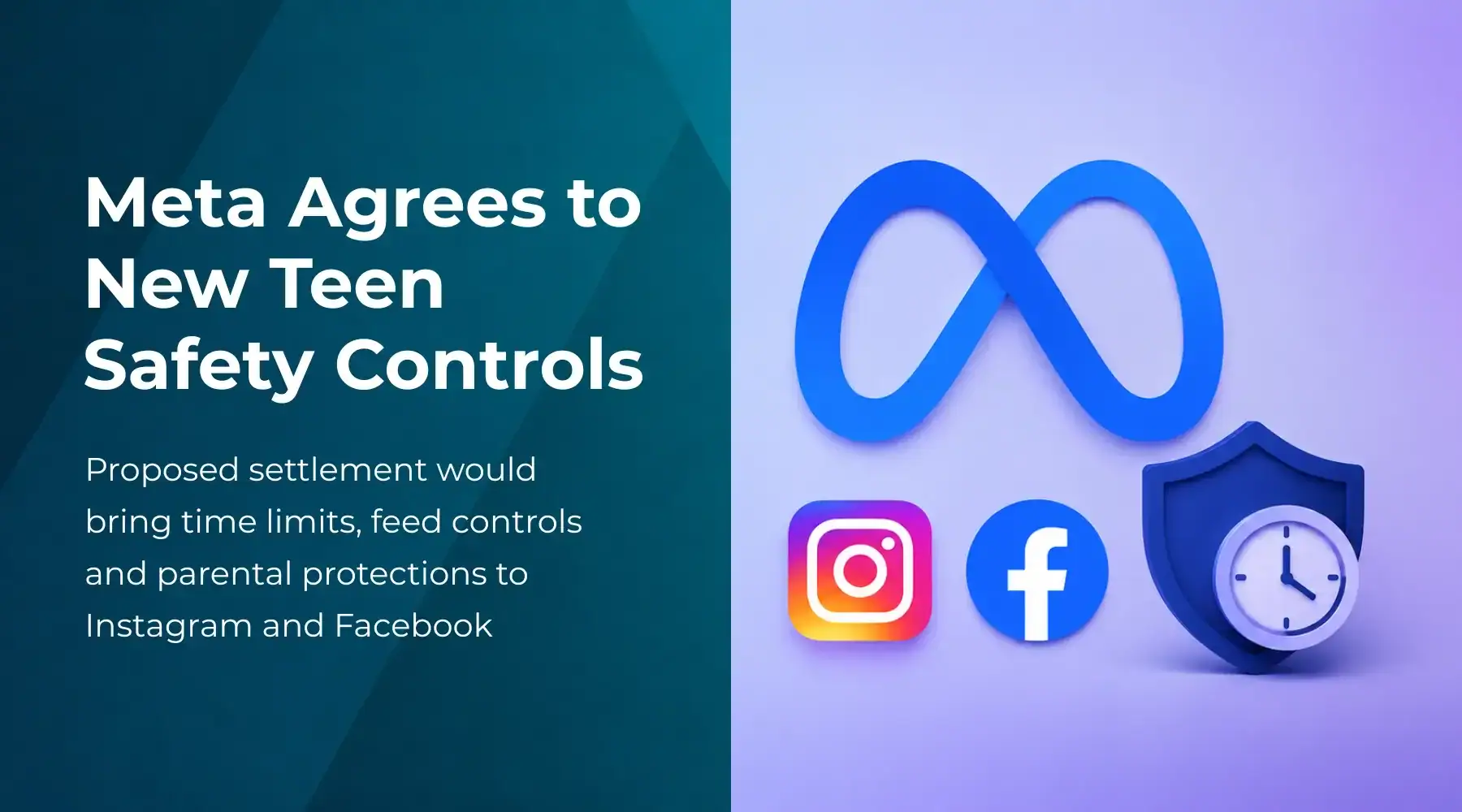
Meta has agreed to a proposed settlement worth up to $17 billion that would introduce new protections for users under 18 on Instagram and Facebook in participating US states and territories. The measures include time limits, overnight access restrictions, stronger parental controls and new safeguards intended to reduce compulsive use and exposure to harmful content.
The settlement remains subject to court approval. Meta has denied wrongdoing, and no evidence yet shows how the proposed changes would affect overall creator reach, engagement, or affiliate performance.
Key Takeaways: Meta’s Proposed Teen Safety Changes
- Under-18 users would receive a default cumulative limit of two hours per day across Instagram and Facebook.
- Broader platform access would be restricted overnight, while most notifications would be blocked during school hours.
- Teens would be offered a non-personalized feed and would not see like or reaction counts by default.
- Meta would introduce stronger reporting, age-assurance and parental-supervision measures.
- An independent auditor would oversee compliance with the agreement.
- Any effect on creators, brands or affiliate campaigns remains unconfirmed.
Meta Agrees to New Protections for Users Under 18
The proposed settlement resolves claims that Meta designed Facebook and Instagram features that encouraged compulsive use among children and teens, misrepresented platform safety, and improperly collected data from children under 13. Meta has denied the allegations.
According to the California Attorney General’s official settlement announcement, the agreement would require several changes in participating US states and territories.
These include:
- A default cumulative limit of two hours per day across Instagram and Facebook.
- A default restriction on broader platform access between midnight and 6am.
- Push notifications disabled between 10pm and 7am and during defined school hours.
- Usage prompts after continuous 15-minute sessions and at 60 and 90 minutes of daily use.
- An enhanced system for reporting potentially harmful content.
- Like and reaction counts hidden from under-18 users by default.
- Cosmetic-procedure image filters disabled for users under 18.
- Stronger parental controls and age-assurance measures, including systems intended to identify and remove accounts belonging to children under 13.
- Independent auditing of Meta’s compliance.
Messaging and certain long-form content would not count toward the two-hour limit. Supervising parents would also be able to approve less restrictive settings.
Most requirements would take effect within six months of the agreement becoming effective. Some measures, including the non-personalized feed option, are scheduled within four months, according to the proposed settlement agreement.
Feed and Social Comparison Controls Go Beyond Screen Time
Meta would be required to offer teen users a non-personalized feed that does not use their previous activity to select content. Users would be prompted to consider switching shortly after being identified as teens and every 90 days afterward unless they disable the reminders.
The agreement does not require every teen to use this feed. However, it would give teens and supervising parents greater control over whether recommendation systems determine the content appearing on the default home feed. The measure follows a wider regulatory debate from 2022, when California was considering action against addictive social media algorithms.
Like and reaction counts would also be hidden by default, while cosmetic-procedure filters would be disabled. These measures address social comparison and appearance-related concerns as well as the amount of time spent on the platforms.
Changes to feed settings may produce different content-discovery patterns for some accounts, but the settlement does not explain how posts would be ranked within the non-personalized feed.
Time and Notification Limits Target Compulsive Use
The daily limit, overnight restriction, and notification blocks are intended to interrupt excessive use and reduce platform activity during school and sleeping hours.
These measures may also change when and how some teens interact with posts, Reels and creator content. Fewer notifications could mean fewer immediate return visits, while time limits would reduce overall viewing among users who would otherwise exceed them.
Those are possible consequences rather than established outcomes. The protections apply specifically to under-18 users in participating jurisdictions, and Meta has not announced equivalent restrictions for adult accounts.
What Remains Unclear for Creators and Affiliate Managers
The settlement does not provide evidence of a platform-wide decline in creator reach or affiliate performance. Any commercial effect will depend on court approval, Meta’s implementation and how teens and supervising parents use the available settings.
Aggregated indicators such as age-group reach, engagement by time of day and referral traffic may eventually show whether viewing patterns are changing. Any assessment should remain consistent with privacy requirements and the intended purpose of the protections.
The agreement also contains provisions that could tighten the restrictions if Snapchat, TikTok and YouTube introduce comparable measures. The daily limit could fall to one hour, while the overnight restriction could expand to 10pm–7am.
The effect on creators and brands will become clearer only after implementation. The more important test will be whether the protections reduce harmful or compulsive use among younger users and whether Meta fulfills its obligations under independent oversight.
Everflow
Connect
Tradedoubler
Connect
1win Partners
Connect
PIN-UP Partners
Connect
Shopnomix, a Nomix Group Company
Connect
V.Partners
Connect
Huffson Group
Connect
Kawaii Partners
Connect
Share your expertise and expand your reach and become a content contributor with us today!
Contact Us To Find Out More