Amazon Extends Sponsored Products Into Creator Content
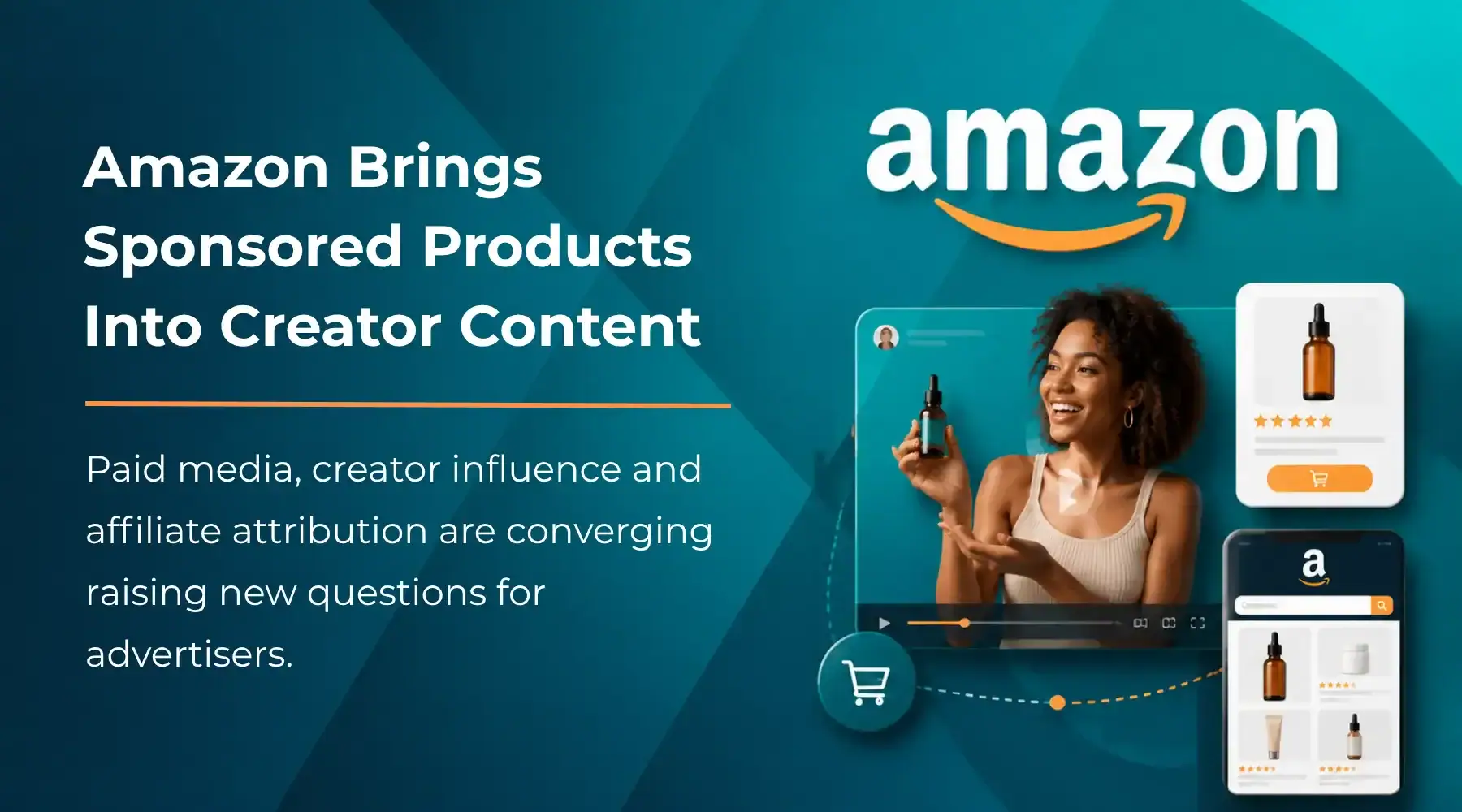
Amazon is extending Sponsored Products into creator content from 10 August 2026, according to a notice sent to advertisers. The company’s updated Sponsored Products guidance confirms that campaigns can appear across premium sites, apps and creators using existing targeting, bids and budgets. The expansion brings retail media, creator recommendations and affiliate influence into the same customer journey, raising questions around attribution, disclosure and campaign performance.
What Amazon’s Creator Ad Expansion Means for Advertisers
- Sponsored Products campaigns can extend beyond Amazon to premium sites, apps and creators.
- Off-Amazon placements use an advertiser’s existing targeting, bids and overall campaign budget.
- “Increase reach” is the default setting, although advertisers can select “Limit off-Amazon spend.”
- Amazon’s public documentation does not clearly explain how creators will be paid or how advertising and affiliate credit will interact.
How Amazon’s Creator Placements Will Work
Amazon describes Sponsored Products as cost-per-click ads for individual product listings. When someone clicks an off-Amazon placement, they are taken to the relevant Amazon product detail page. The new element is the explicit inclusion of creators in that external inventory.
According to the advertiser notice, eligible Amazon Influencer Program creators will be able to feature advertised products within their content.
Advertisers do not need to build a separate creator campaign. Amazon says off-Amazon delivery uses the campaign’s existing targeting, maximum bid and overall budget, with advertisers paying per click wherever the placement appears.
Amazon offers two off-Amazon settings:
- Increase reach: the default option, which uses existing targeting to pursue more impressions and sales opportunities beyond Amazon.
- Limit off-Amazon spend: a more restrictive option that reduces external delivery, potentially at the expense of reach.
Advertisers can change the setting during a campaign. Teams that leave the default untouched may therefore see a broader mix of traffic once creator inventory becomes available.
Why This Is an Affiliate Story
Sponsored Products has traditionally been associated with shoppers showing clear retail intent. Creator content often sits earlier in the journey, introducing products, explaining their value and building the trust that leads to a purchase.
Amazon’s change brings those two models closer together. Creator content will be able to serve as paid-media inventory while retaining the influence of a personal recommendation. The trend was evident at Cannes Lions 2026, where creator activity, retail media and platform-native commerce increasingly overlapped.
That overlap creates an attribution problem. If a shopper discovers a product through creator content, clicks a Sponsored Products placement and later buys on Amazon, the advertiser will see a paid click and an attributed sale. Amazon’s public material does not explain whether the creator can also earn an affiliate commission, receive another form of payment or combine the two.
Affiliate teams need to know whether creator influence is being rewarded, duplicated or absorbed into retail media reporting. This reflects the wider challenge of measuring influence in the zero-click era: a measurable click can close a sale without revealing which content originally shaped the shopper’s decision.
Search Reporting Will Need More Context
Amazon says that on off-Amazon placements without a user query, it may infer a search term from customer context that best matches the advertised product. A term in the report may therefore be a system-generated description rather than something the shopper typed.
Advertisers can use these inferred terms for negative targeting, but they should not compare creator traffic directly with high-intent Amazon search traffic. Amazon’s Sponsored Products Placement Report provides off-Amazon metrics. Teams should establish a baseline and monitor click-through rate, conversion rate, acquisition cost and return on ad spend as creator placements begin.
Brand Safety and Disclosure
Amazon says it automatically reviews and blocks unsafe third-party inventory. In the United States, advertisers can also use Amazon Ads deny lists to exclude websites, apps and individual creator tags from Sponsored Products and Display delivery.
Disclosure presents a separate challenge. Consumers need to understand when a placement is paid and whether the creator may also receive affiliate compensation, as one label may not adequately explain both relationships. Recent scrutiny of affiliate-link disclosure and consumer trust shows why consistency matters. Adding retail media to creator content makes that clarity even more important.
What Advertisers Should Check Before 10 August
Advertisers running Sponsored Products should review five areas:
- Off-Amazon settings: Choose between “Increase reach” and “Limit off-Amazon spend” based on the campaign objective.
- Placement reporting: Record current performance and monitor off-Amazon traffic separately after the rollout.
- Product suitability: Identify products that make sense in a creator-led discovery environment.
- Creator exclusions: Review deny-list controls and document any creators or environments the brand should avoid.
- Attribution rules: Ask Amazon how paid clicks, creator compensation and affiliate commissions are handled when they touch the same transaction.
Brands should not judge creator inventory solely against search benchmarks. Creator content may convert less immediately while introducing products to new audiences. The more useful test is whether the placements add profitable, incremental reach rather than moving credit between existing channels.
What This Means for Creators and Publishers
Creator placements may offer another source of revenue, but Amazon’s public documentation does not explain whether participation is optional, how creators will be paid or whether that payment will affect existing Influencer Program commissions. This uncertainty matters as publishers and creators adjust to changes in Amazon’s affiliate commissions and reporting. The opportunity will depend on transparent payment and attribution rules.
Why Sponsored Products in Creator Content Matter for Affiliate Marketing
Amazon is narrowing the distance between paid advertising, creator recommendations and affiliate conversions. That may offer advertisers more reach and creators more commercial opportunity, but it will also make performance harder to interpret.
Until Amazon explains how advertising charges, creator payments and affiliate commissions interact, advertisers should treat creator placements as distinct inventory, monitor them separately and avoid assuming that an attributed sale tells the whole story.
Everflow
Connect
Tradedoubler
Connect
1win Partners
Connect
PIN-UP Partners
Connect
Shopnomix, a Nomix Group Company
Connect
V.Partners
Connect
Huffson Group
Connect
Kawaii Partners
Connect
Share your expertise and expand your reach and become a content contributor with us today!
Contact Us To Find Out More