AI Search Widens Affiliate Attribution Gap, Report Finds
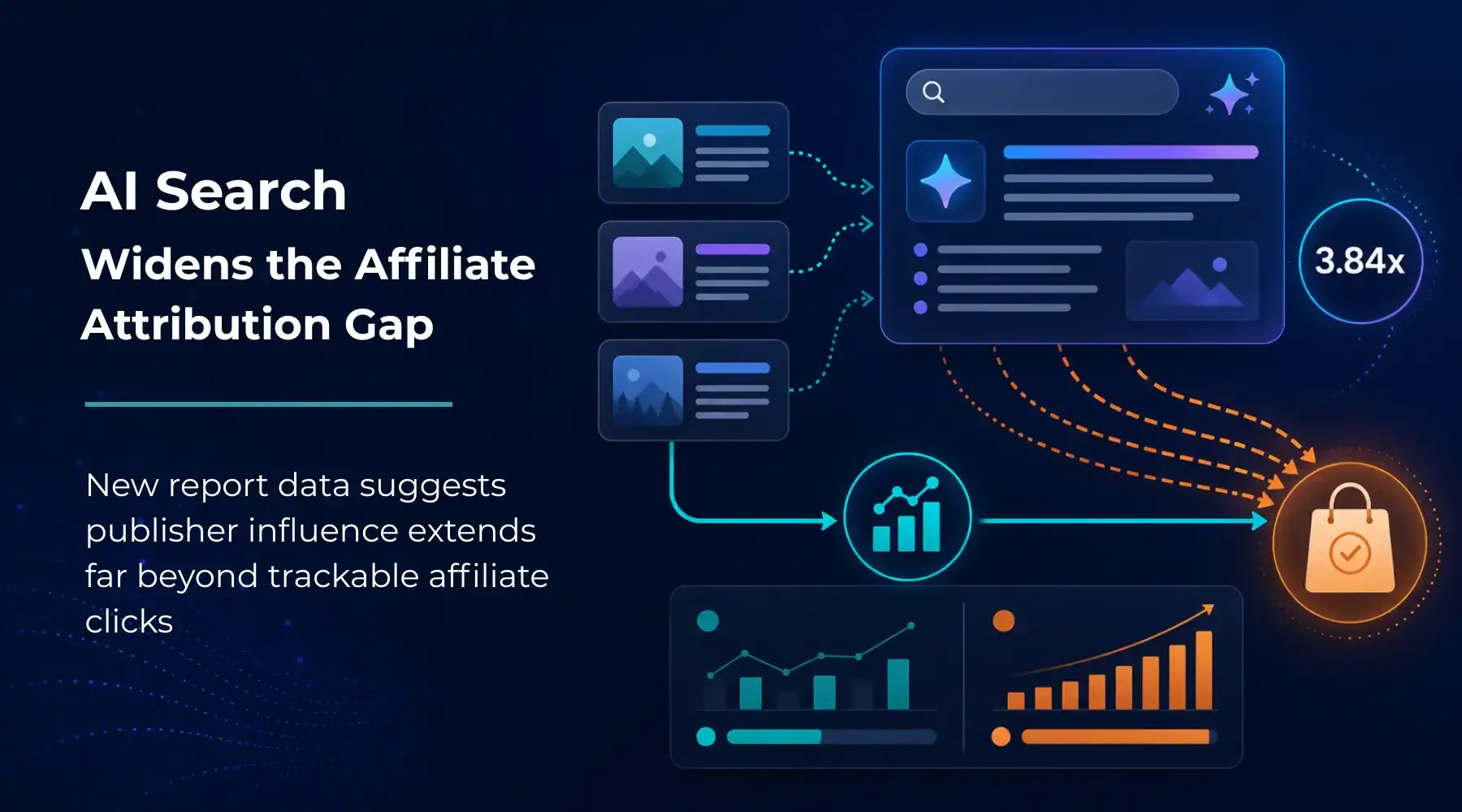
New research suggests that publisher influence through AI-generated answers may be significantly greater than traditional affiliate tracking can detect. The analysis examined commercial searches across six US consumer categories, comparing publisher citations in AI-generated answers with activity recorded through click-based attribution.
Key Findings From the AI Search Attribution Report
- Publisher influence through Google AI Overviews averaged 3.84 times the activity visible through traditional attribution across the categories examined.
- Luxury fashion recorded the largest reported difference, with a HaloIndex of 10.94x.
- Smart wearables followed at 7.33x, while consumer audio devices recorded the smallest category-level difference at 1.54x.
- The analysis identified 1,056 citation gaps, including 47 categorized as critical priorities.
AI Search Influence Outpaces Recorded Affiliate Clicks
The 2026 Zero-Click Commerce Index, published by Partnerize, used a proprietary metric called the HaloIndex to compare publisher influence within AI-generated answers against activity captured by conventional click-based affiliate tracking.
A score of 1.0 represents parity between the two measurements. Scores above 1.0 indicate that publisher citations and their estimated influence on later purchases were greater than the activity recorded through trackable affiliate clicks.
Across the six categories studied, the average score was 3.84x. This does not necessarily mean publishers generated 3.84 times more revenue or completed 3.84 times more work. Instead, it suggests that the research model detected considerably more publisher influence than existing click-based attribution recorded.
Luxury Fashion and Wearables Show the Largest Gaps
The size of the reported attribution gap varied considerably between product categories.
| Consumer category | Reported HaloIndex |
|---|---|
| Luxury fashion | 10.94x |
| Smart wearables | 7.33x |
| Casual and everyday apparel | 3.02x |
| Beauty and personal care | 2.96x |
| Data storage and memory solutions | 2.27x |
| Consumer audio devices | 1.54x |
Luxury fashion produced the highest category-level result. The report linked this to research-heavy shopping journeys in which consumers may consult editorial reviews, comparisons and recommendations before purchasing through another channel.
Smart wearables showed a similar pattern. Commercial searches around specifications, health features, battery life and device compatibility frequently generate AI summaries based on specialist technology content.
Casual apparel generated the largest citation volume, with 3,585 citations across 95 search queries. Beauty and personal care also produced substantial brand-level differences, although the results varied widely between individual companies.
How Zero-Click Publisher Influence Was Measured
The research monitored zero-click publisher influence by examining which editorial publishers appeared in Google AI Overviews and other answer-engine responses to commercial search queries. According to the report, the methodology then linked those citations to downstream conversion activity.
Paid, direct, email and already-attributed customer journeys were excluded from the analysis. Reddit, YouTube and Amazon were also removed from the HaloIndex calculation, allowing the metric to focus on editorial publisher citations rather than wider online visibility.
However, the results are based on a proprietary methodology and six US consumer categories. The 3.84x average should therefore not be treated as a universal multiplier for every publisher, affiliate program or market.
What AI Search Attribution Gaps Mean for Affiliate Programs
The findings highlight a growing gap between publisher influence and traditional affiliate attribution. Reviews and buying guides can shape product discovery through AI-generated answers, even when users never visit the original content or generate a trackable affiliate click. As a result, programs relying heavily on last-click measurement may undervalue publishers that influence consideration earlier in the customer journey.
The industry is exploring alternatives, including multi-touch measurement and open attribution standards that could pass citation signals from AI platforms into affiliate tracking systems. For affiliate managers, the report reinforces the need to assess publisher value beyond clicks and immediate conversions. Lower referral traffic does not necessarily mean lower influence when publisher content continues to shape AI-generated recommendations.
Everflow
Connect
Tradedoubler
Connect
1win Partners
Connect
Shopnomix, a Nomix Group Company
Connect
Huffson Group
Connect
Kawaii Partners
Connect
Trackdesk
Connect
Share your expertise and expand your reach and become a content contributor with us today!
Contact Us To Find Out More