Pinterest Adds Amazon Storefront Linking for Creators
Pinterest has added Amazon Storefront linking for eligible creators, giving them a cleaner way to connect product recommendations on Pinterest with their Amazon affiliate presence.
The update lets creators feature their Amazon Storefront handle directly on their Pinterest profile, tag Amazon products in Pins, and have affiliate information applied automatically to tagged products. Pinterest announced the feature in an official newsroom post, where it also said Storefront linking with other partners will become available soon.
For creators, the update cuts out some of the manual work that sits between content and commerce. For affiliate and partnership teams, it adds another useful signal: social platforms want more creator shopping journeys to happen inside native product-tagging tools, rather than through copied links alone.
Key Takeaways: What Pinterest’s Amazon Storefront Update Means
- Pinterest has added Amazon Storefront linking for eligible creators.
- Creators can show their Amazon Storefront handle on their Pinterest profile.
- Amazon products can now be tagged in Pins through an Amazon filter.
- Pinterest says affiliate information will apply automatically to tagged Amazon products.
- Pins with affiliate links will include an affiliate disclosure.
- Storefront linking with other partners will follow soon, according to Pinterest.
What Pinterest’s Amazon Storefront Linking Does
The new feature gives Amazon creators a direct connection between their Pinterest content and their Amazon Storefront.
Once a creator links their Storefront, Pinterest can display the Storefront handle on the creator’s profile. That gives users a way to move from a creator’s Pinterest presence to a wider set of product recommendations instead of relying only on a single Pin or one-off link.
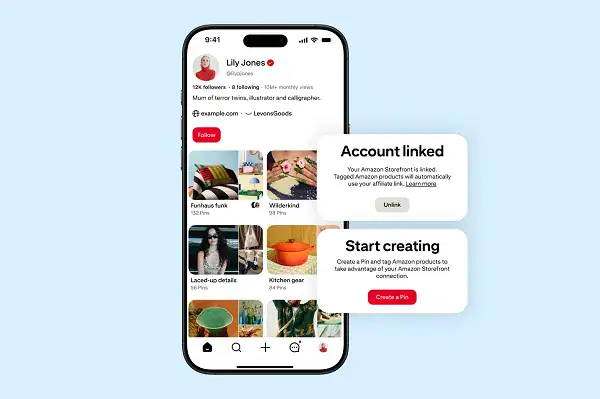
Image source: Pinterest Newsroom. This image was published as part of Pinterest’s official Amazon Storefront linking announcement.
Pinterest framed the update as a way to help users discover products and recommendations from creators they already trust. That fits how Pinterest works. Users often come to the platform with planning intent: home ideas, gift lists, outfits, recipes, beauty looks, event inspiration, and seasonal shopping.
Lauren Glaubach, VP of Global Content Partnerships at Pinterest, said:
People come to Pinterest with purpose – they’re looking for ideas, and often ready to act on them. This means Pinterest sits closer to decision-making than other platforms. That helps creators reach audiences at the moment inspiration turns into action.
That matters for social commerce. Pinterest content can sit closer to search and discovery than fast-moving social posts. A product Pin can keep finding users long after a creator posts it, especially around evergreen or seasonal topics.
How Amazon Storefront Creators Can Tag Products on Pinterest
To link an Amazon Storefront, creators need a Pinterest business account, an Amazon account, an Amazon Storefront, and participation in the Amazon Influencer Program. Once linked, the Storefront can appear on the creator’s Pinterest profile. From there, the product-tagging flow becomes simpler.
Creators can create a Pin, open the product-tagging tool, use the Amazon filter, and select the product they want to tag. Pinterest says affiliate links will then apply automatically to tagged Amazon products. Pins with affiliate links will also feature an affiliate disclosure.
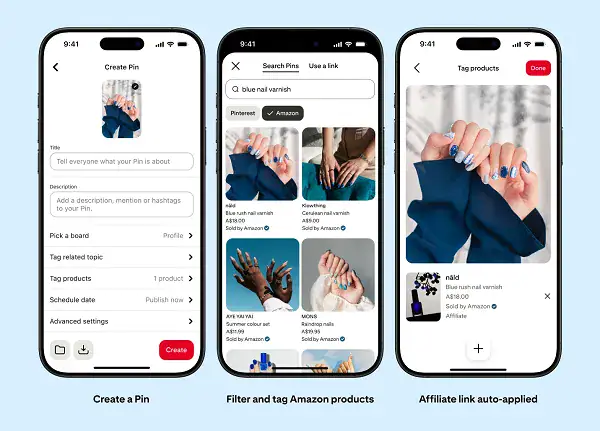
Image source: Pinterest Newsroom. This image was published as part of Pinterest’s official Amazon Storefront linking announcement.
Why This Matters for Affiliate and Partnership Teams
Pinterest’s update won’t replace affiliate tracking, creator briefs, or campaign reporting. But it does make the platform more useful for Amazon creators who already use visual content to organize product recommendations, especially in shopping-led categories such as home decor, fashion, beauty, DIY, fitness, food, parenting, gifting, travel accessories, and seasonal retail.
For affiliate managers, the main question is simple: which creators already drive product discovery on Pinterest, and which ones could use their boards and Pins more intentionally? Amazon Storefronts already give creators a place to group recommendations. Pinterest now gives those Storefronts another discovery point, with less manual linking, more native tagging, and cleaner product surfaces. This follows a similar platform-led commerce pattern to Instagram adding affiliate links to Reels, where creators get more native tools to connect content with tracked product journeys.
How Brands Can Support Amazon Storefront Creators
Brands working with Amazon creators should treat Pinterest Storefront linking as a practical test, not a guaranteed growth driver. There is no public performance data yet showing how much the feature changes clicks, conversions, or commission earnings. Amazon’s program terms, commission rules, and reporting limits still matter, especially as creator commerce continues to adjust to changes like Amazon affiliate cuts affecting publishers and creators.
The best support brands can give creators is clear product context. Strong visuals, seasonal collections, board ideas, and use-case messaging can help creators build Pins that match how people search and save on Pinterest. A Pinterest brief should not read like a TikTok or Instagram Reel script. It needs to help someone plan, compare, save, and return later.
The Affiverse Take on Pinterest’s Amazon Storefront Linking
Pinterest’s Amazon Storefront linking gives creators a simpler route from product inspiration to affiliate-linked recommendations. The strongest part of the update is the workflow. Link the Storefront once. Tag Amazon products inside Pins. Let Pinterest apply affiliate information and show disclosure on eligible affiliate Pins.
The next step is not to rush into generic Pinterest posting. It is to look at creators who already know how to build useful visual collections, then give them the assets and product context needed to turn those collections into shoppable recommendations.
Pinterest has said other Storefront partners will follow. That detail may end up mattering as much as the Amazon launch itself.
Everflow
Connect
Tradedoubler
Connect
1win Partners
Connect
PIN-UP Partners
Connect
Shopnomix, a Nomix Group Company
Connect
V.Partners
Connect
Huffson Group
Connect
Kawaii Partners
Connect
Share your expertise and expand your reach and become a content contributor with us today!
Contact Us To Find Out More