Capital One Must Face Creator Lawsuit Over Alleged Commission Theft
Federal judge allows class action to proceed against banking giant’s shopping browser extension
Capital One Financial Corporation cannot dismiss a proposed class action lawsuit alleging its popular browser extension systematically steals affiliate marketing commissions from social media creators and content publishers, a Virginia federal judge ruled Monday.
U.S. District Judge Anthony Trenga in Alexandria, Virginia, found that content creators plausibly alleged Capital One knew or should have known that its Shopping browser extension diverted their rightfully earned commissions by overriding tracking codes and cookies that identify which affiliate drove a sale.
The ruling represents a significant victory for creators in what legal experts are calling a landmark case that could reshape how browser extensions and affiliate marketing interact in the rapidly growing creator economy.
The Allegations: Cookie Hijacking on a Massive Scale
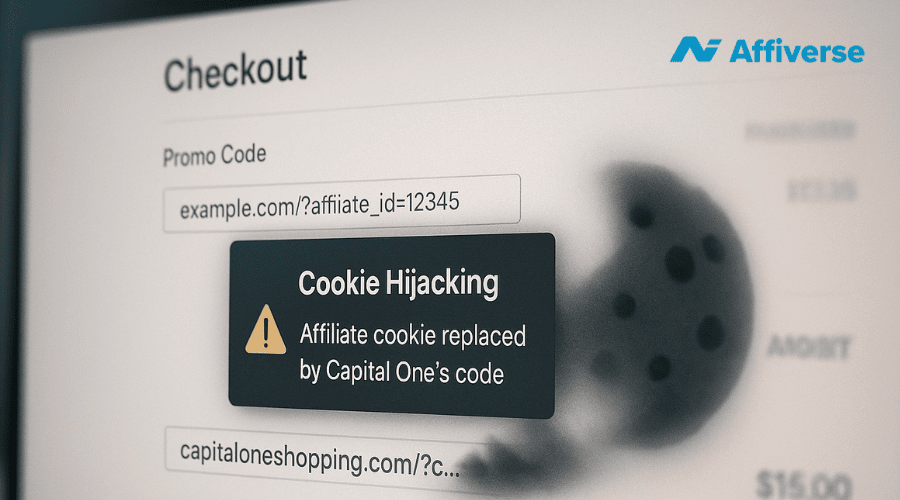
The lawsuit, filed in January by influencers Edgar Oganesyan and Matthew Ely along with other content creators, alleges that Capital One’s Shopping extension—used by more than 10 million people to find discounts and compare prices—systematically replaces affiliate marketers’ tracking cookies with its own during the checkout process.
Oganesyan operates the popular YouTube channel TechSource with 3.87 million followers, while Ely co-owns ToastyBros, LLC with more than 1 million subscribers. Both creators say they’ve lost substantial commission income due to the alleged cookie replacement scheme.
The case centers on the fundamental mechanics of affiliate marketing, where creators earn commissions by promoting products through unique tracking links. When a consumer clicks an affiliate link and makes a purchase, a tracking cookie ensures the creator receives credit for driving the sale. According to the lawsuit, Capital One’s extension “silently and invisibly” removes these affiliate cookies and replaces them with its own, effectively claiming credit for sales it didn’t generate.
“This browser extension doesn’t just help consumers find deals—it’s systematically stealing money from the creators who actually drive those sales,” said Norman Siegel, an attorney representing the plaintiffs.
Legal Victory Despite Partial Dismissal
While Judge Trenga dismissed several claims, including conversion and four state law claims, he allowed the creators to proceed with their core allegations. The court found merit in claims that Capital One was unjustly enriched, interfered with affiliate contracts and earning potential, and violated the federal Computer Fraud and Abuse Act.
The decision comes as the affiliate marketing industry grapples with increasing complexity around tracking technology and compliance issues. Recent regulatory changes have heightened attention to how affiliate commissions are tracked and distributed, making this case particularly significant for industry standards.
Capital One defended its practices in a statement, saying “Capital One Shopping does not replace affiliate marketer cookies or unlawfully take credit for commissions. We disagree with the allegations in the complaint and look forward to defending ourselves in court.”
The banking giant had argued that merchants ultimately decide how to allocate commissions and suggested the lawsuit reflected creators’ frustration that merchants “do not always share their view that they did all the work.”
Part of a Broader Industry Battle
The Capital One case is the latest in a series of legal challenges targeting browser extensions and their impact on affiliate marketing. PayPal faces similar litigation over its Honey extension, which has also been accused of hijacking affiliate commissions from content creators.
Microsoft and its Shopping extension have also been named in comparable lawsuits, suggesting a broader pattern of browser tools potentially interfering with affiliate attribution systems.
These cases highlight the growing complexity of affiliate marketing compliance as technology evolves faster than regulations can keep pace. Industry experts note that the lack of clear standards around cookie handling and commission attribution has created a “wild west” environment where disputes are increasingly common.
Impact on the Creator Economy
The lawsuit comes at a critical time for the creator economy, which is projected to reach $528 billion by 2030. Affiliate marketing represents a crucial revenue stream for millions of content creators, with accurate commission tracking essential to maintaining trust between creators, brands, and platforms.
Recent regulatory developments have emphasised the importance of transparency in affiliate relationships, making cases like this even more significant for establishing industry standards.
The case also underscores broader challenges facing creators in protecting their revenue streams. As Affiverse previously reported, cookie tracking and attribution disputes have become increasingly common as various browser tools and extensions compete for commission revenue.
What’s Next
The class action seeks to represent all U.S.-based social media influencers, bloggers, and content creators who have had commissions allegedly diverted by Capital One’s browser extension. The plaintiffs are seeking damages, restitution, and injunctive relief to prevent future commission diversion.
Legal experts predict the case could set important precedents for how browser extensions must interact with affiliate marketing systems. A ruling in favor of the creators could force companies to implement more transparent practices and potentially share revenue with affiliates whose work drives sales.
For Capital One, the lawsuit represents another legal challenge beyond its recent $425 million settlement over savings account interest rates and ongoing regulatory scrutiny of its practices.
The case is being closely watched by affiliate marketing professionals and creator economy stakeholders, who see it as potentially defining the future relationship between technology platforms and content creators’ earning rights.
The litigation is Edgar Oganesyan and Matthew Ely v. Capital One Financial Corporation, Wikibuy LLC, and Wikibuy Holdings, LLC, Case No. 1:25-cv-00113, in the U.S. District Court for the Eastern District of Virginia.
As the case proceeds to discovery, it promises to shed more light on the often opaque practices of browser extensions and their impact on the billions of dollars flowing through affiliate marketing channels annually.
Everflow
Connect
Tradedoubler
Connect
1win Partners
Connect
PIN-UP Partners
Connect
Shopnomix, a Nomix Group Company
Connect
V.Partners
Connect
Huffson Group
Connect
Kawaii Partners
Connect
Share your expertise and expand your reach and become a content contributor with us today!
Contact Us To Find Out More