Accessible to international audiences, offshore casinos are licensed in jurisdictions such as Curaçao and Anjouan, where gambling laws, regulatory requirements, and player protection mechanisms differ from those in the EU and UK. Instead, they are licence dependent, meaning the availability of safeguards, such as dispute resolution channels and responsible gambling tools, varies. Therefore, players should check not only whether offshore casinos are licensed, but also what protections the casino licence provides. Read on to discover how offshore sites compare to domestically licensed casinos and learn more about the licence-related factors to evaluate before depositing.
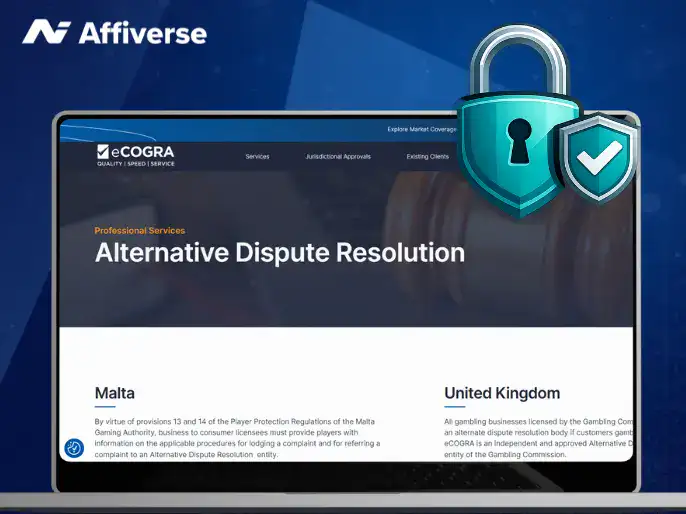
Delayed payouts or blocked accounts are issues players want to avoid, but when they happen, an alternative dispute resolution (ADR) mechanism can go a long way. Therefore, before joining an online casino, check whether the offshore regulator has listed an independent ADR provider that will mediate issues between operators and players.
We audited five EU-facing offshore gambling sites, highlighting strengths and weaknesses that matter to players.
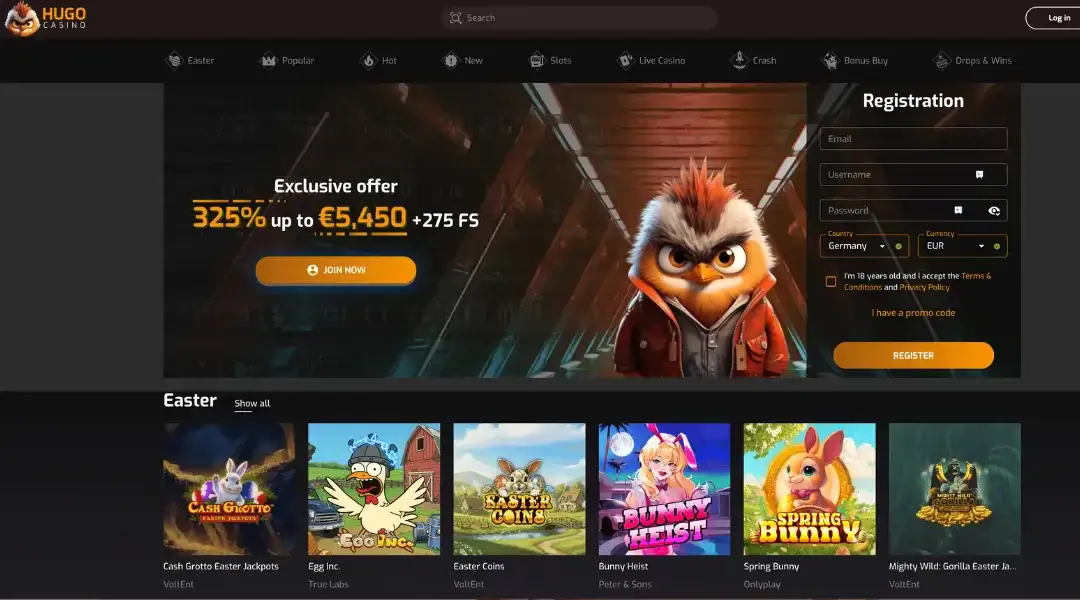
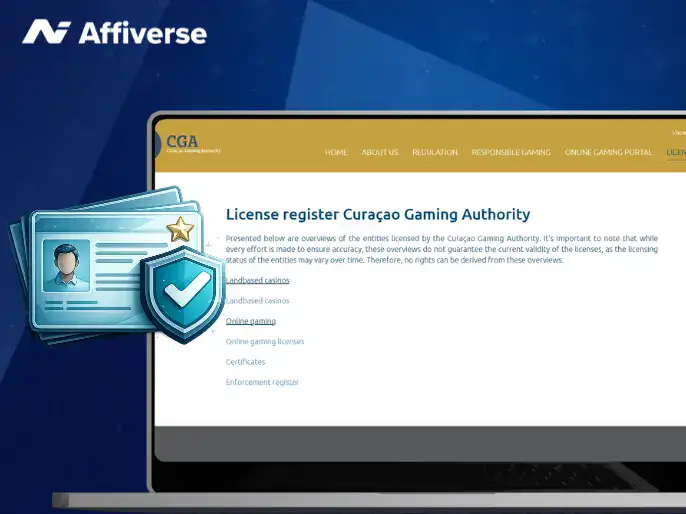
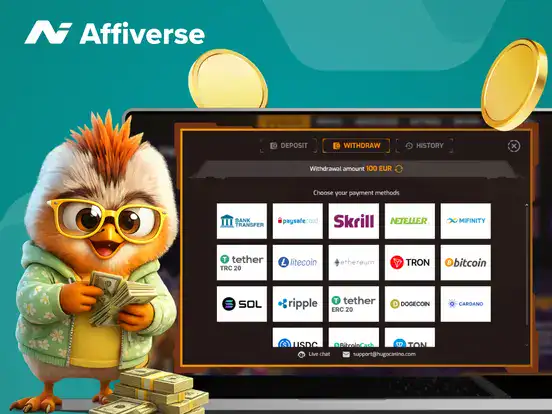
Licensed by the Curaçao Gaming Authority (OGL/2024/589/0556, status confirmed at CGA Portal), Hugo Casino is a loyalty-focused offshore gambling site with incentives for returning players.
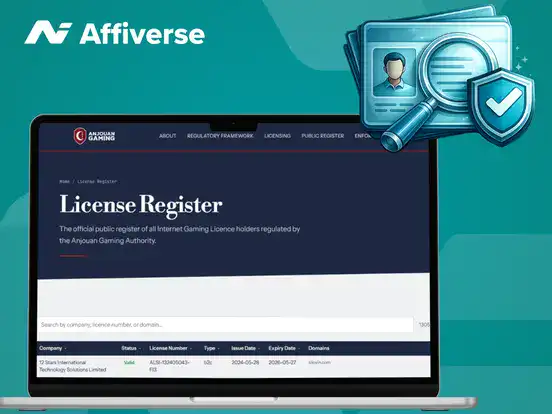
An Anjouan-licensed offshore casino (ALSI-202409044-FI2, verified at License Register Anjouan Gaming), Spinzen Casino hosts regular tournaments, has a diverse live dealer game library, and gamifies Lotus Rewards daily bonuses.
Licensed by the CGA (OGL/2024/169/0146, active status verified at the CGA Portal), Beef Casino is an international online casino that provides unique benefits to high rollers, a selection of reload bonuses, and an extensive game variety. Players who prefer gaming on online casino apps and mobile-optimised browsers should consider Beef Casino as one of their choices.
A platform overseen by the Curaçao Gaming Authority (OGL/2024/169/0146, validity verified at the CGA Portal), Martin is a minimum deposit casino with unlimited daily cash-outs for high-level VIP program members.
‘Offshore’ refers to the jurisdiction in which an online casino is licensed. Still, it is a broad term that encompasses multiple overseas regulatory bodies and frameworks, as opposed to operators overseen by EU/EEA national regulators, such as the Spelinspektionen in Sweden. Offshore casinos are typically licensed by the Curaçao Gaming Authority (CGA) and Anjouan Gaming and, less frequently, registered in Panama.

The licensing authority, rather than the offshore label, is what matters when evaluating these online casino sites. Post regulatory reforms, Curaçao vets casino operators more stringently, outlining dispute resolution channels and requiring commitment to player fund protection. The Anjouan Office of Gaming Supervision and Control (OJSC), on the other hand, has more lenient licensing standards, and oversight is not as strict. In contrast, casinos registered in Panama operate as corporate entities but don’t hold online gambling licences, meaning player protection is very limited.
To mitigate risks, it is important to understand these differences before depositing, as the offshore label means little. Instead, it is the specific regulator that oversees offshore casinos that sets the rules and recourse mechanisms. Moreover, despite many associating the term offshore with shady operations, some offshore online casino sites have been operating legitimately for years. On the other hand, several operators have done the complete opposite.
Offshore online casinos are primarily licensed or registered in three jurisdictions: Curaçao, Anjouan, and Panama. Because regulatory frameworks aren’t uniform, it is essential to understand how these differences in oversight affect players and their protection, particularly when disputes arise.
Curaçao’s licensing system moved from a sub-licence/master-holder regulatory regime to a more centralised compliance framework under the National Ordinance for Games of Chance (LOK) in late 2024. Curaçao’s Gaming Control Board (GCB) initially issued provisional gaming concessions, with the Curaçao Gaming Authority becoming the official licence issuer in the jurisdiction in late 2025.
Under the 2026 direct licensing framework, CGA-licensed casinos are required to keep player funds separate and offer an official dispute resolution process. However, these protections mainly depend on operator reporting rather than continuous banking oversight, meaning the level of fund security may not be as strong as the MGA’s stricter ring-fenced account requirements. However, because the supervisory framework is still being implemented, enforcement of these requirements is not yet at the level of Tier 1 licence-issuers, such as the Malta Gaming Authority (MGA) and the UK Gambling Commission (UKGC).
The Anjouan Office of Gaming Supervision and Control (OJSC) performs background checks on operators and sets some basic compliance requirements. However, they are not as extensive as in Curaçao. That makes it easier for operators to obtain licences, but players don’t enjoy the same levels of protection. Moreover, some online casinos may be operating under expired licences, further reducing the dispute resolution options for online casino enthusiasts should payout issues or account blocks occur.
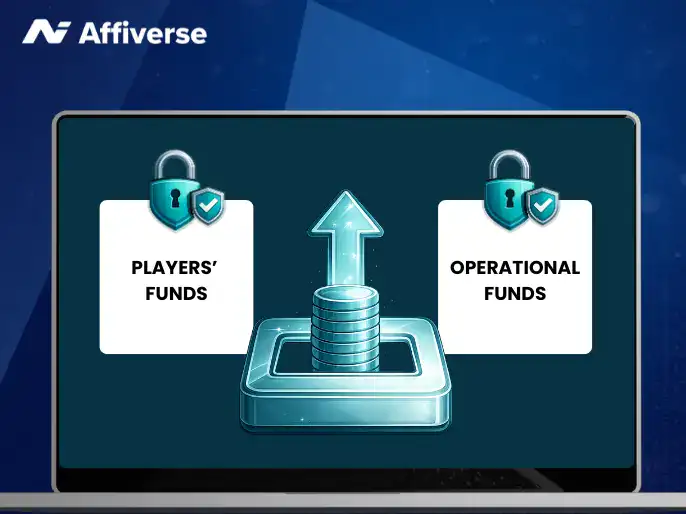
Unlike Curaçao and national EU/EEA regulators, Panama doesn’t issue licences to online casinos. However, some operators are incorporated in Panama, which may mislead players to believe they are joining a casino operating under a Panama licence, when it is only a business registration. As a result, Panama-registered offshore casinos aren’t subject to regulatory supervision and lack dispute resolution systems, don’t keep players’ funds in separate accounts from operational money, and responsible gambling tools are often limited.

An offshore casino may suit your situation if:
An offshore casino is less suitable if:
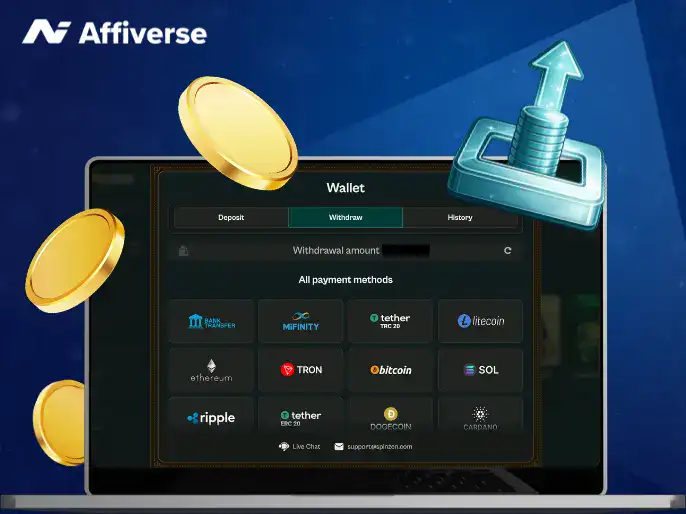
Offshore casinos usually support a broader range of deposit and withdrawal options than locally regulated platforms. It is partly to serve international players and partly because acquiring banks in stricter jurisdictions may decline gambling-related transactions.
| Payment Method | Bonus Eligibility | Fees | Payout Speed | Drawback | Best for |
|---|---|---|---|---|---|
| Visa / Mastercard | Available | Might charge a Cash Advance fee, 3% – 5% | 1-5 business days | May block gambling-related credits | Convenience |
| Ripple / Bitcoin / USDT | Available | Network fees apply: $0.01-$15.00+ | Usually under 1 hour | Volatility affects withdrawal value | High Rollers & Speed |
| PaysafeCard / Neosurf | Available | Maintenance fees apply: €5/month | Do not support withdrawals | Does not support withdrawals | Privact |
| Skrill / Neteller / MiFinity | Usually excluded | 1%-2.5% deposit fees, 3.99%-4.49% conversion fees, 2.80%-3.99% withdrawal fees | Usually up to 24 hours | May not support mainstream processors | Frequent players & Speed |
In recent years, the offshore gambling sites have moved toward cryptocurrency as a primary payment option. This shift is caused by practical factors: lack of bank-level blocking, near-instant transactions, and the ability to serve players across multiple jurisdictions without currency conversion.
USDT and USDC have become a kind of standard for players who want cryptocurrencies without exposure to price volatility. Many offshore operators now offer bonuses and loyalty programmes directly in USDT.
Offshore casinos don’t custody player funds in self-custody wallets. Depositing crypto to a casino address transfers control to the operator. Players should only deposit from wallets they own private keys to, and should not use exchange wallets for gambling deposits.
When reviewing international gambling sites, we rely on criteria tailored for the multi-jurisdictional nature of the best offshore online casinos. Here’s how we evaluate offshore platforms catering to the wider market of online casinos in Europe.
We assess the validity of the licence and look for jurisdiction-specific deceptions operators might engage in. We check if Curaçao licences are issued under the new framework and whether Anjouan casinos hold active operational permits. For Panama gambling sites, we confirm they transparently disclose their corporate registration, instead of misrepresenting it as a gambling licence.
Aiming to identify the best offshore casinos, we check the terms and conditions to see if there is a dispute resolution channel listed, and, if not, we look for one on the regulator’s official website, even though, except for some Curaçao-licensed casinos, independent ADR providers are rarely available. We also scan player forums for resolved issues to assess the efficacy of the ADR mechanism.
Because keeping players’ funds separate from operational money is not mandatory in most offshore jurisdictions, it is essential for us to determine which online casinos engage in fund segregation on a voluntary basis. We verify all information we gather from the website and online player communities and explicitly include it in our reviews.
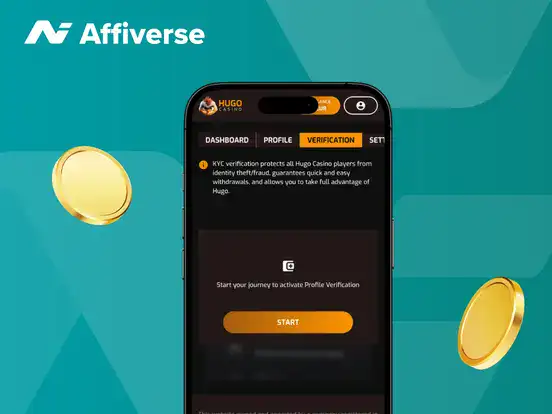
The best way to assess withdrawal speeds, limits, and KYC verification checks is to perform a real payout test. During the cash-out, we identify which payout limits trigger automatic KYC verification and how they affect the payout speed. One of the key things we want to establish is whether the KYC process can be completed before the first deposit so that the casino doesn’t use it as a delay tactic for withdrawals later.
Offshore casino sites aren’t much different from Tier-1 licensed casinos until an issue arises and the player has limited options for recourse or safeguards. We compare how these two types of gambling sites differ from each other on key criteria that determine the quality of the gaming experience.
| Criteria | Offshore Casino (Curaçao/Anjouan) | Tier-1 Licensed Casino (MGA/UKGC) | Unregulated Casinos |
|---|---|---|---|
| Player Fund Protection |
Curaçao (CGA 2026 direct licences): Fund segregation now required, but enforcement is operator-reported, not bank-supervised. Anjouan: No formal requirement. |
Mandatory fund segregation | No requirement exists |
| Dispute Resolution | Only a formal complaints process may exist; no independent ADR body | Each licence specifies the designated ADR provider for dispute resolution | No formal complaints process or no ADR body; players have no structured pathway for dispute resolution |
| KYC Requirements | Often performed at withdrawal after a single or cumulative payout amount trigger is activated (e.g., €5,000) | Casino operators must collect KYC data for each player, usually after registration or before the first payout | No standardised KYC requirement; identity verification is at the operator's sole discretion |
| Responsible Gambling Tools | Vary by jurisdiction and operator | Standardised rules regarding the mandatory availability of deposit limits, self-exclusion, and reality checks | No mandated tools; operator-dependent |
| National Self-Exclusion | No integration with national self-exclusion schemes | Mandatory self-exclusion system integration (e.g. GameStop in the UK, Spelpaus in Sweden, etc.) | No integration with any national self-exclusion organisations |
| Regulatory Sanctions | Enforcing rules and requirements is not as straightforward for the regulator | Easy to execute through licence suspensions and monetary fines for operators | No regulatory body to impose sanctions |
| Game Fairness Certification | Not as strict in enacting requirements for independent auditing of RNG systems | Mandatory – all casino games must be independently tested by approved, third-party testing agencies | No requirement for independent RNG; outcomes can't be independently verified |
| Recourse If Casino Closes | Lack of fund segregation leaves players with limited options for recourse | Even if a casino ceases operations, players' funds are kept separately and can be recovered | Players have no legal recourse and are treated as unsecured creditors |
As you can see, offshore casino sites and Tier-1 licensed casinos, despite seeming nearly identical on the surface, share few similarities. Also, unregulated casinos offer zero guarantees at any level. The right choice ultimately depends on what a player is willing to trade off, but understanding where each type sits on that spectrum is important to making an informed decision.
Many offshore casinos are vying for players’ attention by offering enticing offshore casino bonuses and a wide range of real-money slots, progressive jackpots, roulette, blackjack, and poker games. However, in addition to comparing bonuses and real-money games, players should evaluate offshore-specific factors so that they have better chances of identifying reputable offshore casinos.
Compared to locally licensed casinos, offshore casinos offer a larger and more varied game library. As they are not restricted by the content restrictions, they can have games from a wider pool of providers, such as Malta (MGA), Gibraltar, or Curaçao, as well as developers that provide exclusively to international markets. Some of the popular categories at offshore gambling sites include:
| Game | Provider | Volatility | Multi-Bet | Drawback |
|---|---|---|---|---|
| Aviator | Spribe | Medium | Yes | Max win capped per bet, not per multiplier |
| Spaceman | Pragmatic Play | Medium–High | No | Allows one bet per round. |
| JetX | SmartSoft Gaming | High | No | Long runs of low multipliers (under 1.2x) |
| Balloon | Hacksaw Gaming | Low-Medium | No | No automation / Physically active |
When evaluating online casino offshore platforms, it is paramount to assess the advantages in relation to the trade-offs stemming from each, be they regulatory shortcomings or international casino site limitations.
Taxes on casino winnings vary by country. In most cases, it is determined by local law regardless of where the casino is licensed. Players are responsible for following the tax rules in their country. The information here is not tax advice, and players should talk to a tax professional for guidance specific to their situation.
In most countries, players can play tax-free at casino sites. However, sometimes gambling winnings are subject to income tax or a specific gambling tax. The rule is usually dependent on whether gambling is treated as a professional activity or a recreational activity.
For instance, in the UK, Germany, and Canada, casino winnings are generally not subject to tax for recreational players; the tax is on the operator. But in the USA, all gambling winnings are taxable income under federal law, whether it’s offshore or not, and in the Netherlands, gambling winnings of over €449 are subject to a 30.1% tax, and for offshore casinos, players need to self-report and pay it as well.
The heterogeneous nature of the offshore casino ecosystem gives rise to many misunderstandings as to how offshore casinos work, the protections they enable, and the reliability of their payouts.
Reality: Offshore is a broadly applied term to online casinos that are licensed in foreign jurisdictions, such as Curaçao and Anjouan. So, they are legitimate businesses, even though a Curaçao licence is not as strong as an MGA one. That means licensed offshore sites operate within a legal framework and comply with regulatory requirements, but the regulatory regime is different from that of Tier-1 licensed operators.
Reality: It’s unfair to compare Anjouan, and particularly Curaçao-licensed casinos, to Panama-registered sites operating under business licences. While gambling sites with Curaçao oversight don’t offer the same recourse mechanisms as MGA-licensed platforms, they provide players with a formal dispute resolution system, unlike Anjouan and Panama-supervised operators. Distinctions should always be made between offshore sites holding different licences.
Reality: An offshore licence doesn’t determine whether a casino is more or less reliable when it comes to payouts. Instead, transparent withdrawal policies and a lack of payout-related complaints are the best indicators of casinos with reliable and fast payouts, including offshore ones. The licence helps with recourse after a withheld payout, but it cannot guarantee that an operator won’t block the withdrawal in the first place.
One of the biggest differences between offshore and locally licensed casinos is the availability of responsible gambling tools. National regulators such as the UK Gambling Commission (UKGC), the Swedish Spelinspektionen, and the Dutch Kansspelautoriteit (KSA) require specific tools: limits, cooling-off periods, self-exclusion, and national support systems. Offshore gambling sites are not obligated to offer these.
The non-uniform offshore casino landscape cannot be evaluated on a licensed/unlicensed basis or a reputable/fraudulent binary. Instead, the regulatory jurisdiction and the track record of individual operators determine the levels of trust and risk, as well as the options for responsible gambling and recourse in case of disputes. To reduce the likelihood of disappointments, players should verify that the licence is valid directly in the licence-issuer’s registry. Additionally, dispute resolution systems should be evaluated and a test withdrawal performed before depositing more substantial amounts.
Offshore online casinos are gambling sites that are not regulated by the EU and UK online gaming authorities. These operators are licensed in Curaçao and Anjouan but may also be operating under corporate registrations in countries such as Panama and Costa Rica. Licences issued by the Curaçao Gaming Authority are considered to offer better player protection mechanisms compared to Panama and Anjouan-registered platforms.
Online casinos are legitimate businesses when they operate under valid licences or corporate registrations, but it is the player’s country of residence and local laws that determine whether accessing an offshore casino is legal for the player. Therefore, players should check their local regulations even when accessing reputable operators.
When a casino withholds a payout, recourse mechanisms are determined by the regulator. For Curaçao-licensed casinos, there is a formal complaints route, but it is not as efficient as ADR systems of Tier 1 authorities, like the MGA or UKGC. At the same time, Anjouan Gaming-overseen platforms are required to list an ADR provider, but enforcement is limited. Panama-registered casinos, on the other hand, may voluntarily decide to offer recourse mechanisms, but typically don’t.
MGA-licensed casinos are required to keep player funds in separate EU-regulated bank accounts, helping ensure that operators cannot use those funds for business expenses. Curaçao’s 2026 direct licensing framework also introduced player fund segregation requirements, although the legal protections in bankruptcy situations are not as well established as the MGA/EU model. Anjouan-licensed casinos do not currently have the same requirement. Because of this, players should generally consider offshore-held balances to carry a higher level of risk.
Unlike the MGA, a Curaçao licence doesn’t oblige operators to hold player funds separate from company balances. While Curaçao-licensed casinos provide players with complaint submission channels, the MGA mandates an independent ADR provider. Lastly, Curaçao’s responsible gambling requirements are not as strictly enforced as MGA’s mandatory responsible gambling controls.