Our team has reviewed several EU casinos, evaluating them across licensing, payment speed, and support. Operating in highly regulated markets, they comply with strict gambling regulations to ensure maximum player and data protection. They offer popular casino games, including online slots, table games, and live dealer games. We evaluated their regulatory framework, licensing authorities like MGA and UKGC, payment methods, and availability across the European Economic Area. Before joining an online European casino, players must understand the key features highlighted here.

There is no unified gambling regulation for European markets, so “EU licensed” does not imply one single licensing standard. Instead, EU-facing casinos are licensed under the following tiers.

Trusted EU online casinos adhere to strict licensing and jurisdictional requirements with AML checks, KYC requirements, and segregated player funds. While we review online casino sites, we routinely check whether licence badges link to the regulator’s registry.
While the MGA is the”gold standard” for EU-facing online casinos, operators must comply with country-specific rules.
For a safe online casino experience, the best European online casinos offer responsible gaming tools and player refund protection.
A casino account registered in one country may work differently in another country due to cross-border restrictions.
Most European casinos support the EUR and other currencies used in the EEA for deposits and withdrawals.
Gambling winnings are tax-free in some EU countries and taxable in others, depending on the amount won and player type. For example, Germany and Belgium tax winnings while UK doesn’t. Tax rules vary; always consult a local tax advisor or official government resource.
If an EU online casino site does not display a verifiable licence number in the footer section of the website, or the licence badge links to the casino’s own page, then it is not covered by the player protections described on this page. The licence badge should link to the regulator’s registry, like MGA’s licence verification page.
If you encounter issues with an unlicensed casino, formal dispute resolution through a regulator is not available. In such cases, your options may be limited to contacting your payment provider requesting a chargeback via your bank or e-wallet, or seeking independent advice from organisations like European Consumer Centres Network. Outcomes are not guaranteed, which is why verifying a licence before playing is essential.
With several platforms claiming to be the best EU casinos, players must choose carefully. Follow these steps to find a reliable site that allows you to fund your EU online casino accounts and play safely as these steps reflect our review methodology:
We discovered this discrepancy during our own casino testing process. Before funding your EU casino account, open the cashier and try to deposit at the casino’s minimum threshold using your preferred withdrawal method. If your preferred method isn’t available in the cashier, the casino doesn’t support it for your account regardless of what the payment page states. This happens because payment providers sometimes restrict methods based on a player’s country or verification status, which the general payment page doesn’t reflect.
Licensing rules in the European online gambling industry vary by country and have a significant impact on player protection. Below are the three licence tiers EU casino players will encounter.
Malta-licensed European online casinos offer stronger player protection mechanisms, fund segregation, and formal dispute resolution. As the benchmark for international casinos, the MGA follows stricter KYC and AML guidelines and mandates RG tools while lower tiers may not. Players can verify gaming licences at MGA’s website.
If a withdrawal is blocked at an MGA casino, the player can resolve the issue within 30 days through MGA’s Player Support Unit and an ADR provider like eCOGRA or IBAS.
Some of widely used European casinos are licensed in Curaçao, with easy licence verification at cga.cw. Under the restructured GCB framework introduced in 2023, operators must now obtain a single licence directly from the Gaming Control Board of Curaçao, replacing the previous sublicensing system that allowed master licence holders to onboard operators with minimal oversight. Despite the post-2023 reforms to tighten player protection measures for Curaçao casinos, the MGA offers better fund protection and dispute resolution mechanisms.
If a withdrawal is blocked at a Curaçao casino, the GCB dispute resolution process is slower and less enforceable, and refunds may not be possible if the company behind the casino is insolvent.
The Anjouan licence is gaining popularity among EU-facing operators due to its lower barrier to entry. However, it has limited player recourse and basic complaint procedures at Anjouan eGaming website.
If a withdrawal is blocked at an Anjouan casino, players should not expect reliable regulatory interventions due to limited complaint processes and a lack of reliable enforcement measures. In practice, the most viable option for players is a chargeback request through their bank or card provider, though this is only possible for recent transactions and is not guaranteed. E-wallet payments such as Skrill or Neteller are generally non-reversible, leaving players with little to no recourse. If the operator is unresponsive, filing a complaint directly with your national gambling authority or consumer protection agency is worth attempting, even if enforcement across jurisdictions is limited.
Below are the top online casinos in Europe, catering to different EU players looking to play real-money games or free demos for entertainment.
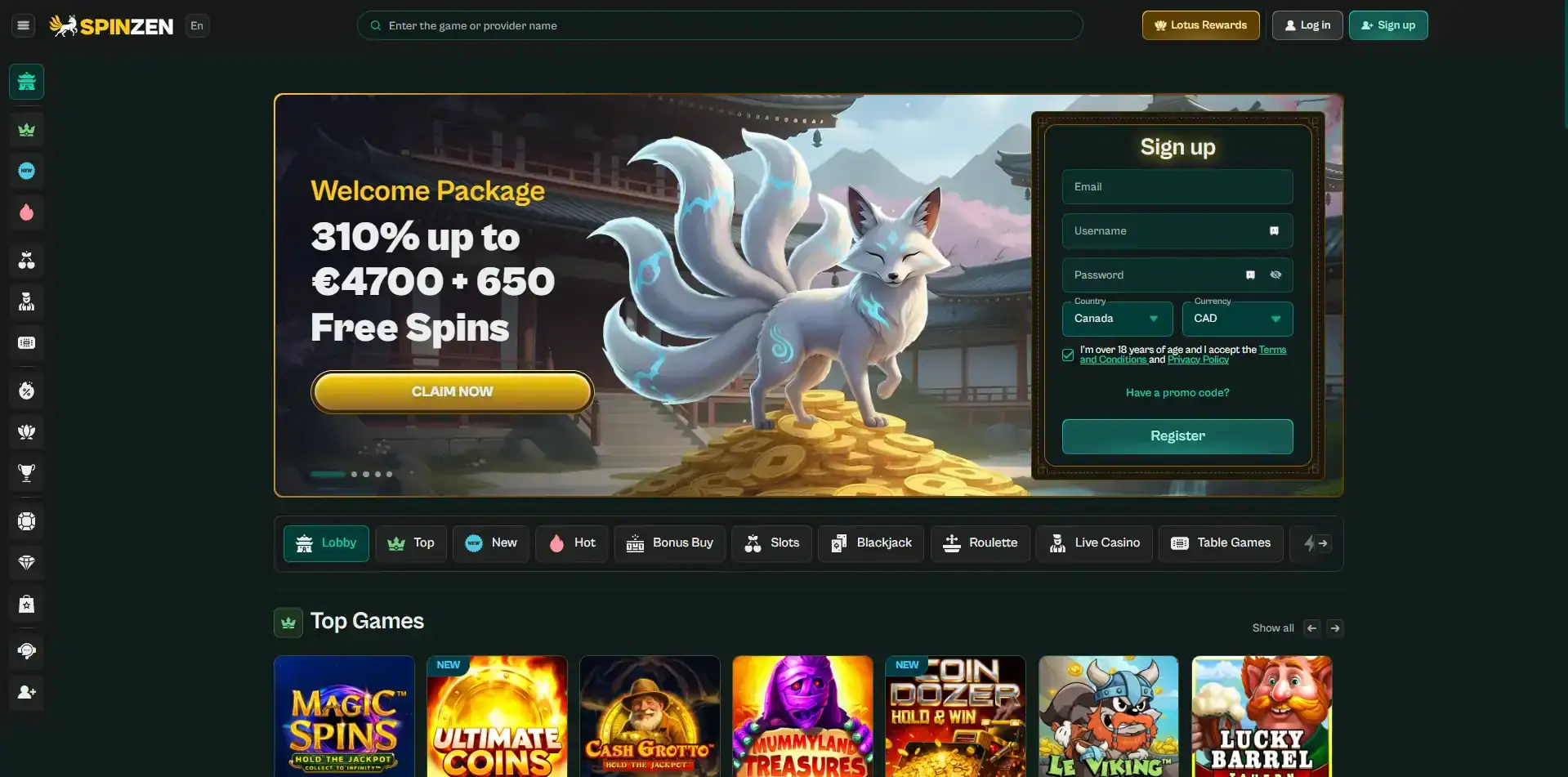
With a wide range of slots, table games, and live casino games, Spinzen is an Anjouan-licensed online casino.
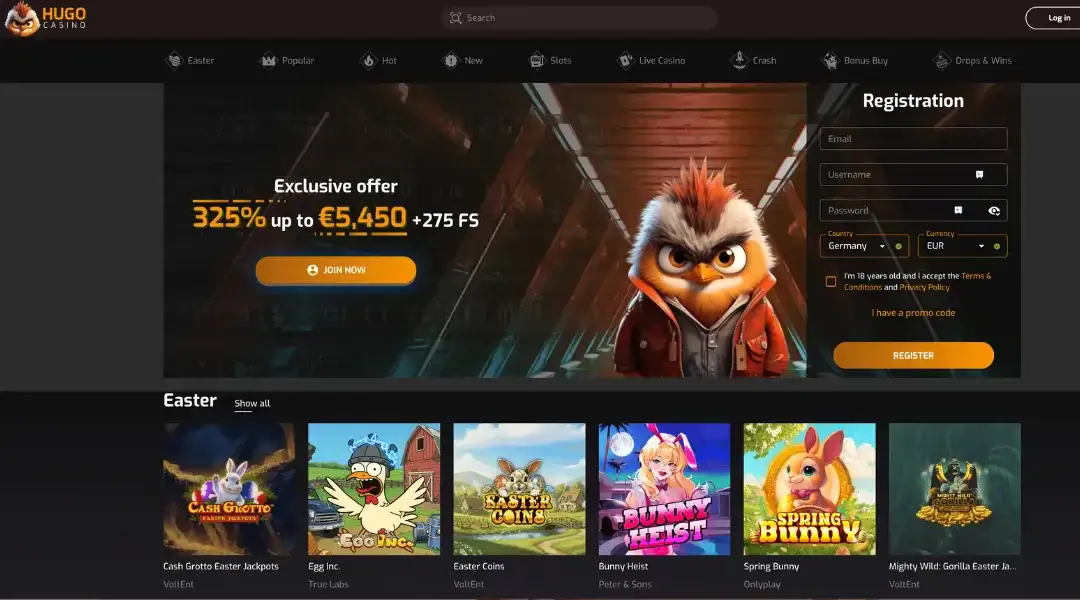
Licensed in Curacao, Hugo Casino is best known for its broad selection of online slots and promotions with free spins.
Designed for playing online casino games and betting on sports, Alawin Casino is licensed in Costa Rica.
Lanista is one of the top online casino sites for jackpot games, including slot games with progressive jackpots.
Operating under Curaçao laws and regulations, Beef Casino boasts well-structured VIP programme.
Licensed in Curacao, Martin Casino appeals to mobile app users and fans of crash games.
Certain problems can occur after registering even at the best European online casino site. Below are the most common roadblocks EU players might face when accessing these platforms.
Roadblock: Even if you verified your account, EU casinos often trigger additional KYC when you attempt to withdraw winnings.
The Fix: If you had claimed a bonus, ensure you’ve met the wagering requirements. Standard EU casino wagering requirements typically range from 20x to 40x the bonus amount. Due to the closed-loop policies at European online casinos, select the same deposit method for withdrawals. If you withdrew a large amount, you might be required to submit bank statements for source-of-funds checks.
Roadblock: A player deposits funds after travelling to another country. This happens due to market-specific offers and licensing boundaries.
The Fix: Stop playing immediately and check “My Bonuses” or “Promotions” for rejected or cancelled offers. If you had travelled, contact support and provide evidence to prove that you are a permanent resident of your home country. The operator may reinstate the bonus manually. Remember that VPN use can also trigger the same geo-restriction issue as physical travel.
Roadblock: The player registers successfully but cannot set deposit limits for their account.
The Fix: The availability of deposit limits depends on the casino’s licensing rules. Offshore sites may not offer such limits. After registering, you should check for deposit limits in your account settings before depositing money. You can also contact the support team to have your deposit limit lowered. Keep in mind that under Tier 1 licensing, players have a legal right to set deposit limits and can escalate to the regulator if a casino refuses.
We’ve encountered this repeatedly in our reviews: two players from different EU countries testing the same casino received different bonus offers at signup without any visible explanation on the promotions page. Depending on the bonus T&Cs, a European casino can allow players in one country to claim the welcome bonus and withhold the same offer for players in another EU country. This can happen even without providing any information on the promotions page about bonus availability because operators hold separate licensing agreements per country, each with different marketing and bonus restrictions imposed by local regulators. To know which bonuses are available, check the country-specific bonus T&Cs that can only be accessed after choosing your country when signing up. You can also can contact support before depositing to confirm bonus eligibility, avoiding a situation where you deposit and then discover the bonus isn’t available.
European online casino players should weigh the benefits and drawbacks of joining EU sites before registering. We have conducted extensive research on these platforms and noted the following pros and cons.
Myth 1: EU casinos offer instant withdrawals.
Reality: Some casinos deliberately mislead players with this claim. Transaction times when withdrawing funds at online casinos in Europe depend on the selected payment method, not the operator’s mentioned speed. For crypto withdrawals via Bitcoin, Ethereum, USDT, Litecoin, and other digital currencies, players can receive the funds within 10 to 15 minutes of approval. However, blockchain confirmation times vary by network like Ethereum can be slower during congestion or USDT on Tron is faster than on Ethereum. Most EU casinos use SEPA bank transfers that take 1 to 3 business days to process payments. If a casino claims to offer “instant withdrawals”, this only refers to the operator’s approval time. E-wallets like Skrill and Neteller are more realistic, with players receiving funds the same day.

Myth 2: All payment methods at EU online casinos qualify for bonuses
Reality: Most European casinos online accept bank transfers for payments. Keeping in mind that crypto withdrawals bypass some AML checks and may trigger additional verification, many EU-facing casinos with international licences also support crypto methods. However, not all payment methods are eligible for bonuses. For example, several EU countries have banned credit card gambling deposits entirely. Also, during our bonus testing, we found Skrill and Neteller exclusions buried in T&Cs on the majority of casinos we reviewed. E-wallets are generally excluded from bonuses because users can abuse bonus systems via multiple accounts.
The most trusted online casinos in Europe follow strict gambling laws. Regulations affecting players depend on the country of residence and the casino’s licensing rules.
Some of the top European online casinos operate under national laws, offering deposit limits, self-exclusion schemes, and mandatory KYC. Gambling authorities in open regulated markets include the UKGC, Spillemyndigheden, Spelinspektionen, and the MGA. For example, Sweden’s Spelinspektionen mandates a deposit cap of SEK 5,000/month during bonus play while Denmark’s Spillemyndigheden requires operators to integrate with the national self-exclusion register (ROFUS).
In some countries, governments issue licences to a state-backed operator or a few approved casinos. Win2Day in Austria, ESBK in Switzerland, and Total Casino in Poland are noteworthy examples of how monopolistic gambling markets work. While Austrian law does not criminalise players for accessing offshore sites, these operators have no legal standing to offer services there, and in countries like Switzerland and Poland, winnings from unlicensed casinos are not legally enforceable and players have no regulatory recourse if issues such as refused withdrawals arise.
There are notable differences in terms of how a European online casino account works in different countries. If you travel abroad or relocate to another country, you may undergo geo-checks and experience changes in bonus availability and payment options. Geo-checks are typically triggered by three things: your IP address, the country of your payment method, or a mismatch between your registered address and your current location. The most common outcomes are restricted access to promotions, suspension of bonus eligibility, or in some cases a full account review.
Choosing between EU-licensed casinos and international online casinos is a choice between different regulatory frameworks. The core trade-off is straightforward: EU-licensed casinos offer stronger legal protection, while offshore casinos offer broader access and faster withdrawals. Knowing the difference that matters to them helps European players choose carefully with their safety and legal recourse in mind.
At Affiverse Media, we identify reliable European online casino sites through extensive checks both on mobile and desktop. Our experts consider the following factors. Casinos that fail any step are either excluded or flagged in the review.
We select online European casino sites with verifiable licences. Our experts check the licence number in the footer and verify it using the MGA, GCB, or Curacao public registry. The registered licence must match the one displayed by the operator or if the badge links to the casino’s own page rather than the regulator, the casino fails this step immediately. We have flagged casinos at this stage that appeared credible on the surface.
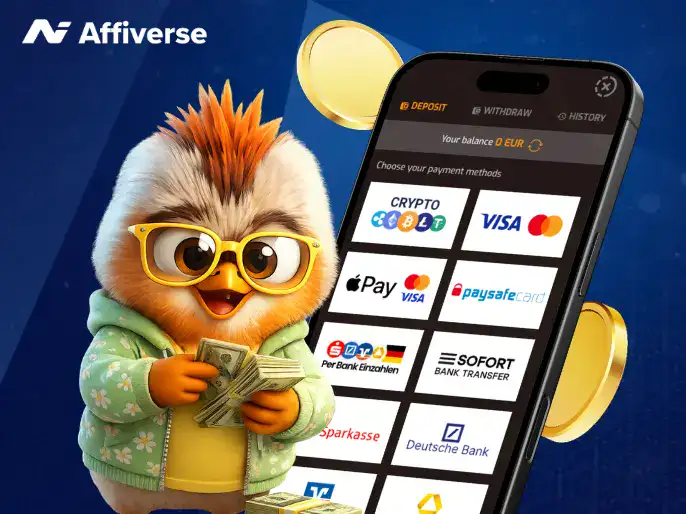
The next step is to confirm that European players can use the most popular payment methods like bank transfer, Visa, Skrill, and where relevant, crypto. We do not rely on the casino’s payment page. We sign up and open the cashier to check the available methods. We verify for EUR currency support. Users should be able to deposit or withdraw funds without paying conversion fees.
We navigate to the account settings and confirm whether deposit limits, session limits, and self-exclusion are present and functional. During our review, we note whether tools are mandatory or optional, and whether self-exclusion connects to a national scheme such as Spelpaus, CRUKS, or OASIS. Casinos that offer no tools or hide them behind a support request are flagged.
We read the full bonus T&Cs, not just the headline offer. We check wagering requirements, eligible payment methods, country restrictions, and game contribution rates. Any casino that buries material restrictions, such as e-wallet exclusions or country-based bonus blocks, without upfront disclosure is noted in the review. We flag wagering requirements above 40x as unfavourable.
After reviewing dozens of EU-facing casinos, our conclusion is consistent: the licensing tier matters more than the brand name. The best EU online casinos must operate under strict regulations. They provide secure gaming environments and ensure fair play by offering real money games from trusted software providers. Before joining an EU casino online, check for a clickable licence badge that links to the regulator’s official registry, and check whether responsible gambling tools are available in your account settings, not just listed on a policy page. Only register if the licence is valid. Moreover, note that gaming laws in Europe vary by country. If you are unsure whether a specific casino is legally accessible from your location, check your national gambling authority’s website for a list of licensed or blocked operators before playing.
For players in fully regulated markets like Sweden, the UK, or Denmark, stick to Tier 1 licensed operators. For players in grey-market countries where offshore casinos are the practical reality, prioritise Curaçao GCB-licensed sites over Anjouan, and always verify the licence at cga.cw before depositing.
The legality of online gambling activities in Europe depends on local gaming laws. The EU has no single gambling law. Each member state regulates online gambling independently. In fully regulated markets like the UK, Sweden, and Denmark, licensed online casinos operate legally under national law. In monopoly markets like Poland and Switzerland, only state-licensed operators are legal, and offshore sites are officially blocked, though not criminalised for players.
It varies by country. In the UK, Ireland, and Malta, gambling winnings are tax-free for players. In Germany and Belgium, winnings above certain thresholds are taxable. Offshore winnings are not automatically exempt; your country of residence determines tax liability, not where the casino is licensed.
Popular EU online casino games include slots, jackpots, and table games. Many EU casino sites also offer live dealer games. Game availability also varies by software provider licensing agreements, meaning some titles may be unavailable depending on your country.
Yes, the best EU casinos offer welcome bonus packages, free spins for slot games, reload bonuses, and loyalty rewards. Always check country-specific T&Cs before depositing, as bonuses visible on the promotions page may not be available in your region.
Yes, most European online casino sites operate under offshore licences issued in Curaçao, Anjouan, and other jurisdictions. The practical risk is that offshore casinos offer no formal dispute resolution and are not covered by local consumer protection laws.
Yes, EU casinos typically support online casino gambling on mobile devices, with some sites offering downloadable iOS and Android apps. However, in certain regulated markets, app availability may be restricted due to platform-specific gambling policies. Apple and Google both apply regional restrictions on gambling apps in their respective stores.