The allure of VPN casinos lies in their ability to enhance the gaming experience with increased privacy and security through encrypted internet connections. Players can access these sites and play slots, table games, and live games without exposing their real IP address and location. However, VPN use at online casinos has its drawbacks, including having winnings voided at geo-restricted casinos. In our guide to VPN-friendly online gambling sites, we explain the common issues players have, what VPNs are, and what to pay attention to.
Disclaimer: Accessing a geographically restricted online casino site using a VPN may violate the operator’s terms and conditions, void the user’s gambling winnings, and constitute a crime, depending on licensing and jurisdiction rules. This guide explains how VPN casinos work without promoting circumvention of gambling regulations in any country. Visit our responsible gambling page for helpful tools, resources, and support.

A casino can be VPN-friendly, but this does not necessarily mean it is VPN-approved. Your account may be closed and winnings voided if your KYC documents indicate a restricted jurisdiction.
Our editor has identified the following casinos that players can access on computers and mobile devices using VPNs. Note that while these casinos allow VPNs, players must still adhere to local laws and the casino’s specific KYC policies to ensure they can actually withdraw winnings.
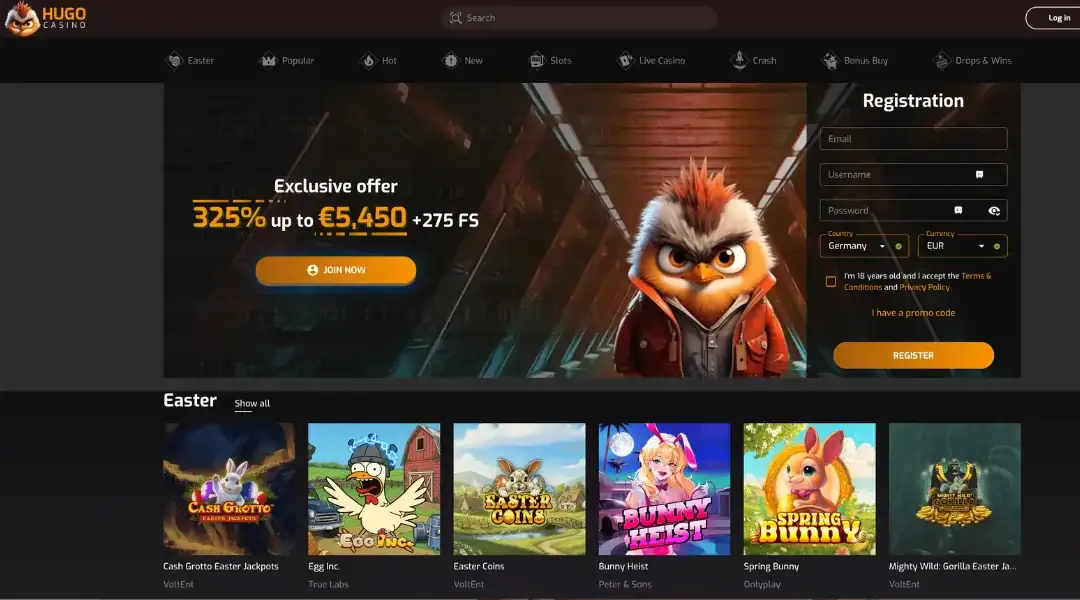
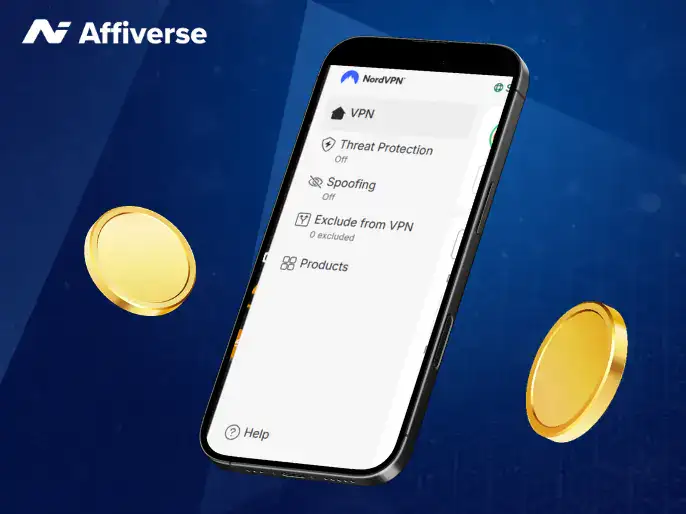
During our testing, the Curacao-licensed Hugo Casino (OGL/2024/589/0556) remained stable under a NordVPN connection on a weekday during a peak hour.
Licensed in Curaçao (OGL/2024/169/0146), Martin Casino is a VPN-friendly platform suitable for playing various games. We tested it with Proton VPN on a weekday afternoon, and we hadn’t experienced any disconnection.
We tested GlitchSpin Casino with NordVPN on a weekend evening, and we haven’t had any issues during games and betting on sports. The offshore casino site is licensed by the Curacao Gaming Authority (OGL/2024/589/0556).
Reliable VPN online casinos strive to deliver smooth gameplay with secure connections. However, players can encounter the issues described below.
Fix: Some operators carry out regular IP checks that are often triggered by large transactions or withdrawal requests. If your account is locked after a casino IP check, contact the support team for assistance and avoid reconnecting via a VPN. You can also provide evidence of your IP address if you did not break any rules.
Fix: Consistency is key when using a VPN to access casinos. To avoid withdrawal blocks, use the same IP location used to sign up at the payment stage. Any discrepancy can cause suspicion and trigger additional KYC checks.
Fix: Players from some regions may not be allowed to claim certain bonuses. Casino operators usually cross-reference the IP used during registration against the payment and document country. Bonuses can be voided if the casino detects a mismatch. We recommend using the same IP throughout the process.
Fix: Most casinos request KYC verification when a player tries to withdraw funds for the first time. Additional account review may also be triggered, including analysing the player’s IP history after winning a substantial amount of money. Try verification immediately after registration.
After thorough audits of various online casino platforms, our team has identified the following benefits and drawbacks of gambling online at VPN-friendly casinos.
With a reputation for compliance, Affiverse assesses VPN-friendly casino sites based on what operators enforce in practice rather than what they state in their T&Cs. In many cases, casinos that do not explicitly mention VPN use have strict payment processing checks and KYC verification procedures.
The chosen VPN-friendly casino must be regulated by a renowned authority. Our reviewers pick online gambling sites with valid licences issued in Curacao, Anjouan, and other jurisdictions. We use the regulator’s official registry to verify gaming licences.
We search each casino’s T&Cs for the words “VPN”, “proxy”, “IP masking”, and “geo-circumvention”. Sites are flagged if any clause explicitly bans VPN connections, and the exact language is recorded for our reviews.
This step entails checking player feedback on review sites and online forums. We focus on the problems VPN users highlight, such as verification and withdrawal issues. We note patterns in each mini-review to identify the sites that most frequently enforce IP-match rules on payouts.
Finally, we access the desktop and mobile casino site using a VPN. We perform thorough checks to establish if VPN users can complete KYC and withdrawal processes without losing winnings. This reveals whether the site enforces geo-checks passively or actively during identity checks.
To ensure compliance with gaming regulations in the target jurisdictions, online casino VPN access is usually not allowed. Sites without written terms regarding VPN acceptance still follow strict rules to comply with payment and KYC policies. In terms of legality, it all depends on the applicable licensing and jurisdiction rules in your country. Gaming laws in your current location still apply even when hiding your IP address with a VPN. The legal risks are especially high when using a VPN to access casinos restricted in your location.
We tested the following casinos using NordVPN and ProtonVPN. The table provides an overview of the key criteria players should use when evaluating VPN-friendly casinos.
| Casino | Hugo | Spinzen | Beef |
| Licence | Curaçao Gaming Authority (OGL/2024/589/0556) | Anjouan Gaming (ALSI-202409044-FI2) | Curaçao Gaming Authority (OGL/2024/169/0146) |
| VPN Clause in T&Cs | No explicit VPN prohibition, but it may suspend your account if it's believed you’ve tried to alter your device’s IP address, and the responsibility is on the player | No explicit VPN prohibition, but the responsibility is on the player, and one account is allowed per IP | No explicit VPN prohibition, but it can't guarantee the correct operation of the site and restricts access strictly to some countries |
| IP Check Policy | Passive checks only | Passive checks only | Active checks: the system checks IP addresses to spot multiple accounts or proxy use during a withdrawal |
| Payment Options | Bitcoin, Ethereum, Litecoin, Skrill, Mastercard, Trustly, Interac, Zimpler, and more | Litecoin, Cardano, USDT, Visa, Trustly, Neteller, MuchBetter, Neosurf, and more | BinancePay Ethereum, Ripple, SEPA, Skrill, MiFinity, PaysafeCard, Visa, and more |
| Responsible Gambling Tools | Reality check and take a break from the settings. Self-assessment and resources are also available, but require contacting live support for self-exclusion | Take a break and a reality check is available from the settings. Need to contact via email for self-exclusion | Allows setting limits and reality checks from settings. Self-exclusion and resources are also available |
| Editor's Note on Performance via VPN | No issues during a withdrawal, deposit, or disconnections during gameplay | Didn't experience a disconnection during transactions, navigations, and gameplay | Stable during gameplay, website navigation, and transactions |
Players must consider several key features to choose a reliable VPN for online gambling. These include a strict no-logs policy to ensure maximum privacy, the provider’s jurisdiction, access to obfuscated VPN servers, risk of WebRTC leaks, and acceptance by online casinos. Below are the most popular VPNs suitable for online gaming.
| VPN Service | No-Logs Policy | Jurisdiction | Obfuscation | WebRTC Leak Risk | Casino Suitability |
|---|---|---|---|---|---|
| ExpressVPN | Yes | British Virgin Islands | Yes | Low | Strong |
| NordVPN | Yes | Panama | Yes | Low | Strong |
| Surfshark | Yes | Netherlands | Yes | Medium | Moderate |
| Mullvad | Yes | Sweden | Partial | Low | Moderate |
| Proton VPN | Yes | Switzerland | Yes | Low | Strong |
Before you start playing, you must confirm if the selected online casino supports or bans VPNs. Follow the steps below that we have verified in our casino review to pick the right site.
VPN at online casinos directly affects how deposits and withdrawals are processed, verified, and approved. We explain the most common payment categories and what VPN users need to understand below.
Cryptocurrencies are the most VPN-compatible payment methods. The online casinos usually offer popular coins like Ripple, Bitcoin, USDT, and Litecoin. Although they don’t guarantee full anonymity, as blockchains are publicly recorded on distributed ledgers, they don’t carry country codes or addresses. Coins like Monero even hide transaction details on the blockchain itself. Make sure to use a private wallet rather than an account, as exchange wallets are linked to your verified identity.
E-wallets are the middle ground between crypto and bank transfers for VPN users. Options like MuchBetter and ecoPayz tend to be more flexible, but others like Skrill and Neteller run their own location checks separately from the casino, so a mismatch between your e-wallet’s registered country and your VPN location can get a withdrawal blocked. Make sure the country on your e-wallet account matches wherever your VPN is connecting from.
Prepaid vouchers like PaysafeCard and Neosurf can be used for deposits, as they aren’t tied to a bank account or address. However, they can’t be used for withdrawals, so you’ll still need another method to withdraw your money. This can cause a location consistency issue. They can be used to test a casino before putting in your real budget money.
Cards like Visa and Mastercard are risky options when playing with a VPN. Casinos can identify your card’s issuing country from the first six digits, so a location mismatch shows up even if your VPN is active. On top of that, billing address checks are another identifier that no VPN can hide.
Similar to cards, bank transfers include your registered bank country as part of the payment data, and online banking methods like Trustly require you to log into your bank directly, which can be flagged as suspicious if the IP looks unusual.

While standard VPNs hide your real IP and encrypt traffic, obfuscated servers disguise the fact that you’re using a VPN at all. However, neither option solves the core risk: the risk of revealing your location through KYC documents.
Identity verification is often required before the first withdrawal, even at casinos that accept VPNs. The documents uploaded during the KYC process can reveal your location. Players can reduce the chances of detection by choosing a no-KYC casino without the usual identity checks. However, the operator can still request additional documents for verification and decide to freeze your account if they detect VPN use in previous gaming sessions. Therefore, a no-KYC casino will only let you delay the verification process. There’s no escaping if the operator detects prohibited access via a VPN.
The privacy and accessibility advantages of VPN-friendly casinos can reduce the effectiveness of player protections. That’s why it is more important that the casino offers limit-setting, self-assessments, and resources. Before using a VPN to access an online casino, players should ask themselves whether they are doing this for privacy and security or because they want to avoid restrictions that exist to protect them.
A VPN can grant players full access to online casino games in jurisdictions with strict regulations through secure connections. However, using a VPN to gamble online in a restricted jurisdiction may violate a casino’s T&Cs, leading to loss of funds. Players should check the casino’s terms and jurisdiction rules before using VPNs. They also need to use a reliable VPN provider with robust user protection features. Moreover, the chosen site must have a valid licence and friendly wagering requirements.
Licensed VPN online casinos can be safe to use, as they operate under strict laws and offer fair games from renowned software providers. However, like other gaming sites, their legality depends on online gambling laws in the player’s jurisdiction.
Yes, an online casino can seize your winnings if you use a VPN. This is most likely to happen when using a virtual private network to access a geographically restricted casino. Players should read the terms of use before registering.
Yes, if you register using a VPN, operators can use IP flagging or browser fingerprinting to identify your real location. A discrepancy between your registration IP and the payment method country can raise suspicion about VPN use.
Yes, but the selected VPN may only offer the free version for a limited time and less protection. For extended gameplay and better safety, you may need to use a paid version. Reliable VPNs may even offer basic plans for online casino gaming.
Slots are the most common category available at most VPN-friendly casinos, followed by table games and live casino games, like blackjack, roulette, poker, and baccarat. Availability of a certain game provider can vary from country to country.
No, a VPN alone doesn’t facilitate anonymous payments. Crypto casino sites that accept VPNs can offer some level of anonymity. When using digital currencies like Bitcoin, Ethereum, and Litecoin, players do not share their card or bank account details with operators.